

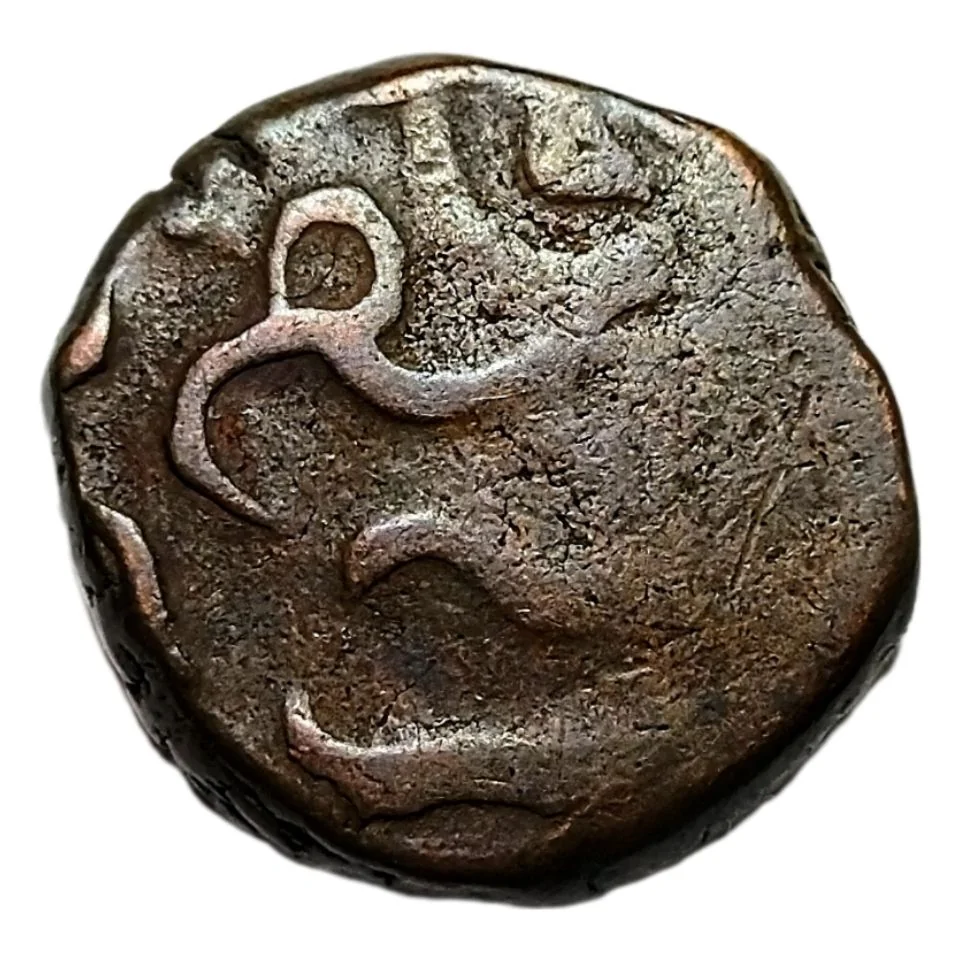
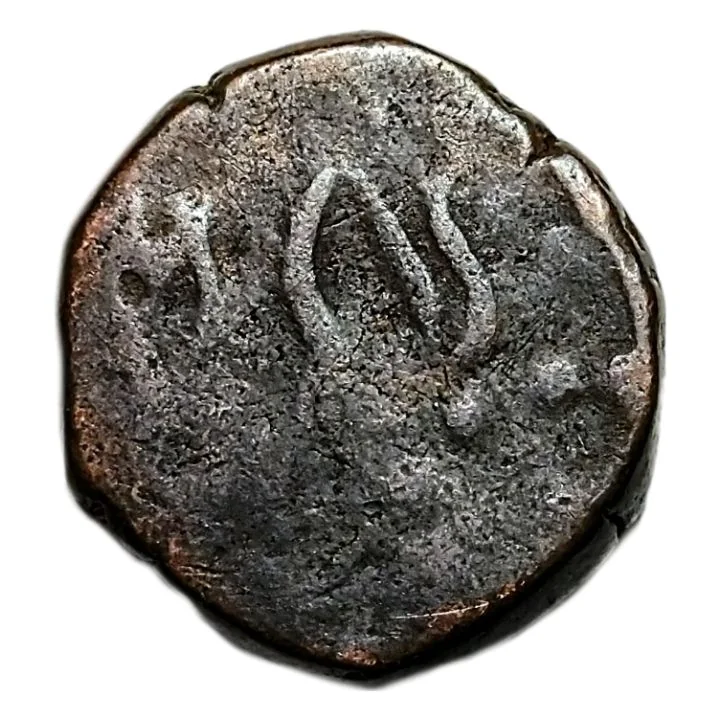
1 Paisa – Mewar-Salumba Feudatory
India

Obverse
Reverse
Edge
Plain
Mintings
| Year | Mint Mark | Mintage | Quality | Collection |
|---|---|---|---|---|
| — | — | — |
Historical background
In 1815, the currency situation in the Mewar-Salumba Feudatory (a thikana or estate within the princely state of Mewar) was complex and transitional, reflecting both local tradition and the growing influence of British power following the Third Anglo-Maratha War. The primary circulating medium consisted of locally minted coins, notably the Salumba Rupee, a silver currency struck in the name of the Mughal Emperor Shah Alam II but bearing the mint mark of "Salumba." This practice of issuing coins in the name of a distant Mughal sovereign was a customary holdover, asserting legitimacy while affirming local administrative autonomy under the Rajput ruler of Mewar in Udaipur.
However, this local system operated within an increasingly fragmented monetary landscape. Alongside Salumba's issues, a variety of other coins circulated, including rupees from the Mewar State capital at Udaipur, coins from neighbouring Rajput kingdoms, and older Maratha and Mughal issues. The value and acceptance of these coins depended on their silver content and the authority behind them, leading to a lack of uniform standardisation. Furthermore, the political settlement of 1815, which solidified British paramountcy over the region, began to subtly pressure such feudatories toward broader economic integration.
Thus, the currency background of Salumba in 1815 is one of layered sovereignty. While the feudatory maintained the right of coinage as a symbol of its subordinate authority, its monetary system was not isolated. It functioned within Mewar's broader framework, which was itself navigating the new reality of British suzerainty. This period represents the latter phase of indigenous coinage before the eventual dominance of standardized British Indian currency in the later 19th century.
However, this local system operated within an increasingly fragmented monetary landscape. Alongside Salumba's issues, a variety of other coins circulated, including rupees from the Mewar State capital at Udaipur, coins from neighbouring Rajput kingdoms, and older Maratha and Mughal issues. The value and acceptance of these coins depended on their silver content and the authority behind them, leading to a lack of uniform standardisation. Furthermore, the political settlement of 1815, which solidified British paramountcy over the region, began to subtly pressure such feudatories toward broader economic integration.
Thus, the currency background of Salumba in 1815 is one of layered sovereignty. While the feudatory maintained the right of coinage as a symbol of its subordinate authority, its monetary system was not isolated. It functioned within Mewar's broader framework, which was itself navigating the new reality of British suzerainty. This period represents the latter phase of indigenous coinage before the eventual dominance of standardized British Indian currency in the later 19th century.
✨ Legendary