

1 Rupee – Mewar-Shahpur Feudatory
India

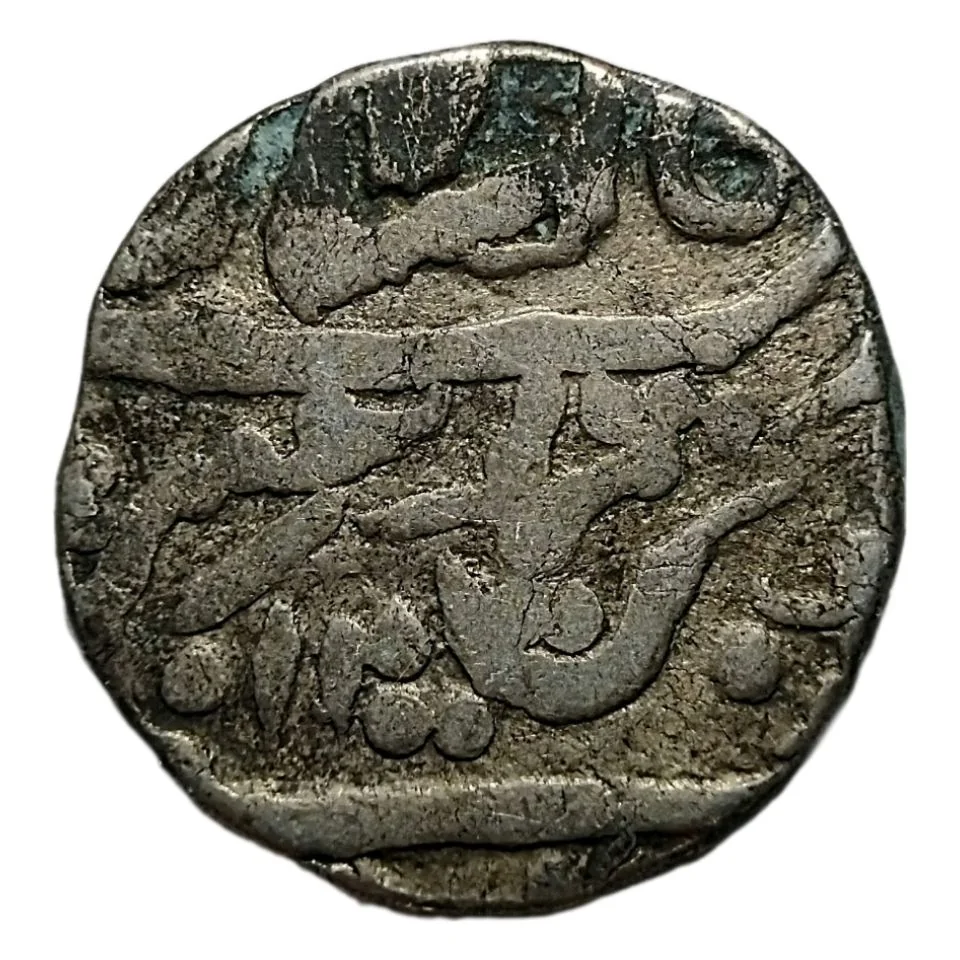
Obverse
Description:
Clumsy, buggy scripts.
Inscription:
Zarb dar al khilafat shahjahanabad julus maimanat manus sanah 12
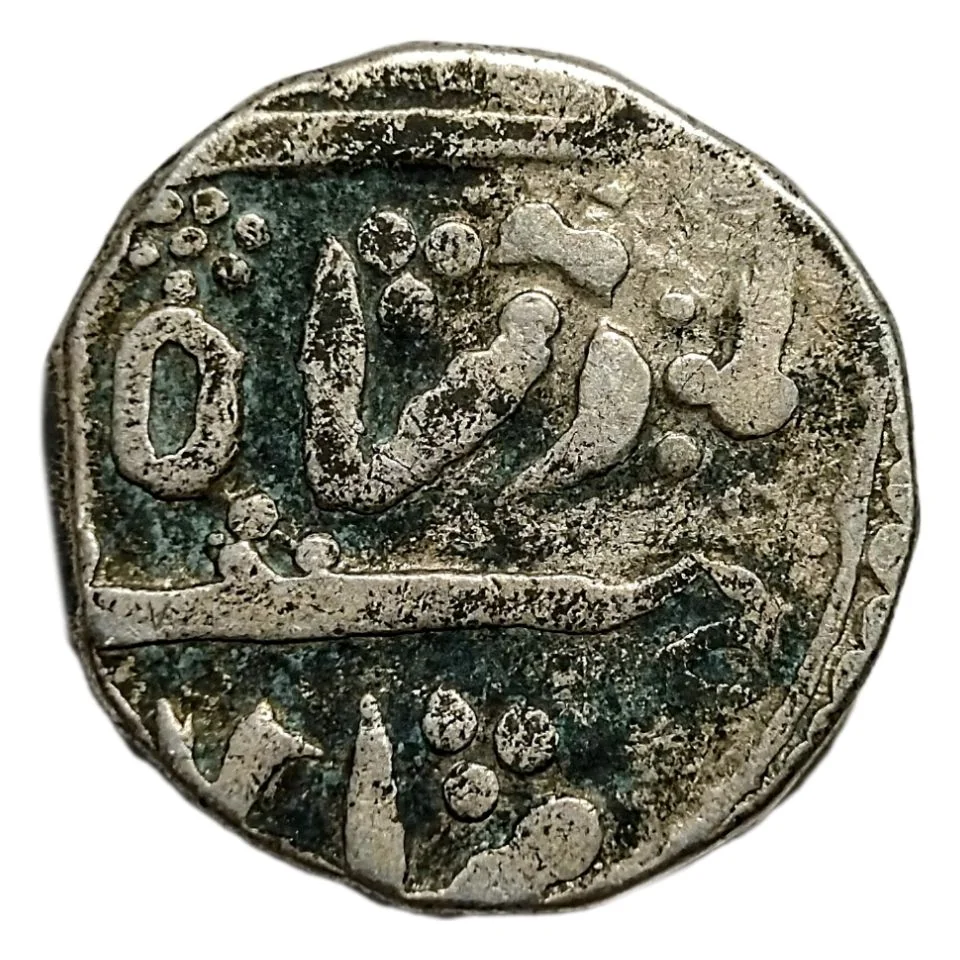
Reverse
Description:
Blundered scripts with a trident mark (likely Shahpura State).
Inscription:
Shah alam baadshah ghazi sikka mubarak
Edge
Plain
Mintings
| Year | Mint Mark | Mintage | Quality | Collection |
|---|---|---|---|---|
| — | — | — |
Historical background
In 1879, the currency situation in the Mewar-Shahpur Feudatory, a princely state within the Rajputana Agency under British paramountcy, was characterized by a complex duality. The official and dominant currency was the British Indian rupee, which had been progressively standardized across India following the Crown's assumption of power in 1858. This ensured that major state transactions, trade with other regions, and revenue payments to the British Raj were conducted in a uniform currency, facilitating economic integration and administrative control.
However, parallel to this imperial system, local and traditional currencies almost certainly persisted in limited circulation. It was common for Rajput states like Mewar to mint their own distinct coins, often silver rupees and fractional copper coins (like dhabus or paisa), which bore the name or emblem of the Maharana. While the British Indian rupee was legally paramount, these local issues would have been tolerated for small-scale daily transactions within villages and local markets, creating a semi-informal monetary layer. Their value likely fluctuated against the imperial rupee based on intrinsic metal content and local acceptance.
Thus, the 1879 currency scene was one of transition and overlay. The British imperial system provided the stable framework for wider commerce and administration, while older feudal and local monetary forms lingered in the socio-economic fabric. This hybrid system reflected the broader political reality of the princely state: internally autonomous in some cultural and local administrative matters, but ultimately operating within the financial and political orbit of the British Empire.
However, parallel to this imperial system, local and traditional currencies almost certainly persisted in limited circulation. It was common for Rajput states like Mewar to mint their own distinct coins, often silver rupees and fractional copper coins (like dhabus or paisa), which bore the name or emblem of the Maharana. While the British Indian rupee was legally paramount, these local issues would have been tolerated for small-scale daily transactions within villages and local markets, creating a semi-informal monetary layer. Their value likely fluctuated against the imperial rupee based on intrinsic metal content and local acceptance.
Thus, the 1879 currency scene was one of transition and overlay. The British imperial system provided the stable framework for wider commerce and administration, while older feudal and local monetary forms lingered in the socio-economic fabric. This hybrid system reflected the broader political reality of the princely state: internally autonomous in some cultural and local administrative matters, but ultimately operating within the financial and political orbit of the British Empire.

✨ Legendary