


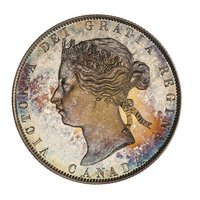
Obverse
Description:
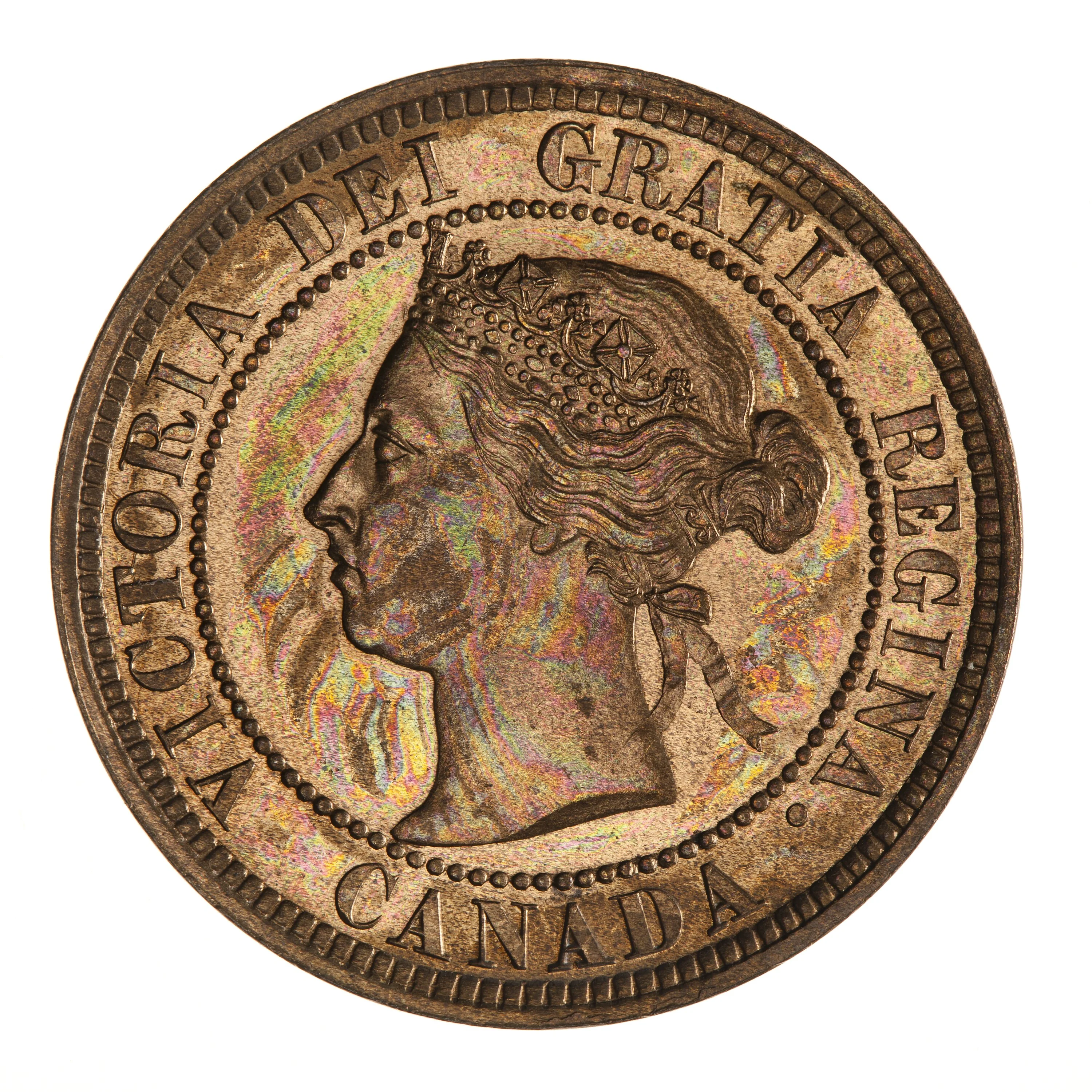
Queen Victoria in tiara, facing left.
Inscription:
VICTORIA DEI GRATIA REGINA.
CANADA
CANADA
Translation:
Victoria by the Grace of God Queen.
Canada
Canada
Script: Latin
Language: Latin
Engravers: Leonard Charles Wyon, George William de Saulles
Reverse
Description:
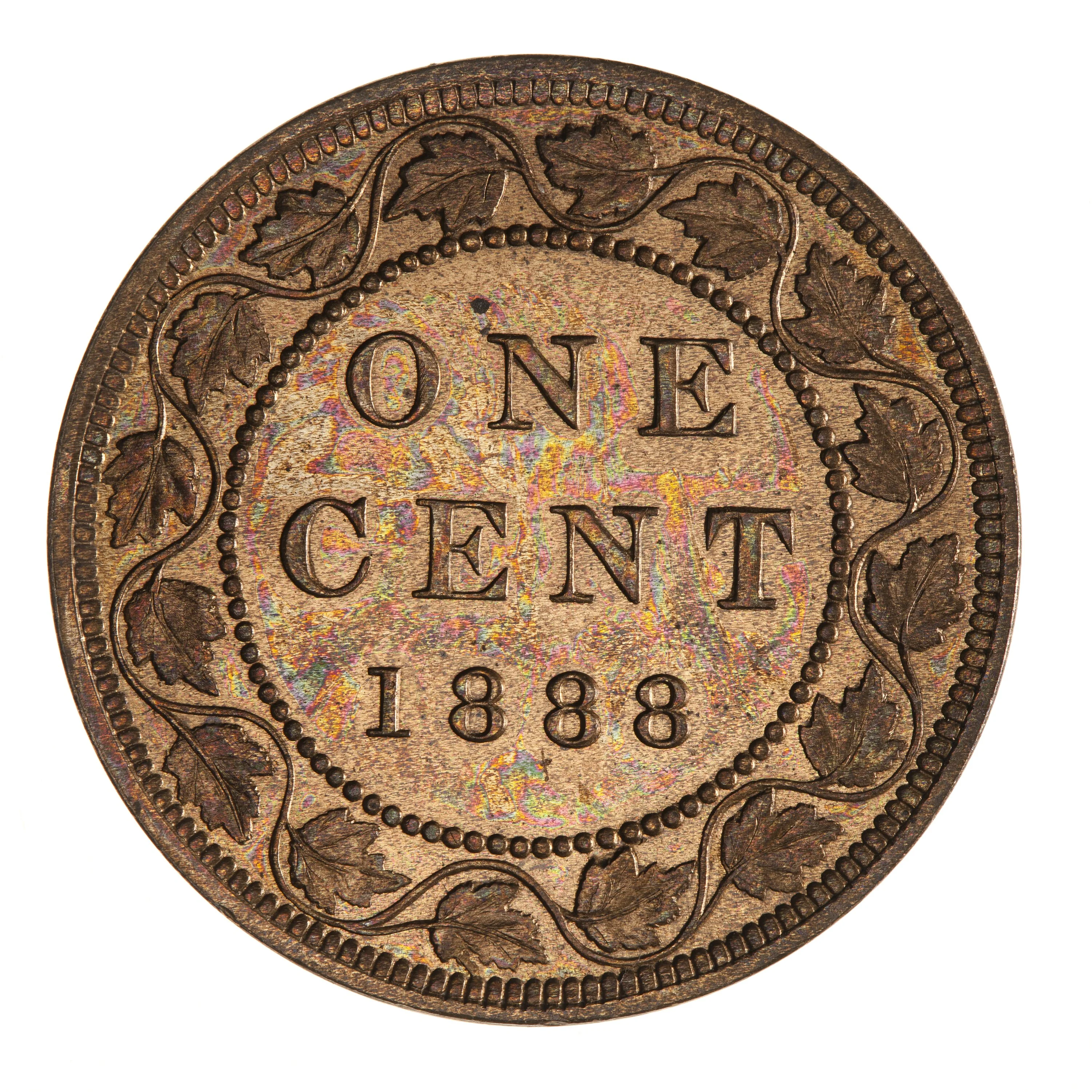
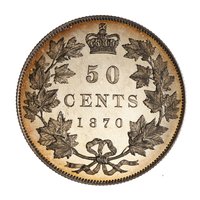
Maple leaves on a vine encircle the face value.
Inscription:
ONE
CENT
1891
CENT
1891
Script: Latin
Engraver: Leonard Charles Wyon
Edge
Plain
Mints
| Name | Mark |
|---|---|
| Royal Mint (Tower Hill) | — |
| Heaton and Sons / The Mint Birmingham | H |
Mintings
| Year | Mint Mark | Mintage | Quality | Collection |
|---|---|---|---|---|
| 1876 | H | 4,000,000 | ||
| 1881 | H | 2,000,000 | ||
| 1882 | H | 4,000,000 | ||
| 1884 | — | 2,500,000 | ||
| 1886 | — | 1,500,000 | ||
| 1887 | — | 1,500,000 | ||
| 1888 | — | 4,000,000 | ||
| 1890 | H | 1,000,000 | ||
| 1891 | — | 1,452,500 | ||
| 1892 | — | 1,200,000 | ||
| 1893 | — | 2,000,000 | ||
| 1894 | — | 1,000,000 | ||
| 1895 | — | 1,200,000 | ||
| 1896 | — | 2,000,000 | ||
| 1897 | — | 1,500,000 | ||
| 1898 | H | 1,000,000 | ||
| 1899 | — | 2,400,000 | ||
| 1900 | — | 1,000,000 | ||
| 1900 | H | 2,600,000 | ||
| 1901 | — | 4,100,000 |
Historical background
In 1876, Canada was in the midst of a complex currency transition, caught between colonial tradition and national ambition. The country operated without a uniform national currency, relying on a confusing mix of British gold sovereigns, American gold coins, and a multitude of private banknotes issued by chartered banks. This system was governed by the Province of Canada Currency Act of 1853, which had officially adopted a decimal system based on the dollar but tied it to a gold standard, with the Canadian dollar fixed in value to the US gold dollar. However, the global scarcity of gold, especially after many nations, including the United Kingdom, had moved to a gold standard, made actual gold coinage rare in everyday circulation.
The practical reality was a fragmented and often inconvenient monetary environment. The notes of one bank might be discounted or even refused in regions served by another, hindering inter-provincial trade. Furthermore, the British government, seeking to impose imperial monetary unity, had been pressuring Canada to adopt a sterling-based system, creating political tension. The Canadian government and commercial interests largely resisted, preferring the continental alignment with the United States' decimal dollar system for practical trade reasons. Consequently, while the official standard was gold, the everyday economy ran on a de facto silver standard for small change and a paper standard for larger transactions, with the value of banknotes depending heavily on the reputation and solvency of the issuing bank.
This unsatisfactory situation set the stage for the Bank Act of 1871, which was the governing legislation in 1876. This act attempted to bring order by strictly regulating the note-issuing chartered banks, requiring them to hold adequate reserves and to redeem their notes in gold on demand. However, it did not create a central bank or a true national currency. The decade of the 1870s, marked by the Long Depression, saw repeated calls for more radical reform, including the issuance of government legal tender notes. Thus, 1876 represents a pivotal point: the old, decentralized system was still functioning under law, but mounting economic pressures and nationalist sentiment were building toward the eventual creation of a centralized government currency, a process that would culminate in the Dominion Notes Act and the establishment of the Canadian Mint in the decades to follow.
The practical reality was a fragmented and often inconvenient monetary environment. The notes of one bank might be discounted or even refused in regions served by another, hindering inter-provincial trade. Furthermore, the British government, seeking to impose imperial monetary unity, had been pressuring Canada to adopt a sterling-based system, creating political tension. The Canadian government and commercial interests largely resisted, preferring the continental alignment with the United States' decimal dollar system for practical trade reasons. Consequently, while the official standard was gold, the everyday economy ran on a de facto silver standard for small change and a paper standard for larger transactions, with the value of banknotes depending heavily on the reputation and solvency of the issuing bank.
This unsatisfactory situation set the stage for the Bank Act of 1871, which was the governing legislation in 1876. This act attempted to bring order by strictly regulating the note-issuing chartered banks, requiring them to hold adequate reserves and to redeem their notes in gold on demand. However, it did not create a central bank or a true national currency. The decade of the 1870s, marked by the Long Depression, saw repeated calls for more radical reform, including the issuance of government legal tender notes. Thus, 1876 represents a pivotal point: the old, decentralized system was still functioning under law, but mounting economic pressures and nationalist sentiment were building toward the eventual creation of a centralized government currency, a process that would culminate in the Dominion Notes Act and the establishment of the Canadian Mint in the decades to follow.
🌱 Very Common