

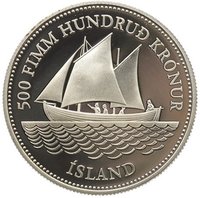
500 Krónur (Banknotes in Iceland) – Iceland
Non-circulating coins
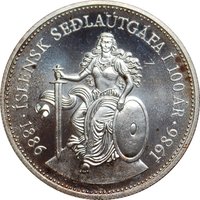
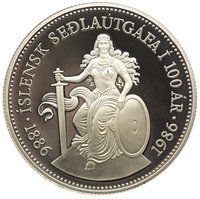
Commemoration: 100th Anniversary of Banknotes in Iceland
Iceland
Context
Material
References
KM: #Click to copy to clipboard30
Numista: #43796
Value
Exchange value: 500 ISK = $4.12
Bullion value: $28.43
Inflation-adjusted value: 5600.24 ISK
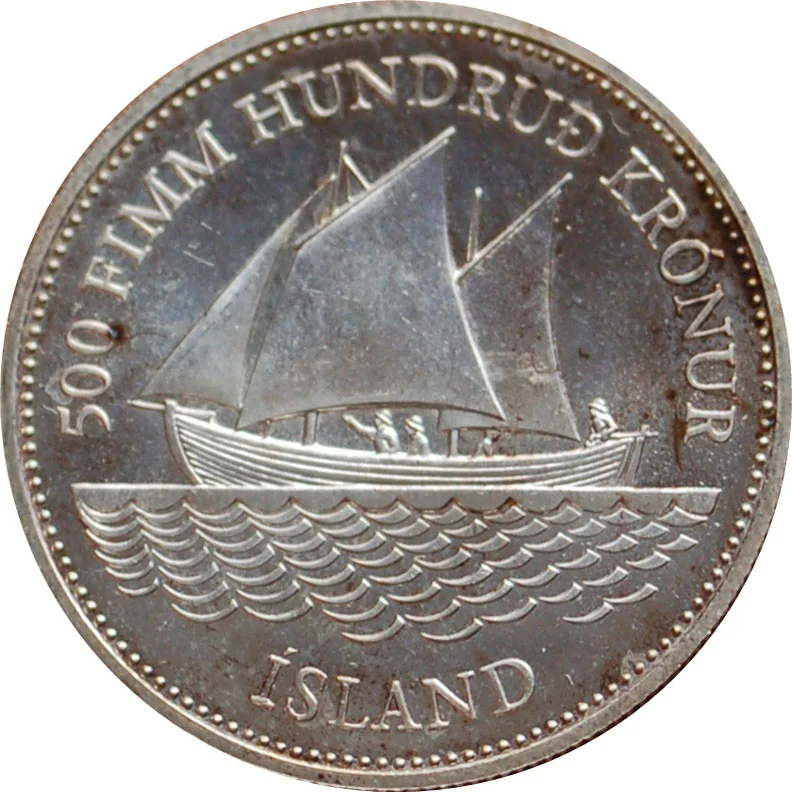
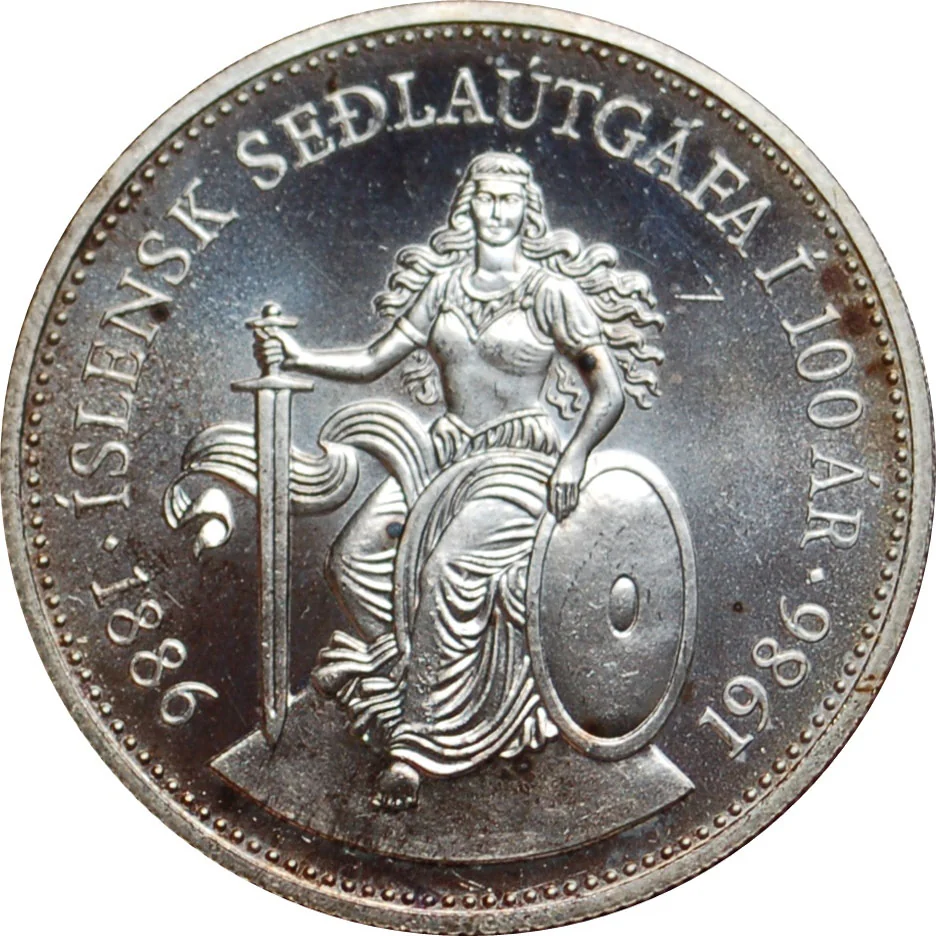
Obverse
Reverse
Edge
Reeded
Categories
| Geography> Sea |
| Transportation> Watercraft |
| Symbol> Allegory |
| Object> Cold weapons |
Mints
| Name | Mark |
|---|---|
| Royal Mint | — |
Mintings
| Year | Mint Mark | Mintage | Quality | Collection |
|---|---|---|---|---|
| 1986 | — | 15,000 |
Historical background
In 1986, Iceland's currency situation was characterized by a tightly controlled and unstable exchange rate regime amidst a period of high inflation and economic vulnerability. The Icelandic króna (ISK) was subject to a complex system of multiple exchange rates and stringent capital controls, a legacy of policies designed to manage a chronic current account deficit and shield the economy from external shocks. The Central Bank of Iceland fixed the official exchange rate against a basket of currencies, but a parallel black market for foreign currency thrived, highlighting the disparity between the official rate and market sentiment. This environment was a direct result of decades of high inflation, which had eroded the króna's value and necessitated repeated devaluations to maintain export competitiveness.
The underlying economic conditions were precarious. Iceland's economy was heavily dependent on the fishing industry, making it susceptible to volatile export earnings. Furthermore, the 1970s oil crises and the global stagflation that followed had hit the small, open economy hard. By the mid-1980s, despite some stabilization efforts, inflation remained stubbornly high (around 20% annually), and public debt had risen significantly. The restrictive currency regime, while intended to conserve foreign reserves, created distortions, hampered investment, and isolated Iceland from international financial markets.
This restrictive framework set the stage for the gradual but significant financial liberalization that would follow in the late 1980s and early 1990s. The government and central bank recognized that the multiple exchange rate system and controls were unsustainable for long-term growth. Therefore, 1986 represents a pivotal late stage of the old, controlled system, immediately preceding a period of dramatic change where Iceland began dismantling capital controls, unifying exchange rates, and moving towards a more market-oriented financial system, albeit with risks that would later contribute to the extreme volatility of the 2000s.
The underlying economic conditions were precarious. Iceland's economy was heavily dependent on the fishing industry, making it susceptible to volatile export earnings. Furthermore, the 1970s oil crises and the global stagflation that followed had hit the small, open economy hard. By the mid-1980s, despite some stabilization efforts, inflation remained stubbornly high (around 20% annually), and public debt had risen significantly. The restrictive currency regime, while intended to conserve foreign reserves, created distortions, hampered investment, and isolated Iceland from international financial markets.
This restrictive framework set the stage for the gradual but significant financial liberalization that would follow in the late 1980s and early 1990s. The government and central bank recognized that the multiple exchange rate system and controls were unsustainable for long-term growth. Therefore, 1986 represents a pivotal late stage of the old, controlled system, immediately preceding a period of dramatic change where Iceland began dismantling capital controls, unifying exchange rates, and moving towards a more market-oriented financial system, albeit with risks that would later contribute to the extreme volatility of the 2000s.
⭐ Rare