

5 Pence – United Kingdom
United Kingdom
Context
Year: 1990
Issuer: United Kingdom 
Ruler: Elizabeth II
Currency:
(since 1971)
Demonetization: 31 December 1990
Total mintage: 35,000
Material

References
KM: #Click to copy to clipboard937a
Numista: #43785
Value
Exchange value: 0.05 GBP = $0.07
Bullion value: $15.15
Inflation-adjusted value: 0.16 GBP
Obverse
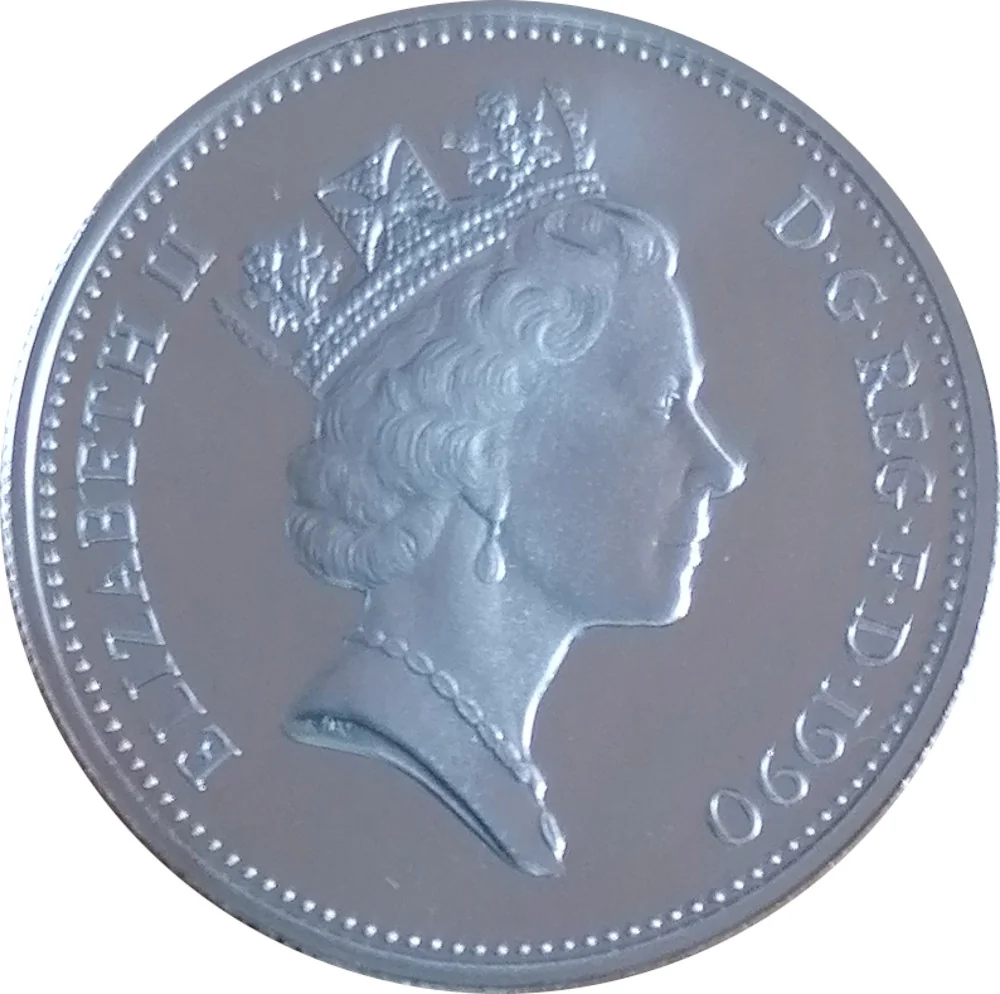
Description:
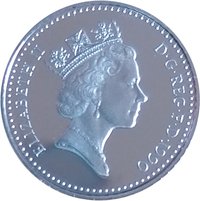
Queen Elizabeth III crowned right, wearing the George IV State Diadem.
Inscription:
ELIZABETH II D·G·REG·F·D·1990
RDM
RDM
Translation:
Elizabeth II by the Grace of God Queen Defender of the Faith 1990
Script: Latin
Language: Latin
Engraver: Raphael David Maklouf
Reverse
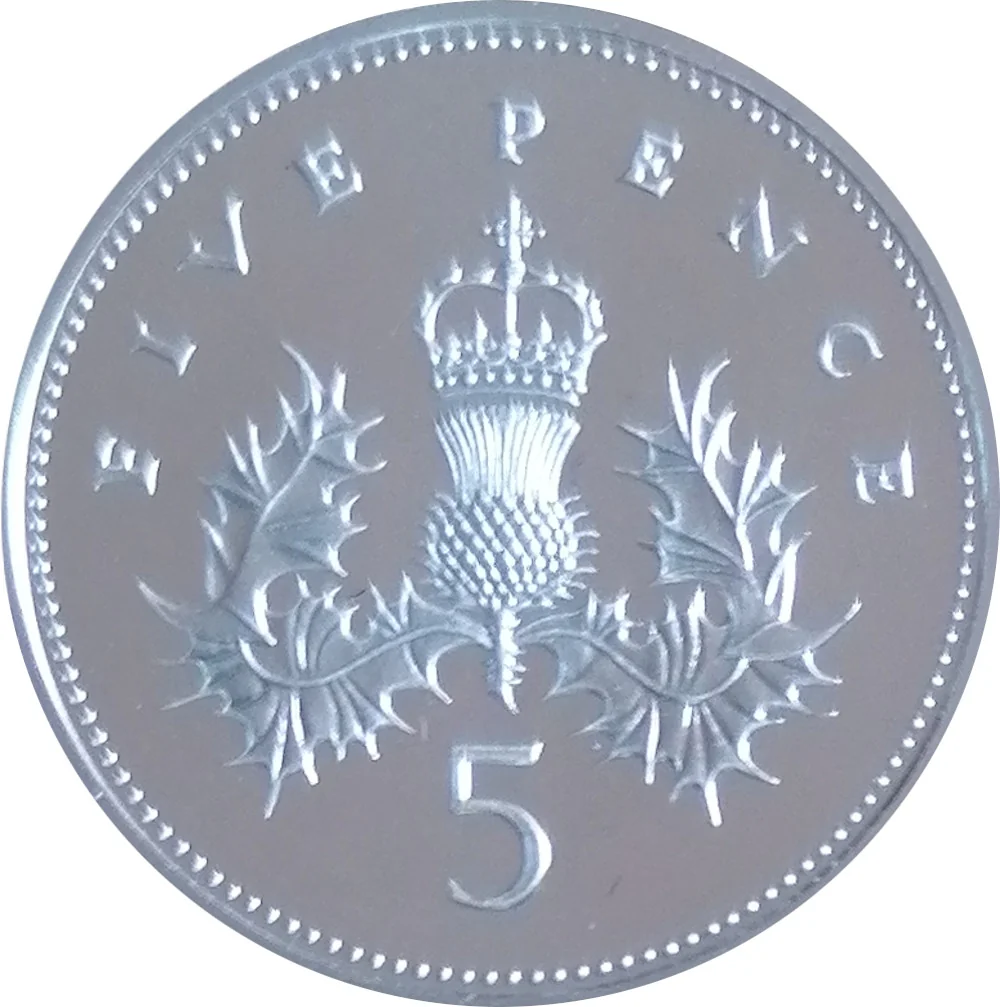
Description:
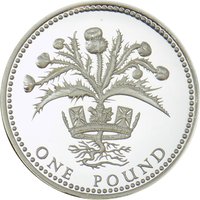
Thistle badge, crowned, with legend above and value below.
Inscription:
FIVE PENCE
5
5
Script: Latin
Engraver: Christopher Ironside
Edge
Reeded
Mints
| Name | Mark |
|---|---|
| Royal Mint | — |
Mintings
| Year | Mint Mark | Mintage | Quality | Collection |
|---|---|---|---|---|
| 1990 | — | 35,000 | Proof |
Historical background
In 1990, the United Kingdom's currency situation was dominated by its pivotal, yet troubled, membership of the European Exchange Rate Mechanism (ERM). Having joined in October 1990 at a central rate of £1 to DM 2.95, the government, under Prime Minister Margaret Thatcher and Chancellor John Major, aimed to use the system as a "discipline" to curb high inflation by pegging sterling to the stable Deutsche Mark. This policy represented a major shift from a free-floating pound and was seen as a precursor to eventual full European Monetary Union, a prospect that caused deep political divisions within the ruling Conservative Party.
The economic context for ERM entry was highly challenging. UK inflation was soaring above 10%, partly due to the Lawson Boom of the late 1980s, and interest rates were at 15%. The ERM required the Bank of England to intervene in currency markets to maintain sterling within a permitted band (6% wide). However, the high UK interest rates needed to combat inflation attracted speculative "hot money" inflows, creating an artificially strong pound that hurt exporters. This overvaluation became increasingly unsustainable as the UK entered a severe recession, creating a fundamental conflict between the needs of the domestic economy and the requirements of the exchange rate peg.
By late 1992, these pressures would culminate in the "Black Wednesday" crisis, forcing sterling's humiliating exit from the ERM. However, in 1990, the policy was still in its early, tense phase. The government remained publicly committed to the mechanism, believing it would deliver long-term stability and low inflation, even as the high exchange rate and interest rates exacerbated the economic downturn. The stage was being set for a dramatic clash between market forces and political commitment, with the pound at the very centre of the UK's economic and European policy.
The economic context for ERM entry was highly challenging. UK inflation was soaring above 10%, partly due to the Lawson Boom of the late 1980s, and interest rates were at 15%. The ERM required the Bank of England to intervene in currency markets to maintain sterling within a permitted band (6% wide). However, the high UK interest rates needed to combat inflation attracted speculative "hot money" inflows, creating an artificially strong pound that hurt exporters. This overvaluation became increasingly unsustainable as the UK entered a severe recession, creating a fundamental conflict between the needs of the domestic economy and the requirements of the exchange rate peg.
By late 1992, these pressures would culminate in the "Black Wednesday" crisis, forcing sterling's humiliating exit from the ERM. However, in 1990, the policy was still in its early, tense phase. The government remained publicly committed to the mechanism, believing it would deliver long-term stability and low inflation, even as the high exchange rate and interest rates exacerbated the economic downturn. The stage was being set for a dramatic clash between market forces and political commitment, with the pound at the very centre of the UK's economic and European policy.

🌟 Limited