

5 pula – Botswana
Add to wishlist
Non-circulating coins
Commemoration: International Year of Disabled Persons
Botswana
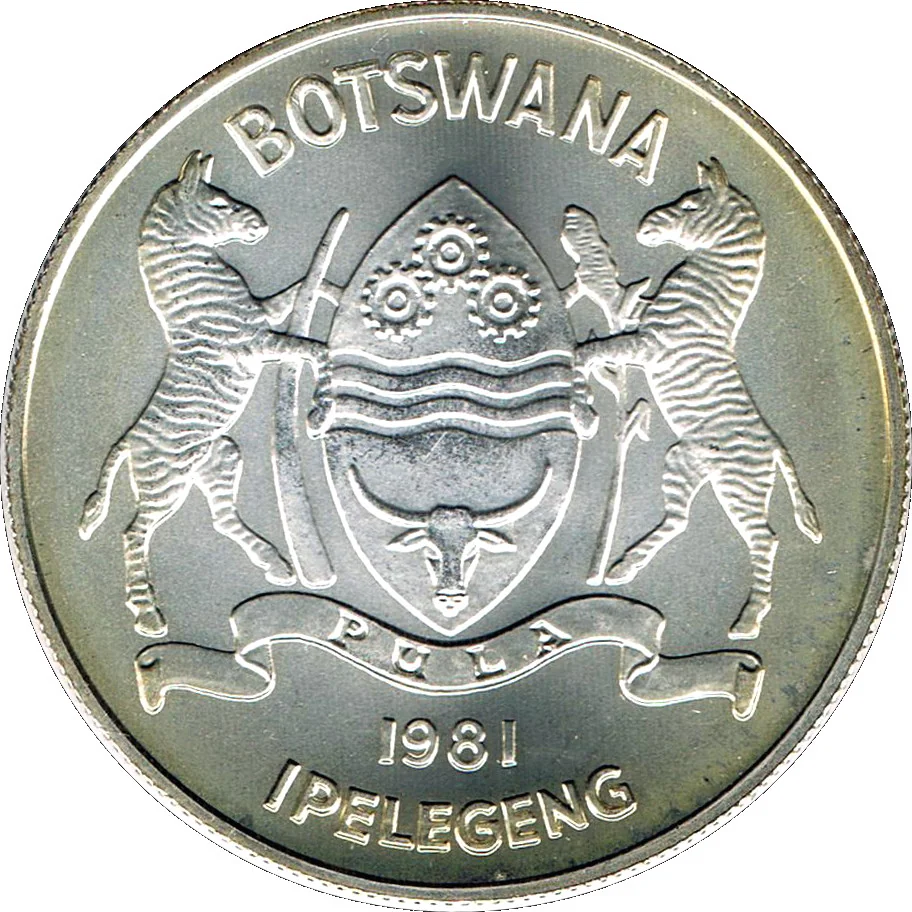
Obverse
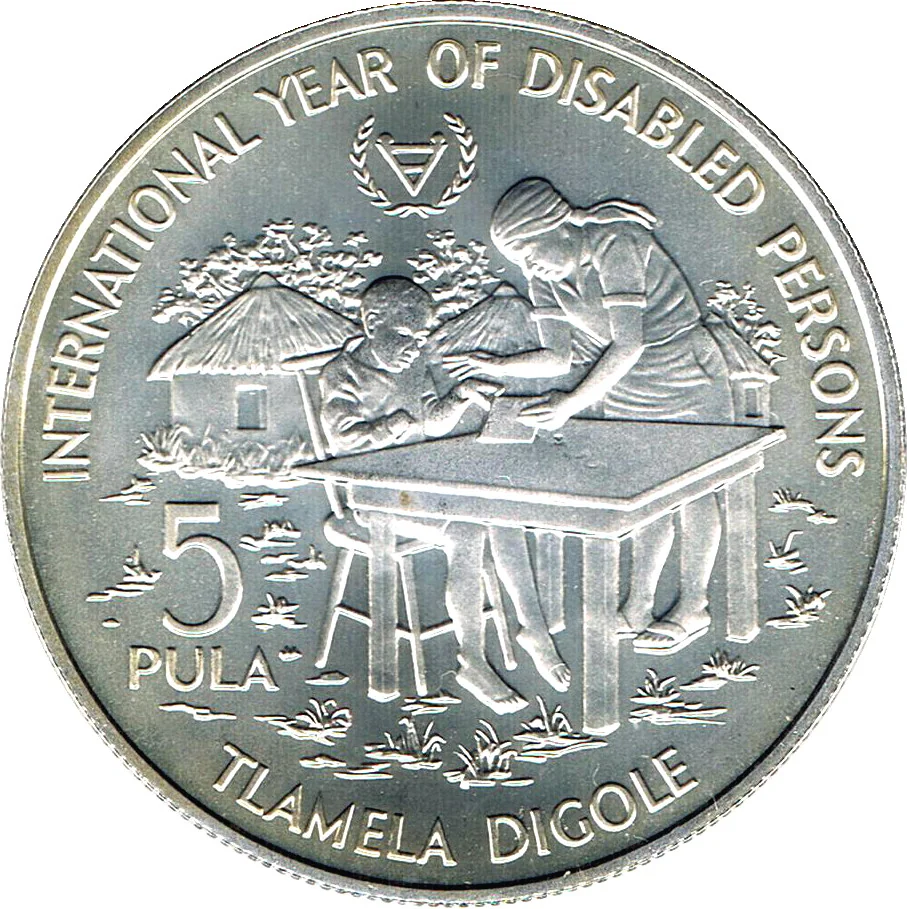
Reverse
Description:
A woman assists a disabled child at a table outside a village hut.
Inscription:
INTERNATIONAL YEAR OF DISABLED PERSONS
5 PULA
TLAMELA DIGOLE
5 PULA
TLAMELA DIGOLE
Script: Latin
Engraver: Robert Elderton
Edge
Categories
| Symbols> Coat of Arms |
| Education |
Mints
| Name | Mark |
|---|---|
| Royal Mint | — |
Mintings
| Year | Mint Mark | Mintage | Quality | Collection |
|---|---|---|---|---|
| 1981 | — | 13,000 | ||
| 1981 | — | 11,000 | Proof |
Historical background
In 1981, Botswana’s currency situation was defined by its recent and successful transition to monetary independence. Just two years prior, in 1976, the country had exited the multinational Rand Monetary Area (RMA) and introduced its own currency, the Pula. This decisive move was driven by Botswana's desire to control its own monetary policy and capture the seigniorage revenue from its growing economy, which was being fueled by a booming diamond sector. The establishment of the Bank of Botswana in 1975 provided the necessary institutional framework to manage this new national currency.
The Pula was initially pegged to a basket of currencies, heavily weighted toward the South African rand but also including the US dollar and British pound sterling. This basket peg, as opposed to a single-currency peg, was a prudent strategy to mitigate economic dependence on apartheid-era South Africa and buffer the economy from the rand's volatility. By 1981, this system was proving effective, helping to maintain relative price stability and investor confidence during a period of global economic uncertainty marked by high inflation and oil shocks.
Overall, the currency situation in 1981 reflected a nation assertively managing its economic sovereignty. The Pula was stable and credible, underpinned by conservative fiscal management and substantial diamond revenues held in foreign exchange reserves. This stability stood in stark contrast to many other developing nations and provided a solid monetary foundation for Botswana's continued exceptional economic growth throughout the decade.
The Pula was initially pegged to a basket of currencies, heavily weighted toward the South African rand but also including the US dollar and British pound sterling. This basket peg, as opposed to a single-currency peg, was a prudent strategy to mitigate economic dependence on apartheid-era South Africa and buffer the economy from the rand's volatility. By 1981, this system was proving effective, helping to maintain relative price stability and investor confidence during a period of global economic uncertainty marked by high inflation and oil shocks.
Overall, the currency situation in 1981 reflected a nation assertively managing its economic sovereignty. The Pula was stable and credible, underpinned by conservative fiscal management and substantial diamond revenues held in foreign exchange reserves. This stability stood in stark contrast to many other developing nations and provided a solid monetary foundation for Botswana's continued exceptional economic growth throughout the decade.

💎 Extremely Rare