

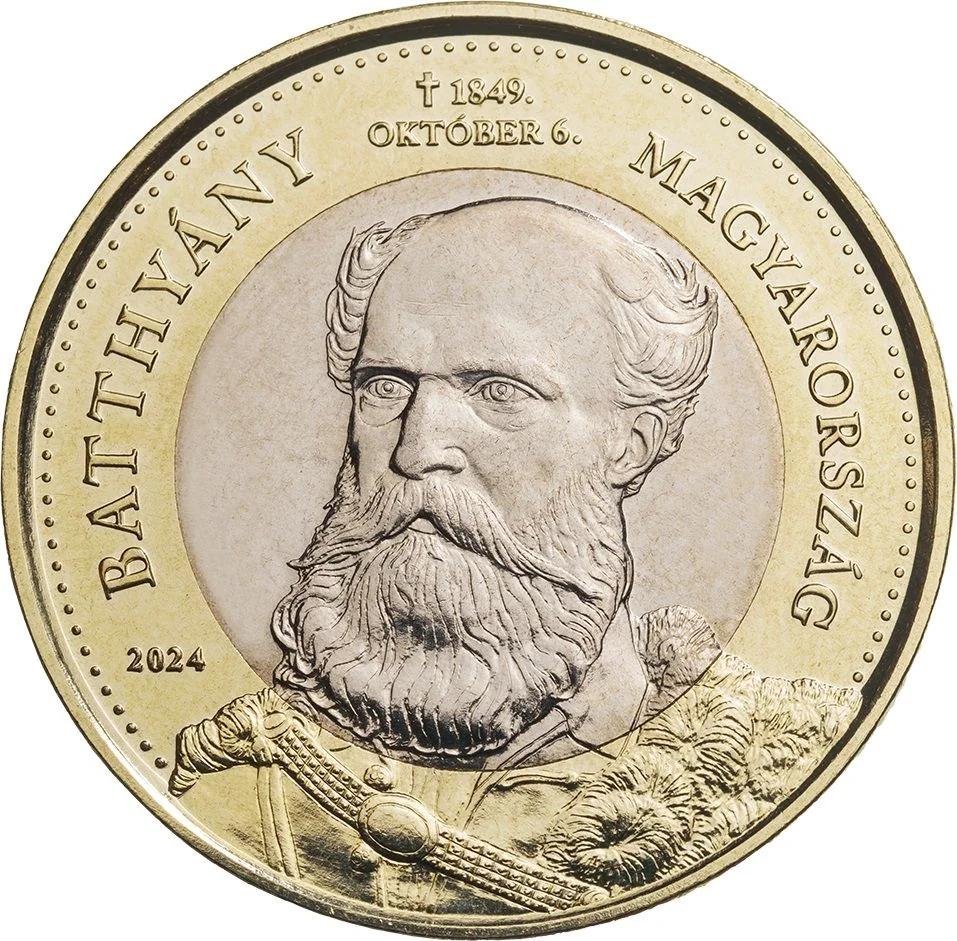
200 Forint (Executions of Lajos Batthyány and the 13 Martyrs of Arad) – Hungary
Circulating commemorative coins
Commemoration: 175th anniversary of the executions of Lajos Batthyány and the 13 Martyrs of Arad
Hungary
Context
Year: 2024
Issuer: Hungary 
Issuing organization: Magyar Pénzverő
Period:
(since 1989)
Currency:
(since 1946)
Total mintage: 16,000
Material
References
KM: #Click to copy to clipboard1080
Numista: #436429
Value
Exchange value: 200 HUF = $0.63
Inflation-adjusted value: 211.92 HUF
Obverse
Inscription:
BATTHYÁNY
MAGYARORSZÁG
1849. OKTÓBER 6.
2024
MAGYARORSZÁG
1849. OKTÓBER 6.
2024
Translation:
BATTHYÁNY
HUNGARY
OCTOBER 6, 1849.
2024
HUNGARY
OCTOBER 6, 1849.
2024
Script: Latin
Language: Hungarian
Designer: Zoltán Kovács
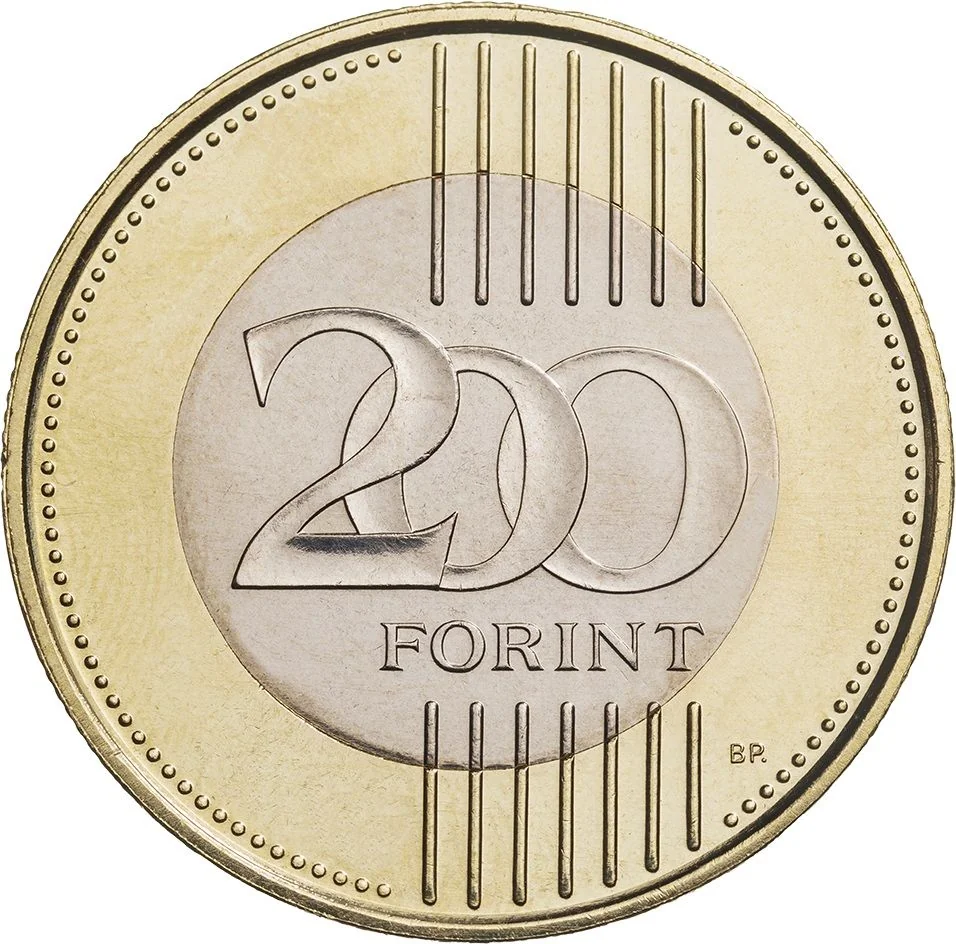
Reverse
Description:
Right of center vertical lines.
Inscription:
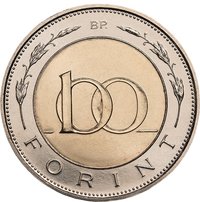
200
FORINT
BP.
FORINT
BP.
Script: Latin
Designer: István Kósa
Edge
Segmented reeding (72 pcs)
Categories
| Event> Death anniversary |
Mints
| Name | Mark |
|---|---|
| Hungarian mint | BP. |
Historical background
In 2024, Hungary's currency situation remains defined by the persistent weakness of the Hungarian Forint (HUF) against major currencies like the Euro and US Dollar. The primary pressure stems from a significant interest rate differential, as the National Bank of Hungary (MNB) has executed one of the EU's most aggressive monetary easing cycles. Starting in late 2023, the MNB rapidly cut its base rate from 13% to 7.75% by mid-2024 to stimulate a stagnant economy, despite inflation remaining above the central bank's target. This created a wide gap with higher interest rates in the Eurozone and US, reducing the yield appeal of forint-denominated assets and leading to sustained selling pressure.
This monetary policy stance exists against a backdrop of lingering structural concerns. Hungary's economy continues to grapple with high budget and current account deficits, which have eroded investor confidence. Furthermore, the prolonged delay in accessing billions in frozen EU recovery funds due to rule-of-law concerns has deprived the country of a key source of foreign currency and a credibility anchor. While the forint has experienced periods of stabilization, often following verbal interventions or hints of a slower pace of cuts from the MNB, these recoveries have proven fragile and short-lived.
Consequently, the forint's volatility remains a central challenge for policymakers and businesses. A weak currency complicates the MNB's inflation fight by making imports more expensive, yet a stronger forint could further hinder economic growth. The government and central bank are therefore walking a tightrope, attempting to balance growth stimulation with currency and price stability. The outlook for the remainder of 2024 hinges on the pace of further MNB rate cuts, the potential unlocking of EU funds, and global risk sentiment, with the currency likely to remain sensitive to both domestic policy signals and international market shifts.
This monetary policy stance exists against a backdrop of lingering structural concerns. Hungary's economy continues to grapple with high budget and current account deficits, which have eroded investor confidence. Furthermore, the prolonged delay in accessing billions in frozen EU recovery funds due to rule-of-law concerns has deprived the country of a key source of foreign currency and a credibility anchor. While the forint has experienced periods of stabilization, often following verbal interventions or hints of a slower pace of cuts from the MNB, these recoveries have proven fragile and short-lived.
Consequently, the forint's volatility remains a central challenge for policymakers and businesses. A weak currency complicates the MNB's inflation fight by making imports more expensive, yet a stronger forint could further hinder economic growth. The government and central bank are therefore walking a tightrope, attempting to balance growth stimulation with currency and price stability. The outlook for the remainder of 2024 hinges on the pace of further MNB rate cuts, the potential unlocking of EU funds, and global risk sentiment, with the currency likely to remain sensitive to both domestic policy signals and international market shifts.

🌱 Fairly Common