

1 angel – Isle of Man
Add to wishlist
Non-circulating coins
Commemoration: Archangel Michael
Context
Years: 1988–1993
Country: British Crown dependencies
Issuer: Isle of Man
Ruler: Elizabeth II
Currency:
(since 1984)
Material
References
KM: #
Numista: #434602
Value
Bullion value: $4776.68
Obverse
Description:
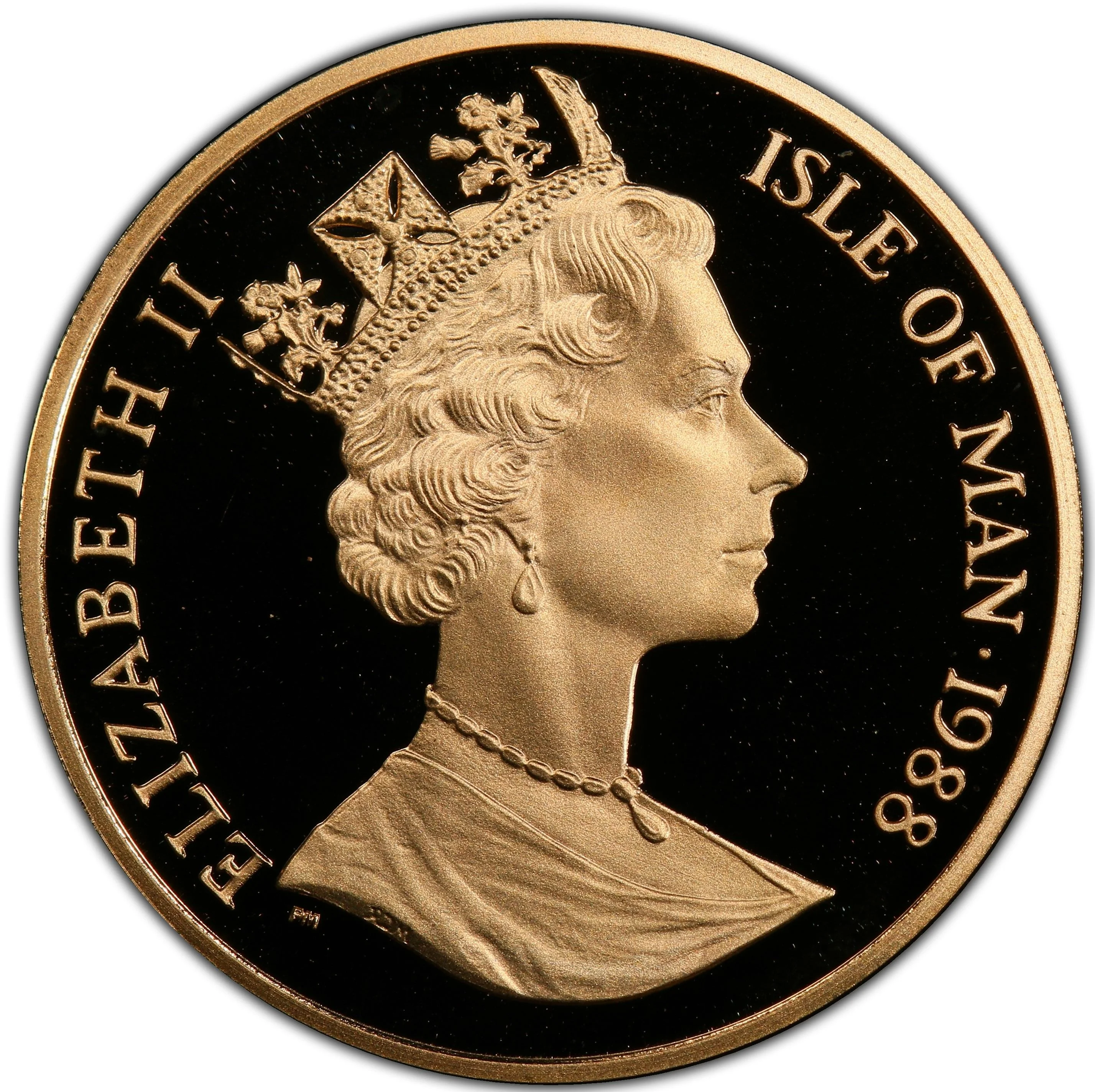
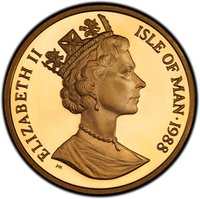
Queen Elizabeth II facing right, wearing the George IV State Diadem, surrounded by legend and date.
Inscription:
ELIZABETH II ISLE OF MAN 1987
RDM
PM
RDM
PM
Translation:
ELIZABETH II ISLE OF MAN 1987
RDM
PM
RDM
PM
Script: Latin
Language: English
Designer: Raphael David Maklouf
Reverse
Description:
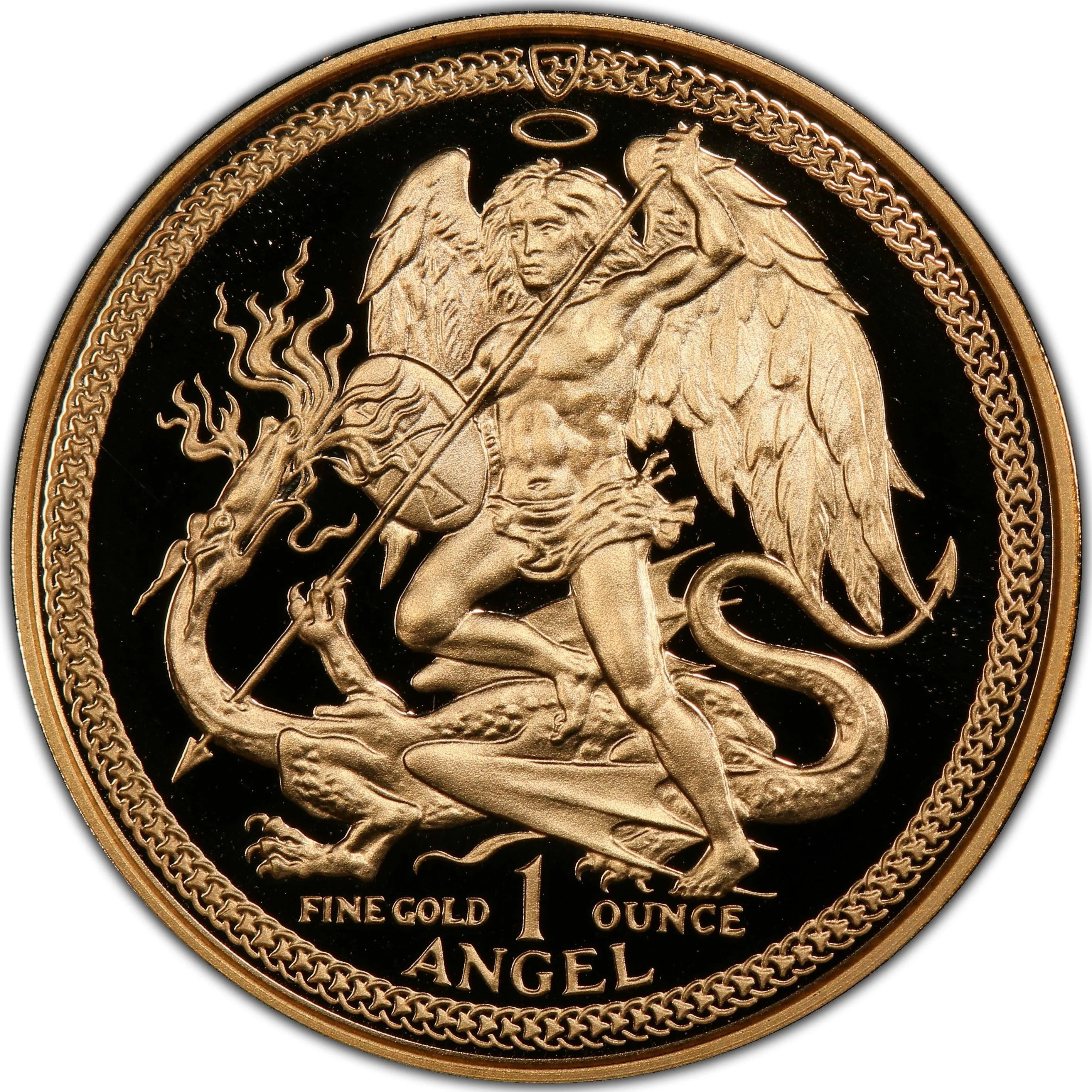
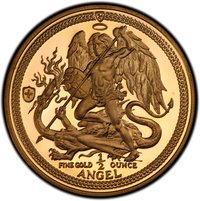
Archangel Michael slaying a left-facing dragon.
Inscription:
FINE GOLD 1 OUNCE
ANGEL
ANGEL
Script: Latin
Engraver: Leslie Lindsay
Edge
Reeded
Categories
| Mythology> Fantastic animal |
| Object> Armour |
| Object> Cold weapons |
Mints
| Name | Mark |
|---|---|
| Pobjoy Mint | (PM) |
Mintings
| Year | Mint Mark | Mintage | Quality | Collection |
|---|---|---|---|---|
| 1988 | PM | — | ||
| 1988 | PM | — | Proof | |
| 1989 | PM | — | ||
| 1989 | PM | — | Proof | |
| 1992 | PM | — | Proof | |
| 1992 | PM | — | ||
| 1993 | PM | — | ||
| 1993 | PM | — | Proof |
Historical background
In 1988, the Isle of Man's currency situation was characterized by a unique and stable dual-issuance system, deeply integrated with but distinct from the United Kingdom. The Island, a Crown Dependency with domestic self-government, issued its own sterling-denominated banknotes and coins (Manx pounds, £). These circulated alongside Bank of England notes and UK coinage, both being legal tender and accepted at parity. This arrangement provided a strong symbol of national identity while ensuring monetary stability through the fixed 1:1 link to Pound Sterling, a necessity for its open economy.
The year saw no major monetary crisis, but the context was shaped by the UK's financial deregulation of the 1980s. As an established offshore financial centre, the Isle of Man benefited from this climate, attracting banking and investment. The stability of its currency peg was fundamental to this success, providing confidence to international depositors and businesses. The Isle of Man Government's ability to issue its own currency (through the Isle of Man Treasury) was primarily a fiscal privilege, allowing it to retain seigniorage profits—the revenue gained from issuing coinage—which contributed to the public purse.
Furthermore, 1988 fell within a period of gradual modernization for Manx currency. The iconic Piedfort £1 coin, a double-thick commemorative piece, was issued that year, reflecting a focus on numismatic prestige. The overall system functioned smoothly, with the Isle of Man Bank (a joint venture of NatWest and the Manx government) and a handful of other commercial banks issuing their own distinctive notes. Thus, the 1988 currency scene was one of quiet confidence, balancing traditional autonomy with pragmatic reliance on the UK monetary system to underpin its growing financial services sector.
The year saw no major monetary crisis, but the context was shaped by the UK's financial deregulation of the 1980s. As an established offshore financial centre, the Isle of Man benefited from this climate, attracting banking and investment. The stability of its currency peg was fundamental to this success, providing confidence to international depositors and businesses. The Isle of Man Government's ability to issue its own currency (through the Isle of Man Treasury) was primarily a fiscal privilege, allowing it to retain seigniorage profits—the revenue gained from issuing coinage—which contributed to the public purse.
Furthermore, 1988 fell within a period of gradual modernization for Manx currency. The iconic Piedfort £1 coin, a double-thick commemorative piece, was issued that year, reflecting a focus on numismatic prestige. The overall system functioned smoothly, with the Isle of Man Bank (a joint venture of NatWest and the Manx government) and a handful of other commercial banks issuing their own distinctive notes. Thus, the 1988 currency scene was one of quiet confidence, balancing traditional autonomy with pragmatic reliance on the UK monetary system to underpin its growing financial services sector.

✨ Legendary