

1 franc – New Caledonia
Add to wishlist
France
Context
Year: 1971
Country: France
Issuer: New Caledonia
Period:
(since 1958)
Currency:
(since 1945)
Demonetization: 30 November 2022
Total mintage: 1,000,000
Material
References
KM: #
Numista: #4311
Value
Exchange value: 1 XPF
Inflation-adjusted value: 8.43 XPF
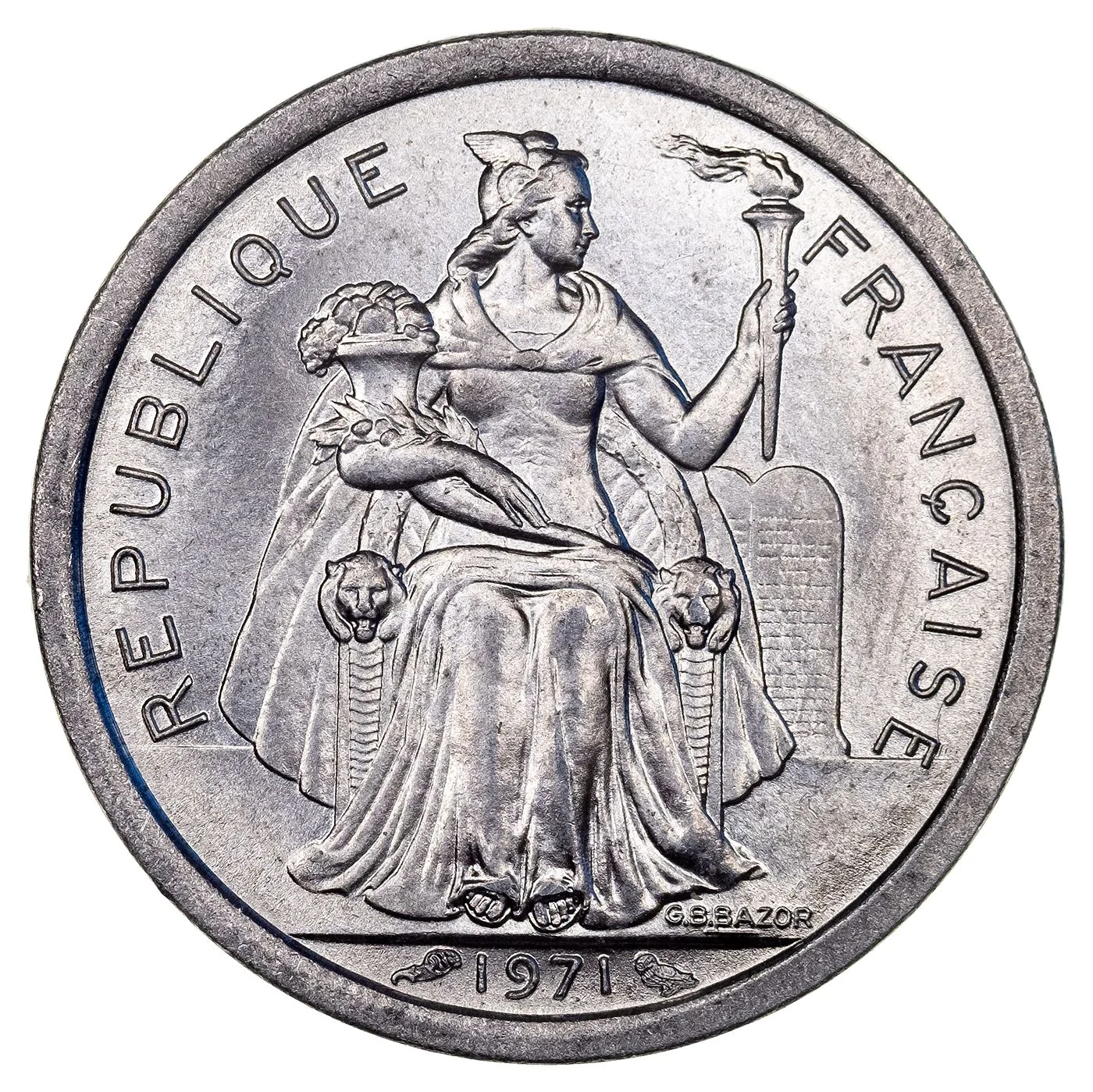
Obverse
Description:
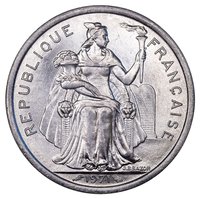
Liberty seated left on throne, holding a lit torch in her left hand and a cornucopia of fruit in her right arm.
Inscription:
REPUBLIQUE FRANÇAISE
G.B.BAZOR
1971
G.B.BAZOR
1971
Translation:
FRENCH REPUBLIC
G.B.BAZOR
1971
G.B.BAZOR
1971
Script: Latin
Language: French
Engraver: Lucien Georges Bazor
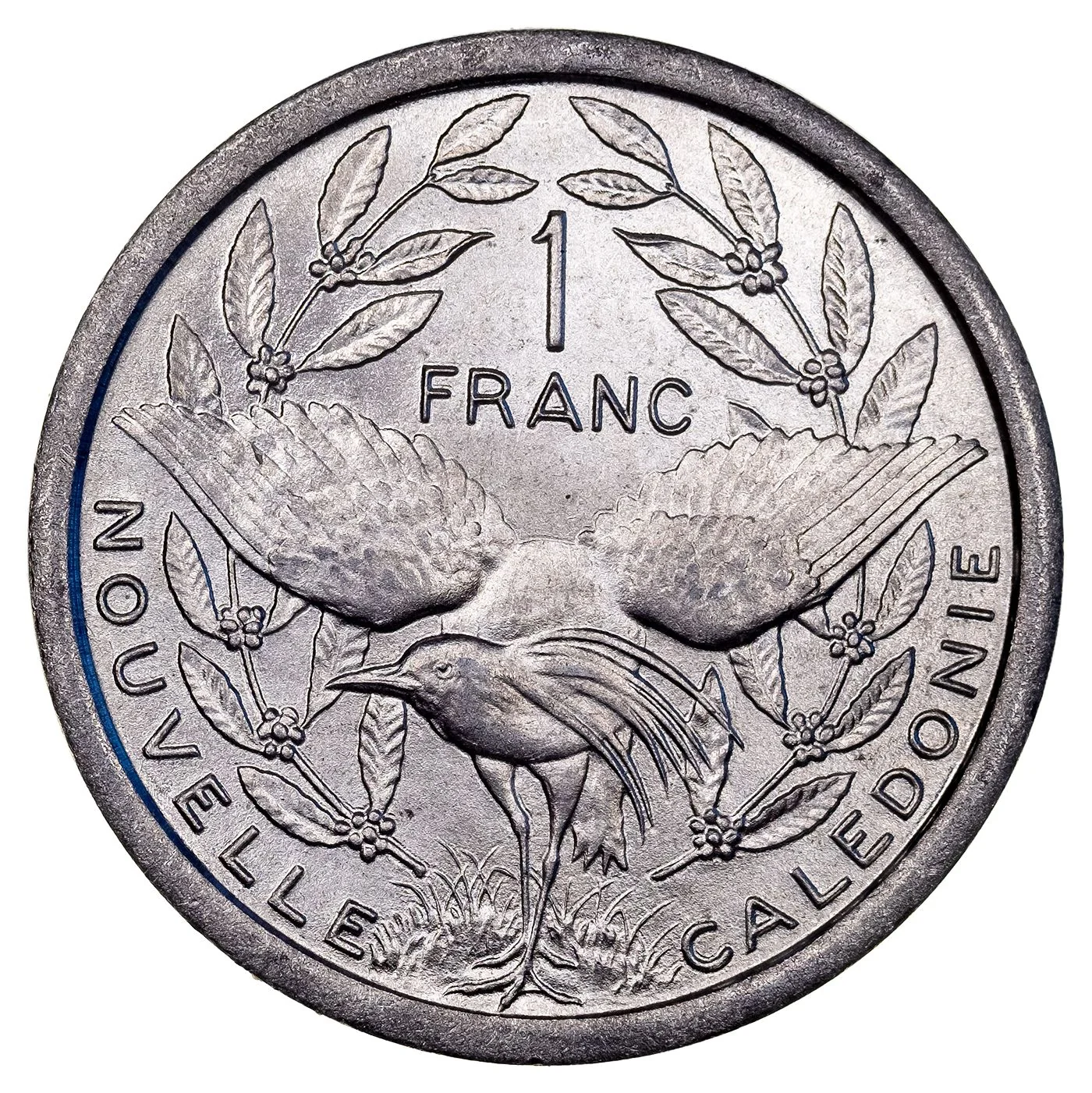
Reverse
Description:
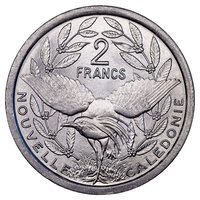
Kagu bird amid sprigs below value.
Inscription:
1
FRANC
NOUVELLE CALEDONIE
FRANC
NOUVELLE CALEDONIE
Translation:
1 Franc New Caledonia
Script: Latin
Language: French
Engraver: Lucien Georges Bazor
Edge
Plain
Mints
| Name | Mark |
|---|---|
| Monnaie de Paris | — |
Mintings
| Year | Mint Mark | Mintage | Quality | Collection |
|---|---|---|---|---|
| 1971 | — | 1,000,000 |
Historical background
In 1971, New Caledonia remained under French colonial administration, and its currency situation was a direct reflection of this political status. The sole legal tender was the CFP franc (Franc des Colonies Françaises du Pacifique), a currency created in 1945 and guaranteed by the French Treasury. This arrangement meant that New Caledonia had no independent monetary policy; the value of the CFP franc was peged to the French franc at a fixed rate, ensuring stability but also tying the territory's economic fortunes directly to those of metropolitan France.
The local economy was dominated by the nickel mining boom, which had accelerated dramatically in the late 1960s following major investments and the opening of large-scale processing facilities. This "nickel rush" created significant wealth and spurred immigration, but it also led to inflationary pressures and a growing economic disparity between the mining sector and other parts of the economy. The fixed CFP franc facilitated the smooth repatriation of profits to French and other foreign investors, but it also meant that local monetary authorities could not devalue the currency to manage economic overheating or boost other export sectors.
Thus, the currency situation in 1971 was one of imposed stability with underlying economic tensions. While the CFP franc provided a reliable medium of exchange and was instrumental in integrating the territory into the French financial system, it also symbolized the centralized colonial control from Paris. This monetary framework would later become a point of political contention as movements for greater autonomy and independence gained momentum in the following decades.
The local economy was dominated by the nickel mining boom, which had accelerated dramatically in the late 1960s following major investments and the opening of large-scale processing facilities. This "nickel rush" created significant wealth and spurred immigration, but it also led to inflationary pressures and a growing economic disparity between the mining sector and other parts of the economy. The fixed CFP franc facilitated the smooth repatriation of profits to French and other foreign investors, but it also meant that local monetary authorities could not devalue the currency to manage economic overheating or boost other export sectors.
Thus, the currency situation in 1971 was one of imposed stability with underlying economic tensions. While the CFP franc provided a reliable medium of exchange and was instrumental in integrating the territory into the French financial system, it also symbolized the centralized colonial control from Paris. This monetary framework would later become a point of political contention as movements for greater autonomy and independence gained momentum in the following decades.
🌱 Fairly Common