

5 francs – New Caledonia
Add to wishlist
France
Context
Year: 1952
Country: France
Issuer: New Caledonia
Period:
(1946—1958)
Currency:
(since 1945)
Demonetization: 30 November 2022
Total mintage: 4,000,000
Material
References
KM: #
Numista: #4308
Value
Exchange value: 5 XPF
Obverse
Description:
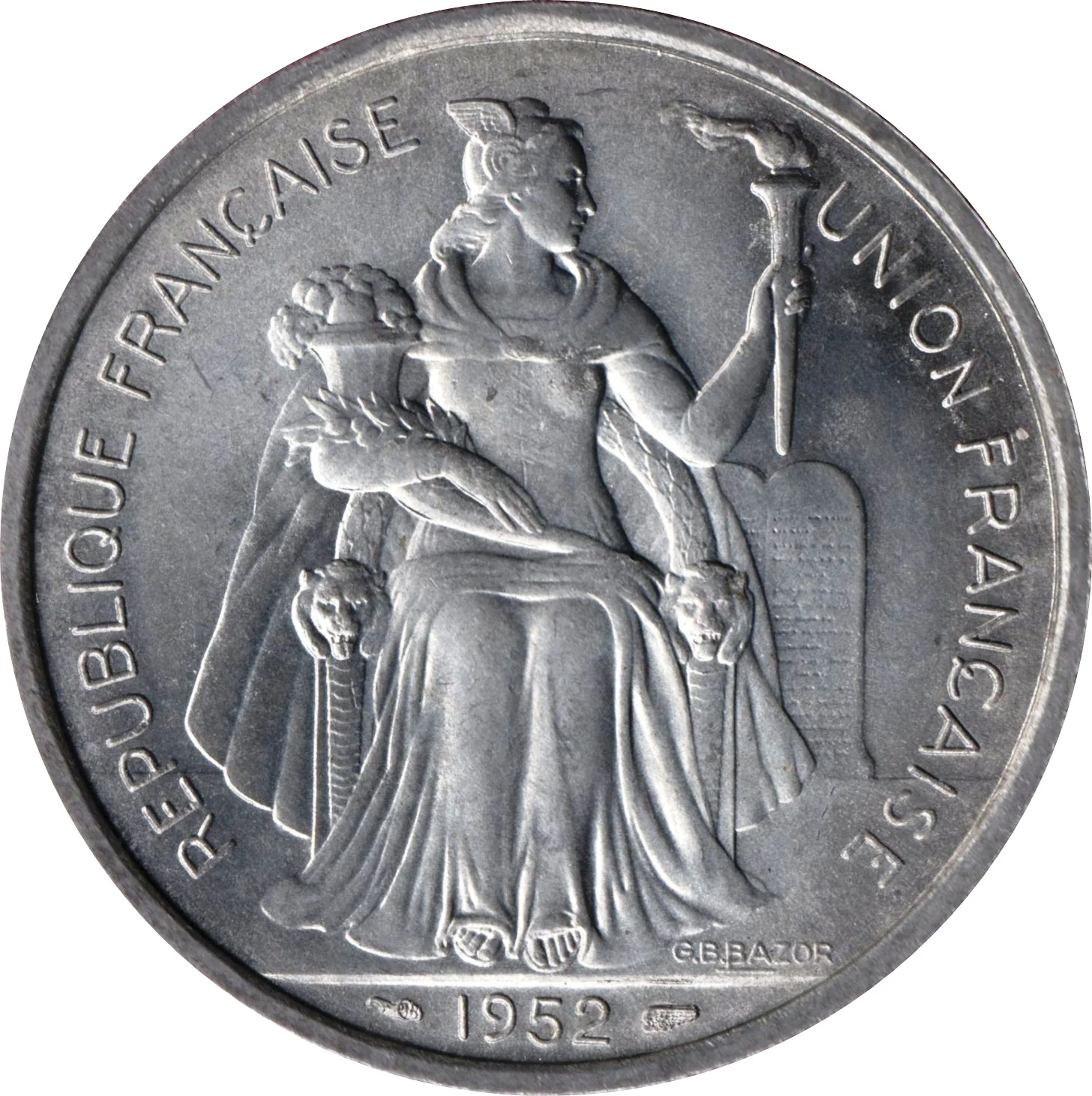
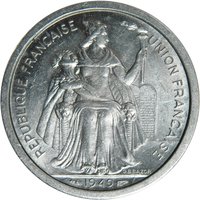
Liberty seated left on throne, holding a lit torch in her left hand and a cornucopia of fruit in her right arm.
Inscription:
REPUBLIQUE FRANÇAISE UNION FRANÇAISE
G.B.BAZOR
1952
G.B.BAZOR
1952
Translation:
FRENCH REPUBLIC FRENCH UNION
G.B.BAZOR
1952
G.B.BAZOR
1952
Script: Latin
Language: French
Engraver: Lucien Georges Bazor
Reverse
Description:
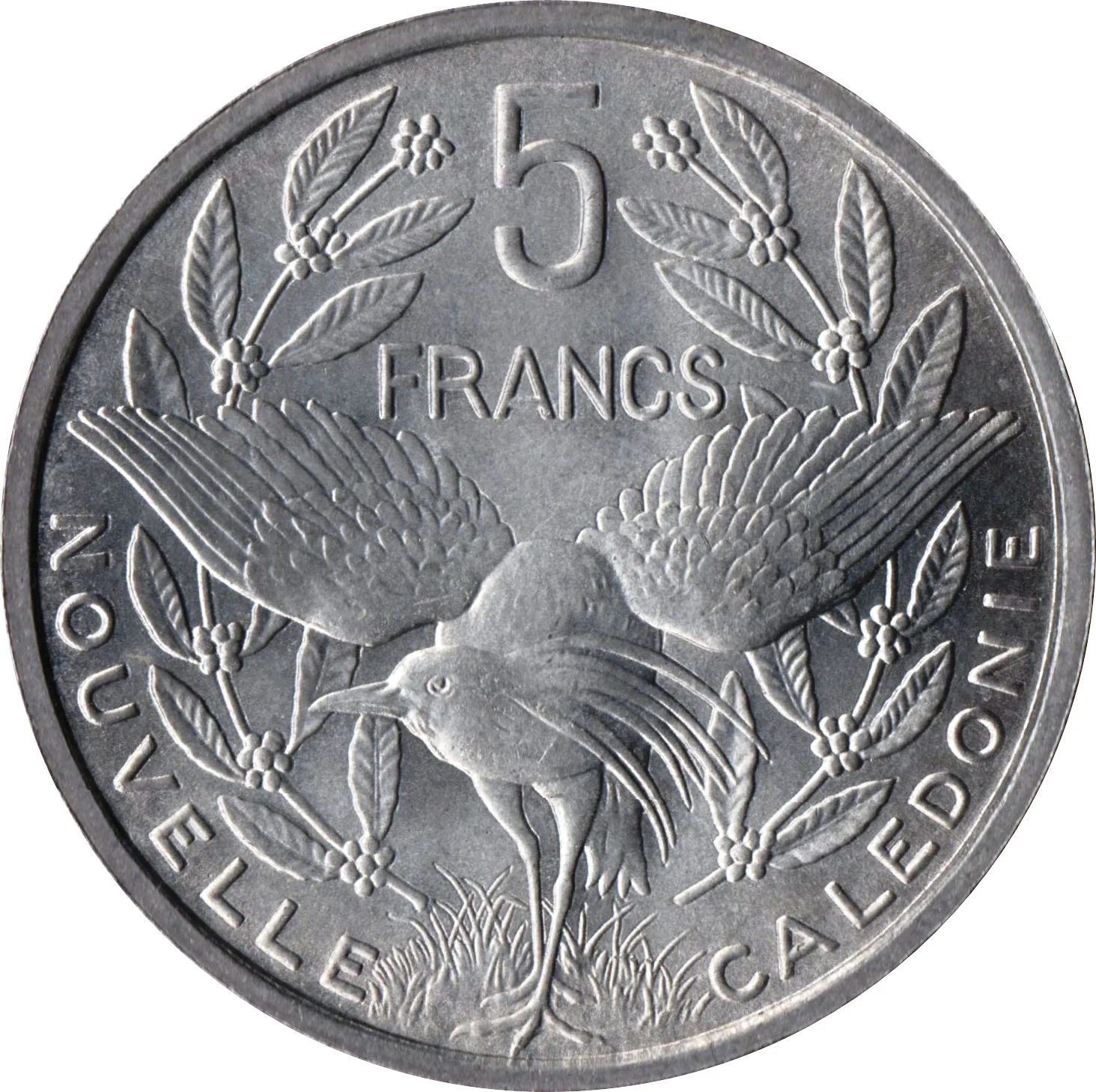
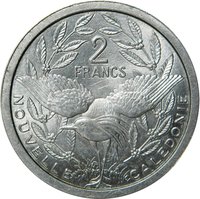
Kagu bird amid sprigs below value.
Inscription:
5
FRANCS
NOUVELLE CALEDONIE
FRANCS
NOUVELLE CALEDONIE
Translation:
5 Francs
New Caledonia
New Caledonia
Script: Latin
Language: French
Engraver: Lucien Georges Bazor
Edge
Plain
Mints
| Name | Mark |
|---|---|
| Monnaie de Paris | — |
Mintings
| Year | Mint Mark | Mintage | Quality | Collection |
|---|---|---|---|---|
| 1952 | — | 4,000,000 |
Historical background
In 1952, New Caledonia remained under the monetary system established by France for its overseas territories, the CFP franc (Colonies Françaises du Pacifique). Created in 1945, the CFP franc was pegged to the French franc at a fixed rate, a system designed to ensure monetary stability and economic integration with the metropole. This arrangement meant that New Caledonia had no independent monetary policy; its currency's value and supply were directly controlled by French authorities through the Institut d'Émission d'Outre-Mer, with the primary goal of facilitating trade and financial transfers within the Franc Zone.
The economic context of 1952 was dominated by New Caledonia's nickel mining boom. Post-war global demand for nickel, driven by reconstruction and the Korean War, brought significant investment and revenue to the territory. This boom underscored the dual nature of the currency situation: while the fixed peg provided stability for French companies and administrators, it also tied the local economy directly to inflation and policy decisions in Paris. The system was criticized by some local settlers and businessmen for potentially not reflecting the territory's unique economic cycle, which was heavily influenced by volatile commodity prices rather than the broader French economy.
Politically, 1952 fell within a period of consolidated colonial administration following World War II. There was no serious movement for a separate national currency, as debates for greater autonomy or independence would not gain significant momentum until later decades. The currency situation was thus a technical and accepted facet of colonial governance, ensuring that the profits from the nickel industry were easily convertible and repatriated. In essence, the CFP franc in 1952 served as a tangible instrument of French sovereignty, facilitating the economic exploitation of the territory's resources while providing a stable, if externally imposed, financial environment.
The economic context of 1952 was dominated by New Caledonia's nickel mining boom. Post-war global demand for nickel, driven by reconstruction and the Korean War, brought significant investment and revenue to the territory. This boom underscored the dual nature of the currency situation: while the fixed peg provided stability for French companies and administrators, it also tied the local economy directly to inflation and policy decisions in Paris. The system was criticized by some local settlers and businessmen for potentially not reflecting the territory's unique economic cycle, which was heavily influenced by volatile commodity prices rather than the broader French economy.
Politically, 1952 fell within a period of consolidated colonial administration following World War II. There was no serious movement for a separate national currency, as debates for greater autonomy or independence would not gain significant momentum until later decades. The currency situation was thus a technical and accepted facet of colonial governance, ensuring that the profits from the nickel industry were easily convertible and repatriated. In essence, the CFP franc in 1952 served as a tangible instrument of French sovereignty, facilitating the economic exploitation of the territory's resources while providing a stable, if externally imposed, financial environment.

🌱 Very Common