

1 angel – Isle of Man
Add to wishlist
Non-circulating coins
Commemoration: Archangel Michael
Context
Years: 2001–2007
Country: British Crown dependencies
Issuer: Isle of Man
Ruler: Elizabeth II
Currency:
(since 1984)
Material
Diameter: 32.69 mm
Weight: 31.1 g
Gold Weight:: 31.10 g
Shape: Round
Composition: 99.99% Gold
Standard: Silver ounce
Magnetic: No
Technique: Milled
Alignment: Medal alignment
flip
References
Numista: #429926
Value
Bullion value: $4841.37
Obverse
Description:
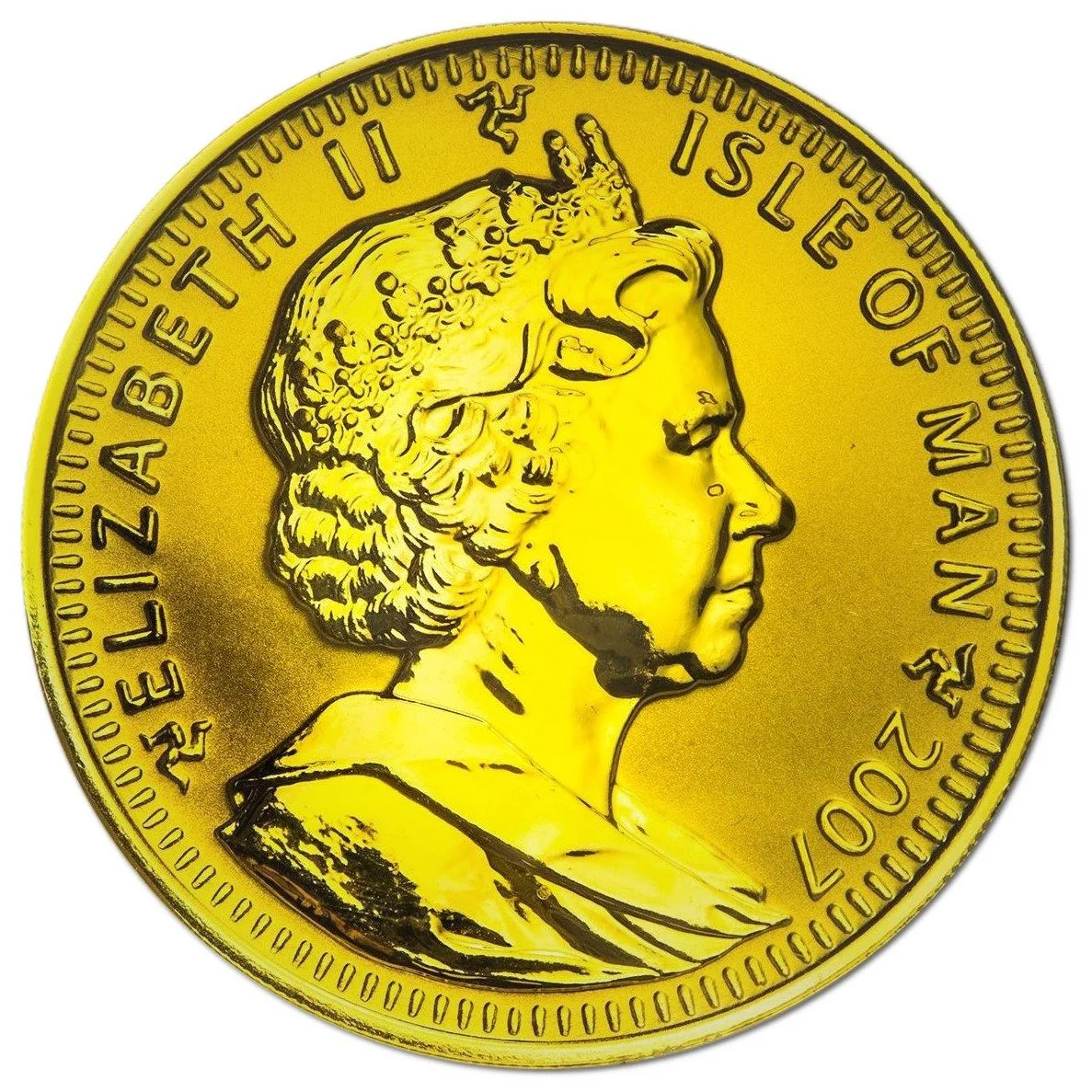
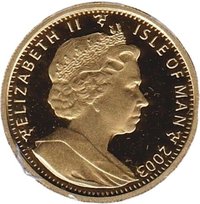
Queen Elizabeth II right-facing portrait in the "Girls of Great Britain and Ireland" Tiara, surrounded by legend and date.
Inscription:
ELIZABETH II ISLE OF MAN 2007
IRB
IRB
Translation:
ELIZABETH II ISLE OF MAN 2007
IRB
IRB
Script: Latin
Designer: Ian Rank-Broadley
Reverse
Description:
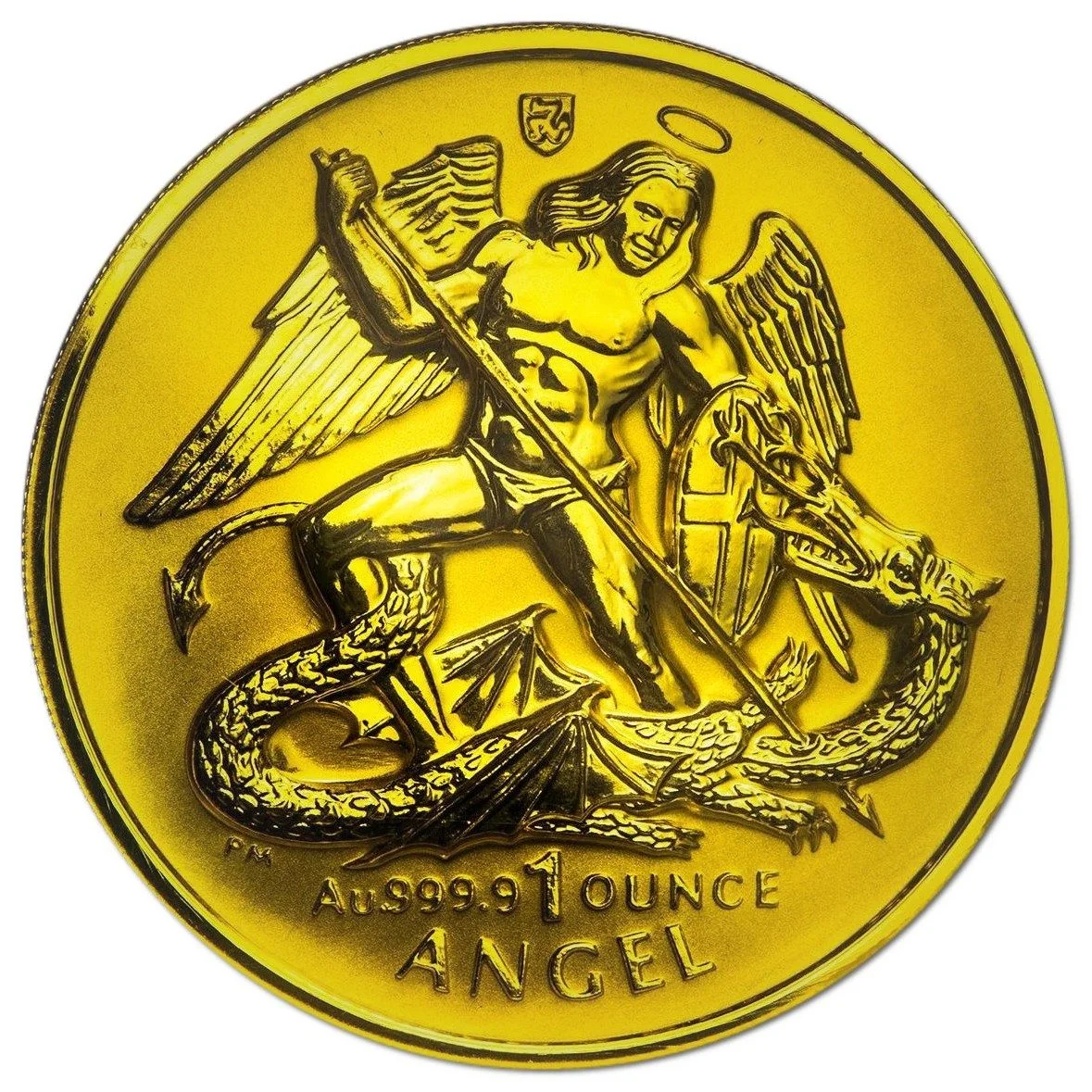
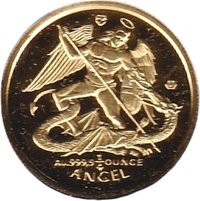
Archangel Michael slaying a dragon, facing right.
Inscription:
Au.999·9 1 OUNCE
ANGEL
ANGEL
Script: Latin
Edge
Reeded
Categories
| Mythology> Fantastic animal |
| Symbol> Triskelion |
Mints
| Name | Mark |
|---|---|
| Pobjoy Mint | (PM) |
Mintings
| Year | Mint Mark | Mintage | Quality | Collection |
|---|---|---|---|---|
| 2001 | PM | — | ||
| 2001 | PM | — | Proof | |
| 2002 | PM | — | ||
| 2002 | PM | — | Proof | |
| 2003 | PM | — | ||
| 2003 | PM | — | Proof | |
| 2004 | PM | — | ||
| 2004 | PM | — | Proof | |
| 2005 | PM | — | ||
| 2005 | PM | — | Proof | |
| 2006 | PM | — | ||
| 2006 | PM | — | Proof | |
| 2007 | PM | — | ||
| 2007 | PM | — | Proof |
Historical background
In 2001, the Isle of Man's currency situation was defined by its unique constitutional position as a British Crown Dependency, possessing its own parliament (Tynwald) and fiscal autonomy, while relying on the United Kingdom for defence and foreign affairs. The official currency was the Manx pound, which operated on a one-to-one parity with sterling. These notes and coins, issued by the Isle of Man Government Treasury (and by private banks until 1961), were legal tender only on the Island, though they were often accepted in the UK due to their fixed parity and similar appearance, albeit with some reluctance from unfamiliar retailers.
The year saw no major crisis or change, as the system functioned smoothly within its long-established framework. The Island's economy was stable, with a growing diversification into offshore banking, e-gaming, and insurance, all of which reinforced the need for a reliable and credible currency peg to sterling. This link provided economic stability, controlled inflation, and facilitated seamless trade with its largest economic partner, the UK. There was no serious political movement to deviate from the sterling link, which was viewed as a cornerstone of the Island's economic success.
However, the arrangement also meant the Isle of Man had no independent monetary policy; interest rates were effectively set by the Bank of England. In 2001, this was not a point of contention, as the UK's economic conditions broadly aligned with the Island's needs. The stability of the Manx currency was, therefore, a reflection of a deliberate political choice to prioritise security over sovereignty in monetary matters, a policy that continued to support the Island's reputation as a stable international finance centre.
The year saw no major crisis or change, as the system functioned smoothly within its long-established framework. The Island's economy was stable, with a growing diversification into offshore banking, e-gaming, and insurance, all of which reinforced the need for a reliable and credible currency peg to sterling. This link provided economic stability, controlled inflation, and facilitated seamless trade with its largest economic partner, the UK. There was no serious political movement to deviate from the sterling link, which was viewed as a cornerstone of the Island's economic success.
However, the arrangement also meant the Isle of Man had no independent monetary policy; interest rates were effectively set by the Bank of England. In 2001, this was not a point of contention, as the UK's economic conditions broadly aligned with the Island's needs. The stability of the Manx currency was, therefore, a reflection of a deliberate political choice to prioritise security over sovereignty in monetary matters, a policy that continued to support the Island's reputation as a stable international finance centre.

✨ Legendary