

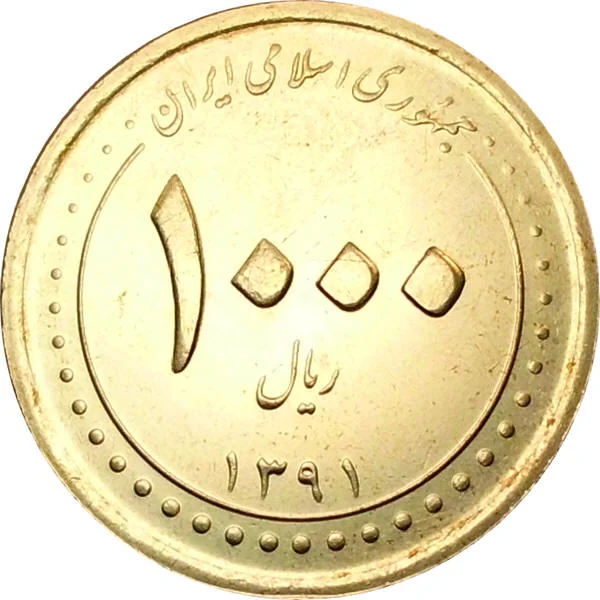
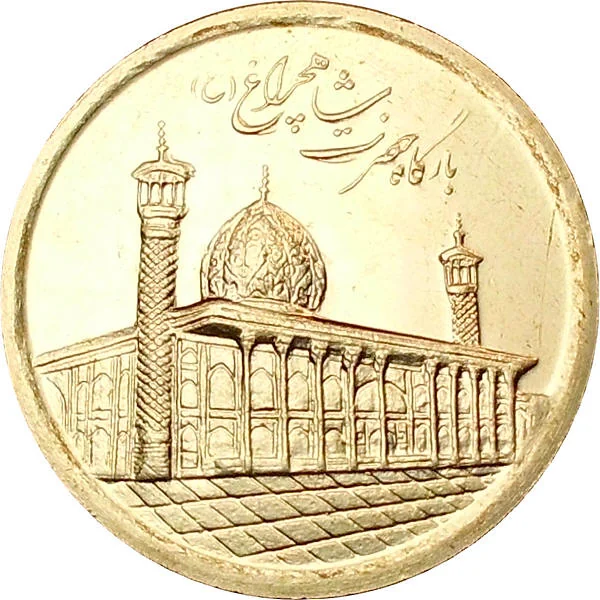
1000 rials – Iran
Add to wishlist
Iran
Context
Years: 2012–2017
Issuer: Iran
Period:
(since 1979)
Currency:
(since 1932)
Total mintage: 400,000,000
Material
Diameter: 23 mm
Weight: 4.6 g
Thickness: 1.61 mm
Shape: Round
Composition: Aluminium bronze
Magnetic: No
Technique: Milled
Alignment: Coin alignment
flip
References
KM: #
Numista: #42973
Value
Exchange value: 1000 IRR
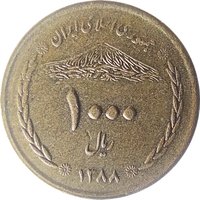
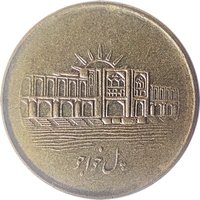
Obverse
Reverse
Edge
Reeded
Categories
| Building> Religious building |
Mintings
| Year | Mint Mark | Mintage | Quality | Collection |
|---|---|---|---|---|
| 2012 | — | 400,000,000 | ||
| 2013 | — | — | ||
| 2014 | — | — | ||
| 2015 | — | — | ||
| 2016 | — | — | ||
| 2017 | — | — |
Historical background
In 2012, Iran's currency, the rial, faced a catastrophic collapse, losing approximately 60% of its value against the U.S. dollar in a matter of weeks. This crisis was the direct result of a severe tightening of international sanctions, particularly those imposed by the United States and the European Union targeting Iran's central bank and oil exports. The sanctions effectively severed Iran from the global SWIFT banking network and placed an embargo on its crucial petroleum sales, strangling the country's primary source of foreign currency revenue and crippling its ability to engage in international trade.
Domestically, the situation was exacerbated by profound economic mismanagement and policy failures. The government of Mahmoud Ahmadinejad pursued a controversial subsidy reform and maintained an unsustainable official exchange rate, which created a vast gap with the black-market rate. This disparity fueled rampant speculation, capital flight, and a loss of public confidence. As dollars became scarce, a booming black market for foreign currency emerged, and the government's attempts to unify exchange rates and inject dollars into the market failed to stabilize the rial, instead leading to further panic and hyperinflation.
The consequences for ordinary Iranians were devastating. The plummeting currency caused import prices to skyrocket, triggering intense inflation for basic goods, including food and medicine. Savings were eroded, businesses were paralyzed, and widespread public protests erupted, marking one of the most severe economic shocks in the Islamic Republic's history. The 2012 currency crisis thus exposed the acute vulnerability of Iran's economy to external pressure and internal policy flaws, setting the stage for prolonged economic hardship and becoming a pivotal issue in the subsequent 2013 presidential election.
Domestically, the situation was exacerbated by profound economic mismanagement and policy failures. The government of Mahmoud Ahmadinejad pursued a controversial subsidy reform and maintained an unsustainable official exchange rate, which created a vast gap with the black-market rate. This disparity fueled rampant speculation, capital flight, and a loss of public confidence. As dollars became scarce, a booming black market for foreign currency emerged, and the government's attempts to unify exchange rates and inject dollars into the market failed to stabilize the rial, instead leading to further panic and hyperinflation.
The consequences for ordinary Iranians were devastating. The plummeting currency caused import prices to skyrocket, triggering intense inflation for basic goods, including food and medicine. Savings were eroded, businesses were paralyzed, and widespread public protests erupted, marking one of the most severe economic shocks in the Islamic Republic's history. The 2012 currency crisis thus exposed the acute vulnerability of Iran's economy to external pressure and internal policy flaws, setting the stage for prolonged economic hardship and becoming a pivotal issue in the subsequent 2013 presidential election.
🌱 Very Common