

3 Euro (Tolmin Peasant Revolt) – Slovenia
Circulating commemorative coins
Commemoration: 300th Anniversary of Tolmin Peasant Revolt
Slovenia
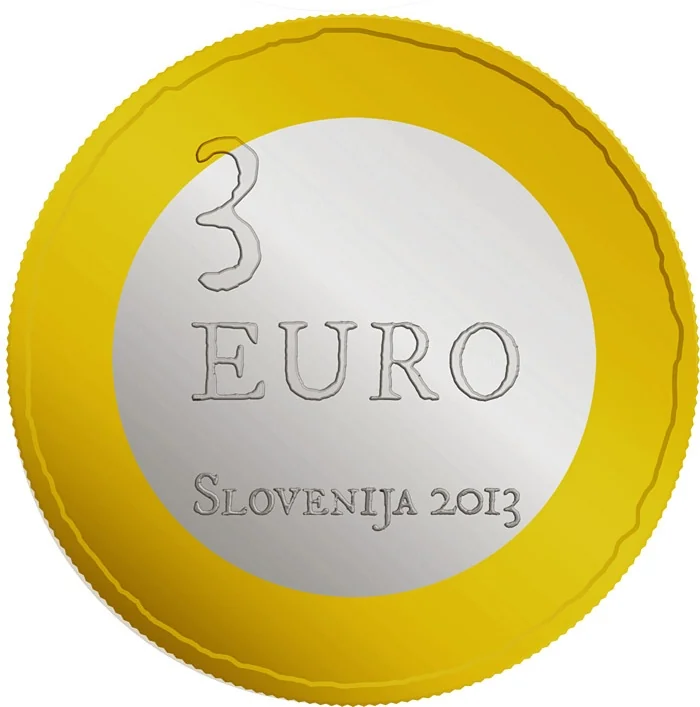
Obverse
Description:
"3 EURO", "SLOVENIJA", and the year of issue.
Inscription:
3
EURO
SLOVENIJA 2013
EURO
SLOVENIJA 2013
Translation:
EURO
SLOVENIA 2013
SLOVENIA 2013
Script: Latin
Engraver: Jernej Kejžar
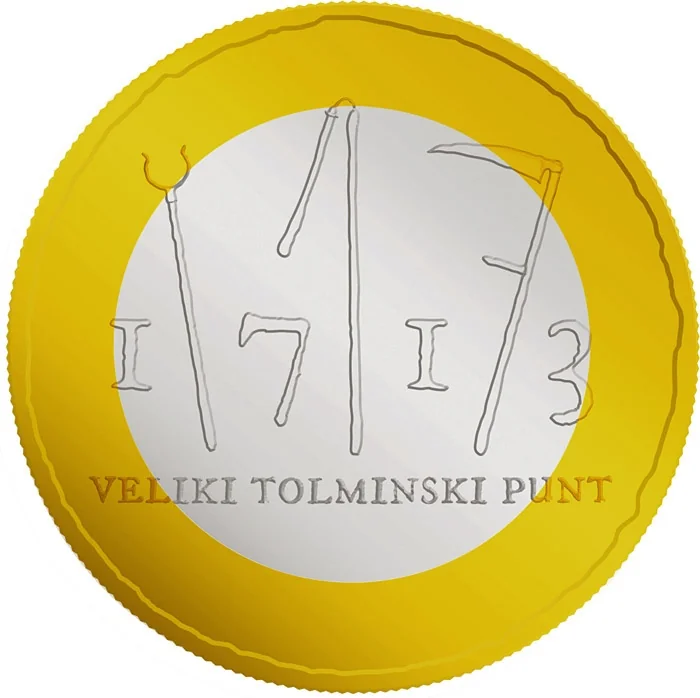
Reverse
Description:
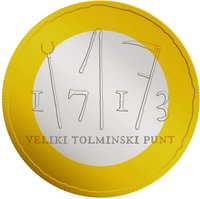
Tools and "1713" above "VELIKI TOLMINSKI PUNT."
Inscription:
1713
VELIKI TOLMINSKI PUNT
VELIKI TOLMINSKI PUNT
Script: Latin
Engraver: Jernej Kejžar
Edge
Reeded
Categories
| Event> Revolution |
Mints
| Name | Mark |
|---|---|
| Kremnica | — |
Mintings
| Year | Mint Mark | Mintage | Quality | Collection |
|---|---|---|---|---|
| 2013 | — | 178,000 | ||
| 2013 | — | 5,000 | Proof | |
| 2013 | — | 15,000 | BU |
Historical background
In 2013, Slovenia faced a severe banking and sovereign debt crisis that brought its currency situation into sharp focus. As a member of the Eurozone since 2007, the country did not have an independent national currency, having adopted the euro. This meant it lacked the traditional monetary policy tools, such as devaluation, to combat the economic downturn. The crisis was primarily domestic, stemming from a deep recession that exposed a fragile banking sector burdened by a massive volume of non-performing loans, largely the result of a corporate debt overhang from earlier years.
The currency situation was defined by Slovenia's position within the Eurozone. While the euro provided stability and prevented a speculative currency collapse, it also meant the country was entirely dependent on European institutions and had to pursue internal devaluation—a painful process of cutting wages and prices to regain competitiveness. There was significant market speculation in 2013 that Slovenia might require an international bailout from the European Stability Mechanism (ESM), following the paths of Ireland, Portugal, and Cyprus. This raised indirect questions about the euro's permanence for the country, though an exit ("Slovexit") was never an official policy.
Ultimately, the government, led by Prime Minister Alenka Bratušek, opted for a domestically funded bank recapitalization in December 2013, avoiding a full international bailout. This decisive action, coupled with the underlying stability provided by the euro, helped to restore some market confidence by year's end. The episode highlighted both the constraints and the protections of the common currency: it removed the option of independent monetary response but also provided a crucial anchor of stability during a period of intense domestic financial stress.
The currency situation was defined by Slovenia's position within the Eurozone. While the euro provided stability and prevented a speculative currency collapse, it also meant the country was entirely dependent on European institutions and had to pursue internal devaluation—a painful process of cutting wages and prices to regain competitiveness. There was significant market speculation in 2013 that Slovenia might require an international bailout from the European Stability Mechanism (ESM), following the paths of Ireland, Portugal, and Cyprus. This raised indirect questions about the euro's permanence for the country, though an exit ("Slovexit") was never an official policy.
Ultimately, the government, led by Prime Minister Alenka Bratušek, opted for a domestically funded bank recapitalization in December 2013, avoiding a full international bailout. This decisive action, coupled with the underlying stability provided by the euro, helped to restore some market confidence by year's end. The episode highlighted both the constraints and the protections of the common currency: it removed the option of independent monetary response but also provided a crucial anchor of stability during a period of intense domestic financial stress.
🌱 Common