

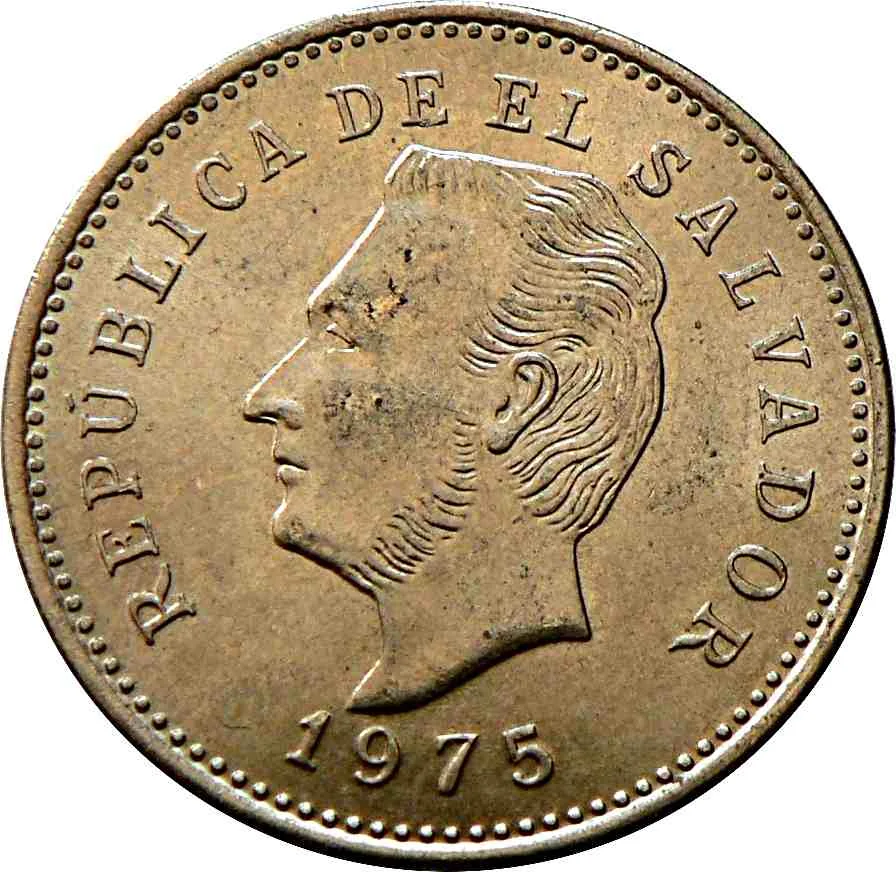
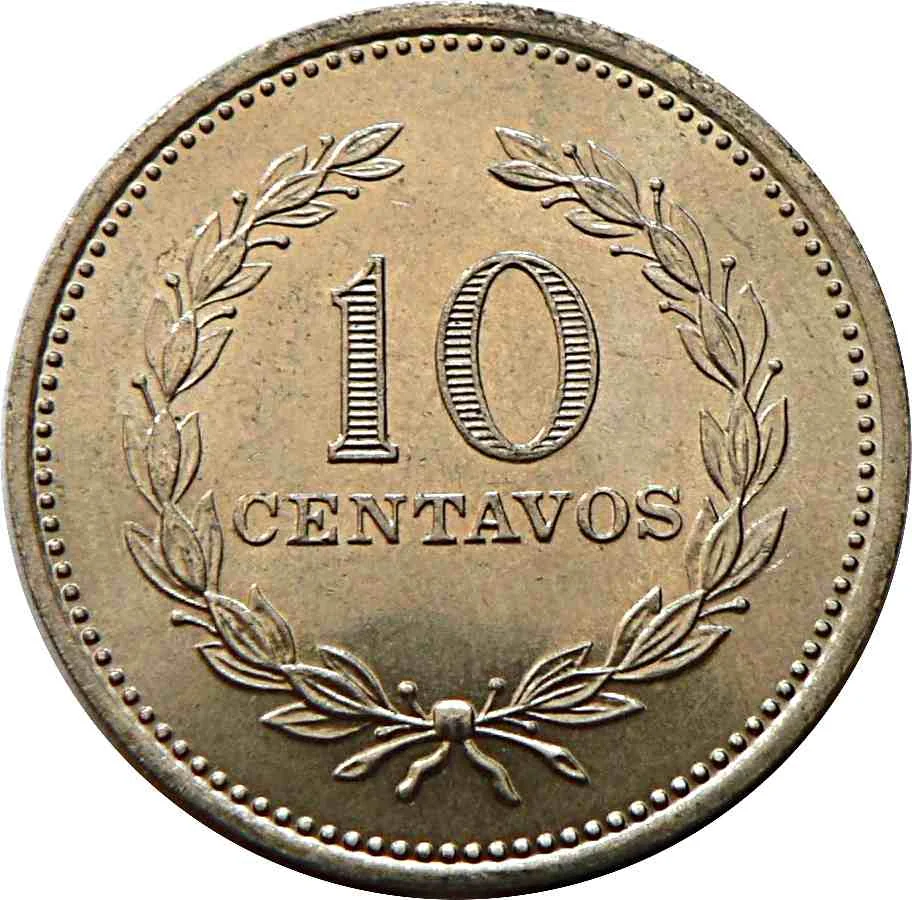
10 centavos – El Salvador
Add to wishlist
El Salvador
Context
Year: 1975
Issuer: El Salvador
Issuing organization: Central Reserve Bank of El Salvador
Period:
(since 1841)
Currency:
(since 1892)
Demonetization: 1 January 2001
Total mintage: 15,002,000
Material
References
KM: #
Numista: #10289
Value
Exchange value: 0.10 SVC
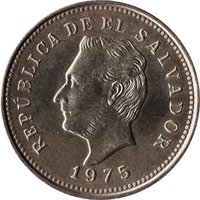
Obverse
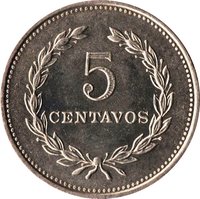
Reverse
Edge
Plain
Categories
| Person> Politician |
| Symbol> Wreath |
Mints
| Name | Mark |
|---|---|
| Royal Mint | — |
Mintings
| Year | Mint Mark | Mintage | Quality | Collection |
|---|---|---|---|---|
| 1975 | — | 15,000,000 | ||
| 1975 | — | 2,000 | Proof |
Historical background
In 1975, El Salvador operated under a fixed exchange rate system, with its currency, the colón, pegged to the United States dollar at a rate of 2.5 colones to one dollar. This peg, established in 1934, provided a long history of monetary stability and was a cornerstone of the country's economic policy, particularly under the governing military-civilian junta. The fixed rate facilitated predictable trade and investment, especially with its largest partner, the United States, and was managed by the Central Reserve Bank of El Salvador.
However, this surface-level stability masked underlying economic pressures and structural inequalities. The Salvadoran economy was heavily dependent on agricultural exports, primarily coffee, which accounted for nearly half of all export earnings. This made the country vulnerable to volatile global commodity prices. Furthermore, the economy was characterized by a profound concentration of wealth and land ownership, which fueled social discontent. While the currency itself was stable, the broader economic model was increasingly strained, limiting industrial diversification and contributing to widespread poverty.
The year 1975 fell within a critical decade of growing political turmoil and social unrest that would eventually escalate into civil war in 1979. Although the colón's peg to the dollar remained formally intact, the economic foundations supporting it were eroding. Inflationary pressures from the global oil crises of the 1970s, coupled with internal fiscal demands and the social costs of a deeply divided society, began to test the sustainability of the rigid exchange rate. The currency regime, therefore, existed in a state of precarious calm, insulated by policy but increasingly at odds with the country's severe political and economic fractures.
However, this surface-level stability masked underlying economic pressures and structural inequalities. The Salvadoran economy was heavily dependent on agricultural exports, primarily coffee, which accounted for nearly half of all export earnings. This made the country vulnerable to volatile global commodity prices. Furthermore, the economy was characterized by a profound concentration of wealth and land ownership, which fueled social discontent. While the currency itself was stable, the broader economic model was increasingly strained, limiting industrial diversification and contributing to widespread poverty.
The year 1975 fell within a critical decade of growing political turmoil and social unrest that would eventually escalate into civil war in 1979. Although the colón's peg to the dollar remained formally intact, the economic foundations supporting it were eroding. Inflationary pressures from the global oil crises of the 1970s, coupled with internal fiscal demands and the social costs of a deeply divided society, began to test the sustainability of the rigid exchange rate. The currency regime, therefore, existed in a state of precarious calm, insulated by policy but increasingly at odds with the country's severe political and economic fractures.
🌱 Common