

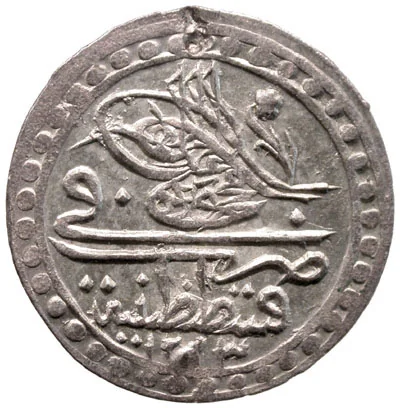
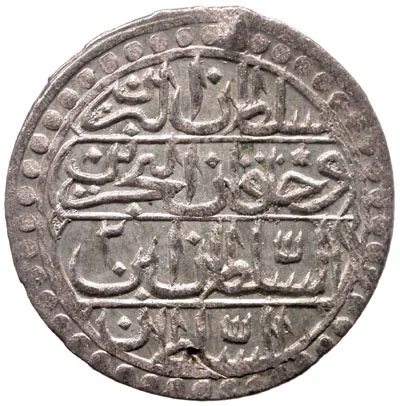
5 Para – Ottoman Empire
Turkey
Context
Year: 1809
Islamic (Hijri) Year: 1223
Country: Turkey 
Issuer: Ottoman Empire
Ruler: Mahmud II
Currency:
(1688—1844)
Demonetized: Yes
Material
References
KM: #Click to copy to clipboard552
Numista: #42824
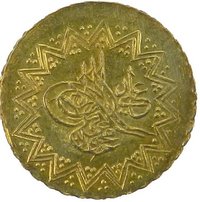
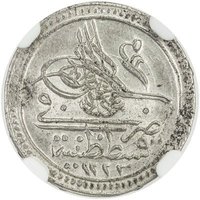
Obverse
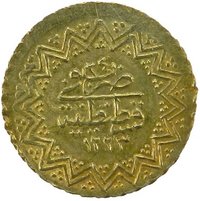
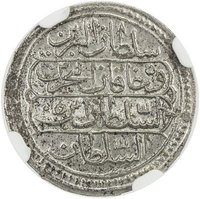
Reverse
Edge
Mints
| Name | Mark |
|---|---|
| Constantinople | — |
Mintings
| Year | Mint Mark | Mintage | Quality | Collection |
|---|---|---|---|---|
| — | — | — | ||
| 1809 | — | — |
Historical background
In 1809, the Ottoman Empire’s currency system was in a state of profound crisis, characterized by severe debasement and instability. The primary silver coin, the kuruş (piastre), had been repeatedly devalued by the state over the preceding decades to finance costly wars and cover budgetary shortfalls. This practice, coupled with widespread counterfeiting and the circulation of a bewildering variety of older, foreign, and provincial coins, led to a chaotic monetary environment where the intrinsic metal value of coins often exceeded their nominal face value, destroying public trust.
The immediate backdrop to this situation was the empire's military and political fragility. Following the Napoleonic Wars' upheavals in the region and recent conflicts with Russia, the Ottoman treasury was depleted. The 1808 Edict of Alliance (Sened-i İttifak), signed just the year before, had attempted to centralize power away from rebellious provincial notables (ayan), but fiscal control remained weak. The state’s inability to collect taxes efficiently and its reliance on short-term expedients like currency manipulation created a vicious cycle of inflation and fiscal distress.
Consequently, domestic and international trade suffered from the lack of a reliable medium of exchange. Merchants had to navigate complex and fluctuating exchange rates between various coinages, while the government struggled to pay its troops and officials with a currency that was constantly losing purchasing power. The year 1809 thus represents a point of acute strain within a longer period of Ottoman monetary decline, highlighting the deep interconnection between the empire’s fiscal weakness, administrative challenges, and its diminishing economic sovereignty in the face of European financial power.
The immediate backdrop to this situation was the empire's military and political fragility. Following the Napoleonic Wars' upheavals in the region and recent conflicts with Russia, the Ottoman treasury was depleted. The 1808 Edict of Alliance (Sened-i İttifak), signed just the year before, had attempted to centralize power away from rebellious provincial notables (ayan), but fiscal control remained weak. The state’s inability to collect taxes efficiently and its reliance on short-term expedients like currency manipulation created a vicious cycle of inflation and fiscal distress.
Consequently, domestic and international trade suffered from the lack of a reliable medium of exchange. Merchants had to navigate complex and fluctuating exchange rates between various coinages, while the government struggled to pay its troops and officials with a currency that was constantly losing purchasing power. The year 1809 thus represents a point of acute strain within a longer period of Ottoman monetary decline, highlighting the deep interconnection between the empire’s fiscal weakness, administrative challenges, and its diminishing economic sovereignty in the face of European financial power.
💎 Extremely Rare