

50 Krónur (Sovereignty) – Iceland
Circulating commemorative coins
Commemoration: 50th Anniversary - Sovereignty
Iceland
Context
Material
References
KM: #Click to copy to clipboard16
Numista: #14572
Value
Exchange value: 50 ISJ
Inflation-adjusted value: 110676.55 ISJ
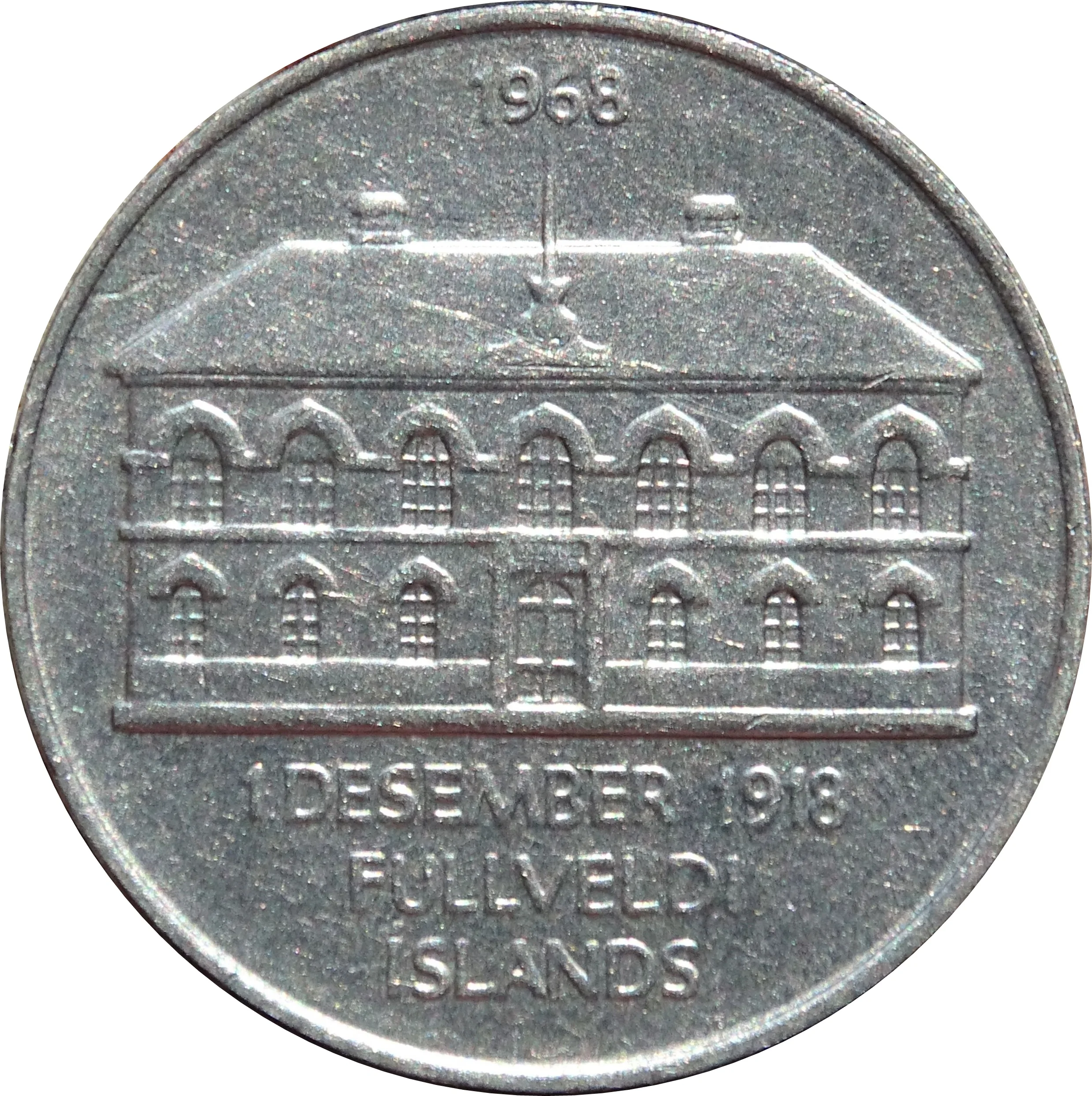
Obverse
Description:
Iceland’s parliament building in Reykjavík.
Inscription:
1968
1 DESEMBER 1918
FULLVELDI
ÍSLANDS
1 DESEMBER 1918
FULLVELDI
ÍSLANDS
Translation:
1918 December 1
SOVEREIGNTY
ICELAND
SOVEREIGNTY
ICELAND
Script: Latin
Language: Icelandic
Engraver: Magnusson Sigurdsson
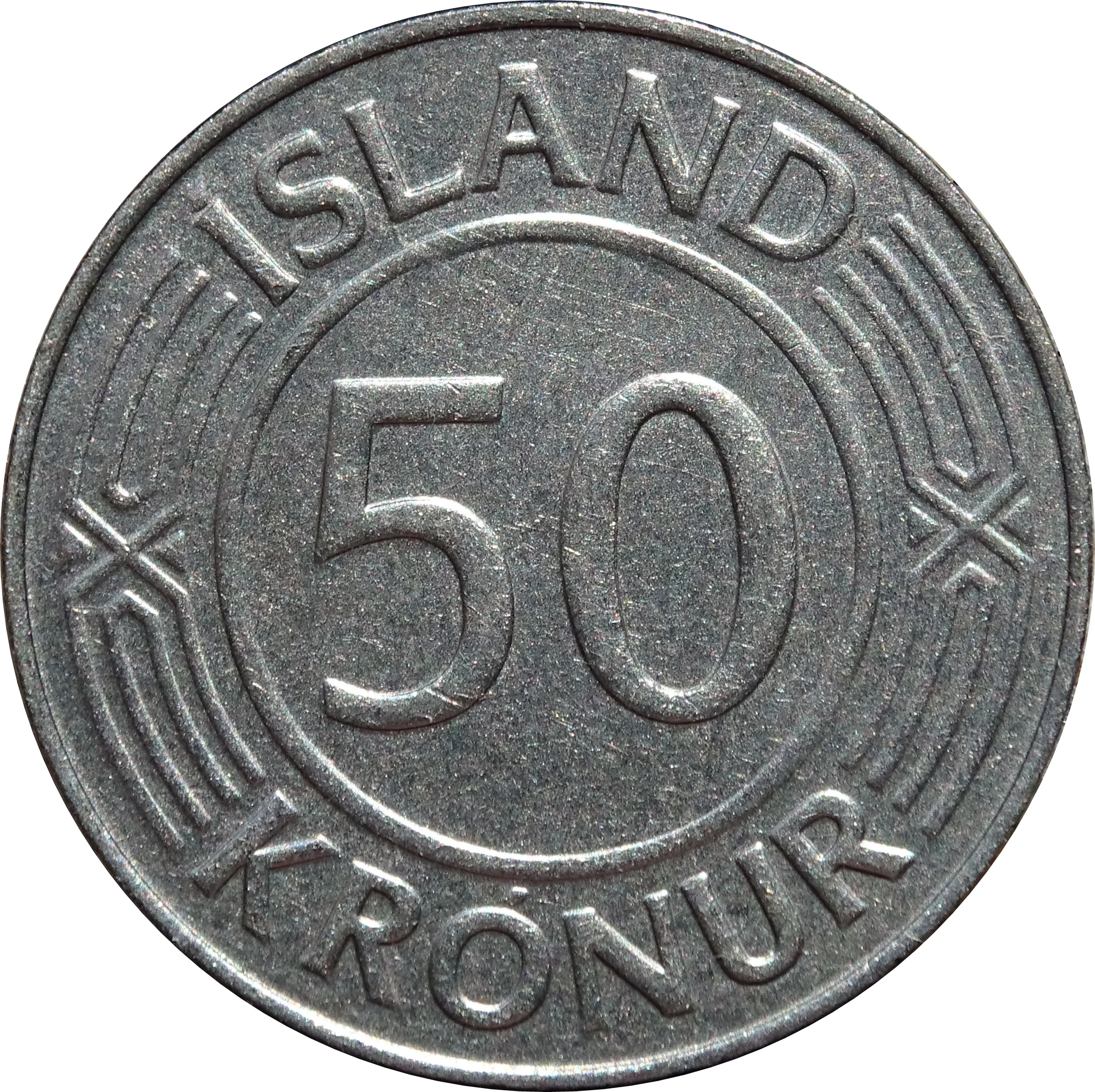
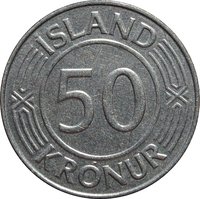
Reverse
Edge
Plain
Categories
| Building> Governmental building |
| Event> Independence |
Mints
| Name | Mark |
|---|---|
| Royal Mint (Tower Hill) | — |
Mintings
| Year | Mint Mark | Mintage | Quality | Collection |
|---|---|---|---|---|
| 1968 | — | 100,000 |
Historical background
In 1968, Iceland was in the midst of a prolonged period of economic transition and instability, heavily reliant on the volatile fishing industry. The national currency, the króna, was strictly controlled under a fixed exchange rate system managed by the Central Bank of Iceland. This regime, characterized by complex multiple exchange rates and stringent capital controls, was designed to protect foreign reserves, manage the chronic current account deficit, and shield domestic industries. However, it also created distortions, discouraged foreign investment, and reflected underlying inflationary pressures driven by strong domestic demand and indexation of wages.
The year itself was not marked by a single dramatic currency crisis but was a point within a longer trajectory of gradual devaluation. The fixed parity of the króna had become increasingly overvalued, putting pressure on export competitiveness—a critical issue for an economy where fish exports were the primary source of foreign earnings. The government and central bank were engaged in a continuous balancing act, using the controls to defend the currency's official value while facing the reality that periodic devaluations were necessary to correct trade imbalances and replenish reserves.
This controlled yet fragile environment set the stage for the more significant monetary reforms that would follow in the coming decade. The pressures evident in 1968 ultimately contributed to a major devaluation in November of the same year, a pattern that repeated until the fixed exchange rate system was abandoned altogether in the early 1970s. Thus, 1968 represents a late chapter in Iceland's era of strict economic isolation and control, preceding the turbulent shift towards more market-oriented policies and the frequent devaluations that would define the 1970s and 1980s.
The year itself was not marked by a single dramatic currency crisis but was a point within a longer trajectory of gradual devaluation. The fixed parity of the króna had become increasingly overvalued, putting pressure on export competitiveness—a critical issue for an economy where fish exports were the primary source of foreign earnings. The government and central bank were engaged in a continuous balancing act, using the controls to defend the currency's official value while facing the reality that periodic devaluations were necessary to correct trade imbalances and replenish reserves.
This controlled yet fragile environment set the stage for the more significant monetary reforms that would follow in the coming decade. The pressures evident in 1968 ultimately contributed to a major devaluation in November of the same year, a pattern that repeated until the fixed exchange rate system was abandoned altogether in the early 1970s. Thus, 1968 represents a late chapter in Iceland's era of strict economic isolation and control, preceding the turbulent shift towards more market-oriented policies and the frequent devaluations that would define the 1970s and 1980s.
🌱 Fairly Common