

1 Melgarejo – Bolivia
Circulating commemorative coins
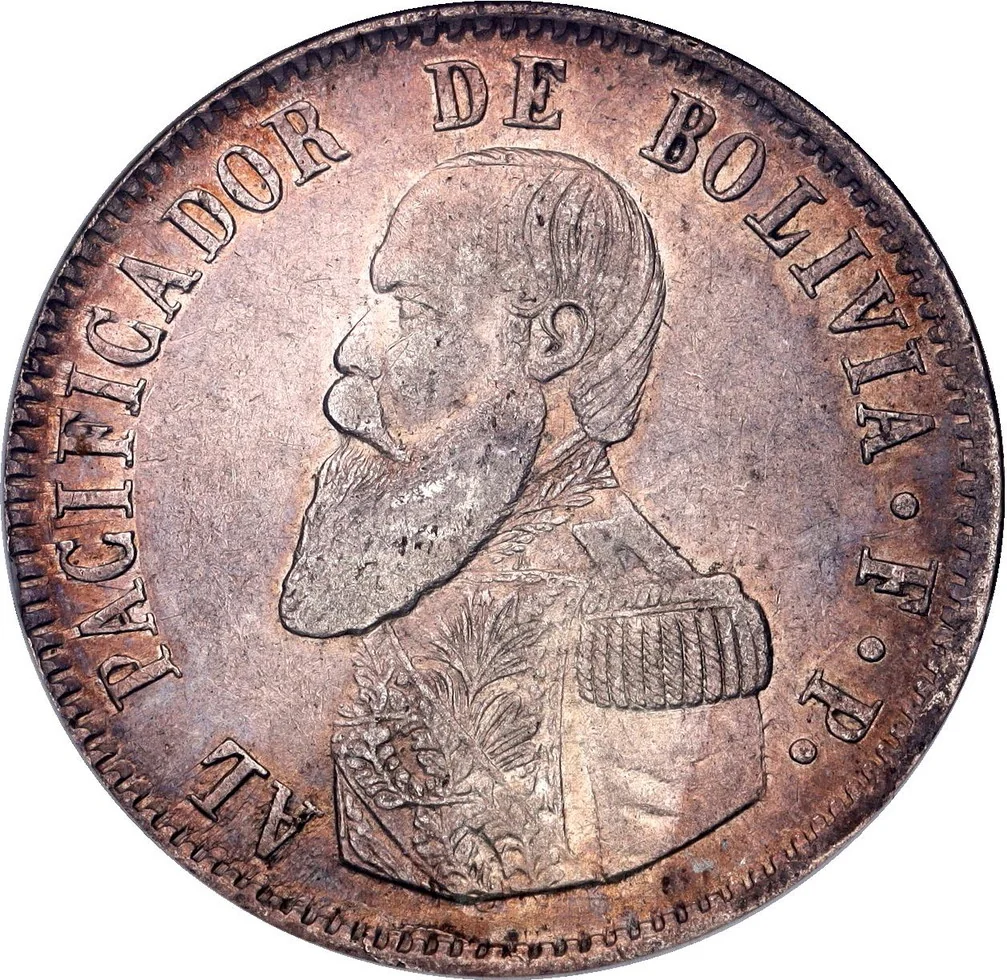
Commemoration: TO THE PEACEMAKER OF BOLIVIA
Bolivia
Context

Material
References
KM: #Click to copy to clipboard146
Numista: #42613
Value
Bullion value: $37.82
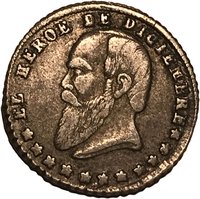
Obverse
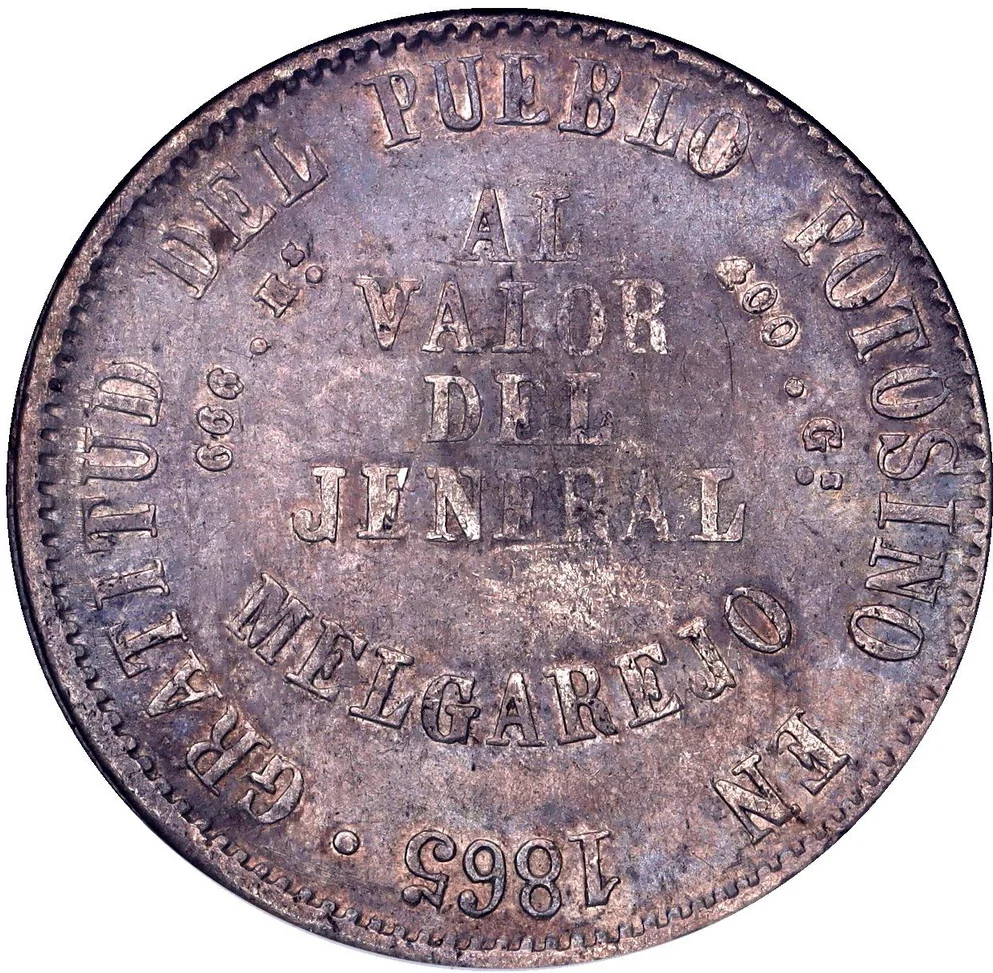
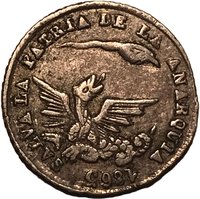
Reverse
Description:
Legend
Inscription:
GRATITUD DEL PUEBLO POTOSINO EN 1865
666.Ms 400.Gs
AL
VALOR
DEL
JENERAL
MELGAREJO
666.Ms 400.Gs
AL
VALOR
DEL
JENERAL
MELGAREJO
Script: Latin
Edge
Categories
| Person> Military leader |
| Person> Politician |
| Mustache/Beard |
Mints
| Name | Mark |
|---|---|
| Potosi | — |
Mintings
| Year | Mint Mark | Mintage | Quality | Collection |
|---|---|---|---|---|
| 1865 | FP | — |
Historical background
In 1865, Bolivia’s currency situation was characterized by profound instability and fragmentation, a legacy of its post-independence economic struggles and the regionalism that defined the early republic. Following the collapse of the Spanish colonial monetary system, the country lacked a unified national currency. Instead, a chaotic mix of foreign and obsolete coins circulated, primarily Peruvian and Bolivian silver pesos, Chilean coinage, and even older Spanish colonial pieces. This monetary anarchy was exacerbated by the government's chronic fiscal deficits, often financed by debasing coinage or borrowing at exorbitant rates, which eroded public trust in the medium of exchange.
The period was marked by the government's attempts to assert control, most notably through the Monetary Law of 1863. This law aimed to decimalize the currency and formally establish the Boliviano (divided into 100 centavos) as the national unit, replacing the old scudo system. However, in 1865, this reform was still in its fraught early stages of implementation. The state's limited minting capacity and widespread counterfeiting meant that the new official coins failed to displace the entrenched variety of foreign and suspect currencies in everyday use. The economic reality was one of multiple valuation systems, where the worth of a coin depended heavily on its metal content, origin, and local acceptance, hindering domestic trade and integration.
This monetary disarray occurred against a backdrop of political turbulence and reliance on silver exports. Bolivia's economy was overwhelmingly dependent on silver mining from centers like Potosí, but the sector was recovering from a long decline. International trade, crucial for government revenue, was complicated by the lack of a reliable standard, as merchants and mining barons often preferred stable foreign currencies. Consequently, in 1865, Bolivia’s currency system was not yet a tool of national economic policy but a reflection of its fragility—a patchwork of metal that symbolized the broader challenges of state-building and creating a unified national market.
The period was marked by the government's attempts to assert control, most notably through the Monetary Law of 1863. This law aimed to decimalize the currency and formally establish the Boliviano (divided into 100 centavos) as the national unit, replacing the old scudo system. However, in 1865, this reform was still in its fraught early stages of implementation. The state's limited minting capacity and widespread counterfeiting meant that the new official coins failed to displace the entrenched variety of foreign and suspect currencies in everyday use. The economic reality was one of multiple valuation systems, where the worth of a coin depended heavily on its metal content, origin, and local acceptance, hindering domestic trade and integration.
This monetary disarray occurred against a backdrop of political turbulence and reliance on silver exports. Bolivia's economy was overwhelmingly dependent on silver mining from centers like Potosí, but the sector was recovering from a long decline. International trade, crucial for government revenue, was complicated by the lack of a reliable standard, as merchants and mining barons often preferred stable foreign currencies. Consequently, in 1865, Bolivia’s currency system was not yet a tool of national economic policy but a reflection of its fragility—a patchwork of metal that symbolized the broader challenges of state-building and creating a unified national market.

⭐ Somewhat Rare