

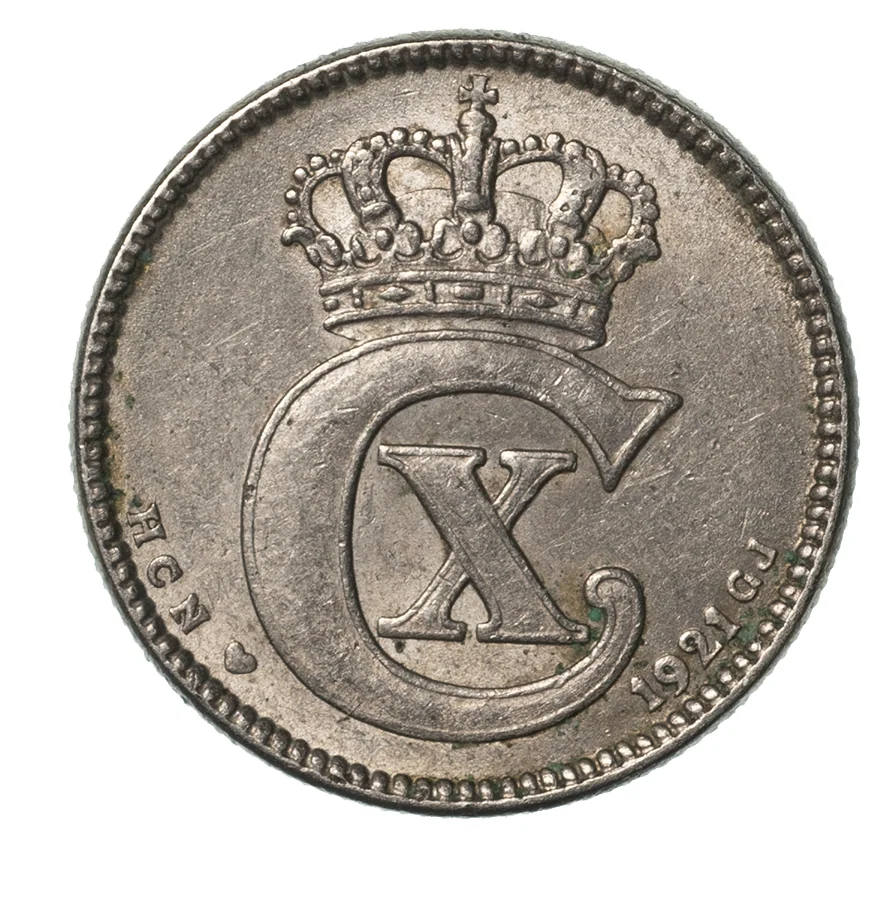
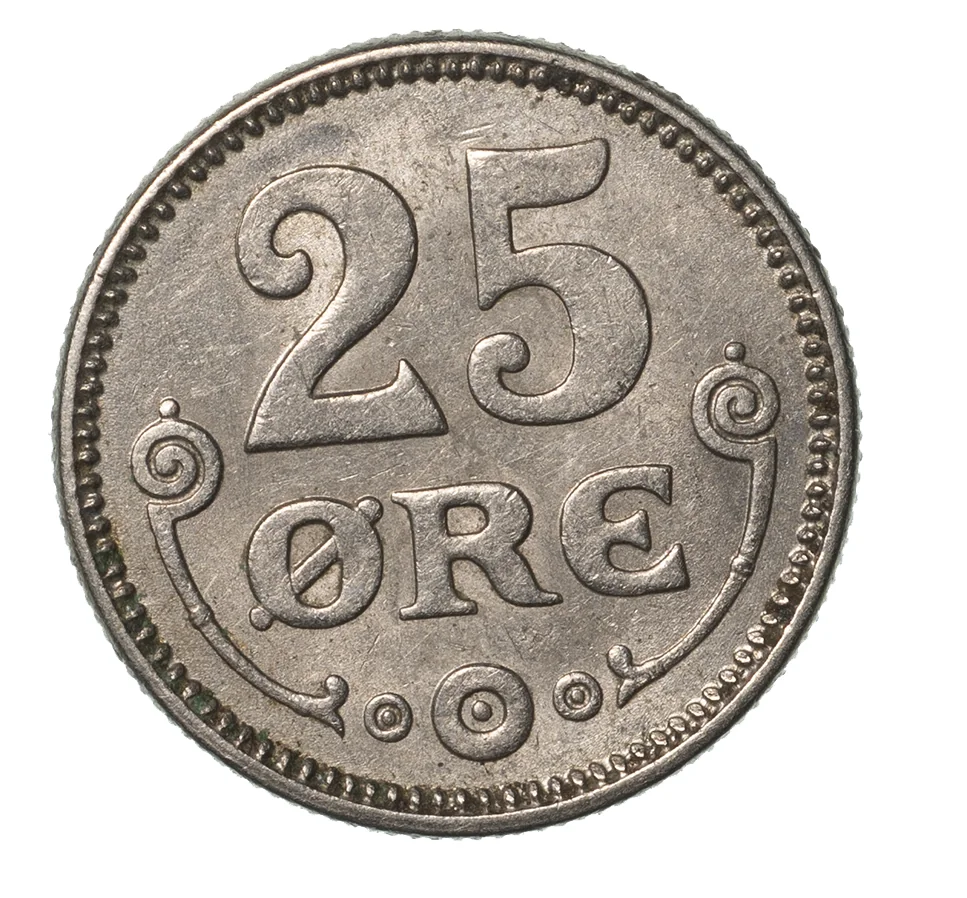
25 øre – Denmark
Add to wishlist
Denmark
Context
Years: 1920–1922
Issuer: Denmark
Ruler: Christian X
Currency:
(since 1873)
Demonetization: 30 September 2008
Total mintage: 27,433,000
Material
Diameter: 17 mm
Weight: 2.4 g
Thickness: 1.2 mm
Shape: Round
Composition: Copper-nickel
Technique: Milled
Alignment: Medal alignment
flip
References
KM: #
Numista: #14553
Value
Exchange value: 0.25 DKK
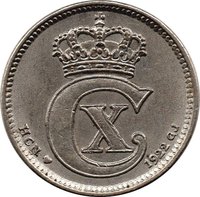
Obverse
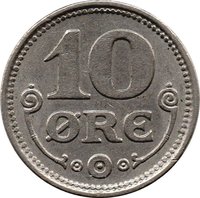
Reverse
Edge
Reeded
Mintings
| Year | Mint Mark | Mintage | Quality | Collection |
|---|---|---|---|---|
| 1920 | HCN;GJ | 12,288,000 | ||
| 1921 | HCN;GJ | 9,444,000 | ||
| 1922 | HCN;GJ | 5,701,000 |
Historical background
In 1920, Denmark's currency situation was defined by its adherence to the classical gold standard, a system it had maintained with stability since the 1870s. The Danish krone (DKK) was legally defined as a specific weight of gold, and the Nationalbank was obligated to exchange banknotes for gold on demand. This system created fixed exchange rates with other gold-backed currencies, like the British pound sterling and the US dollar, which facilitated predictable international trade and investment. The monetary policy of the time was largely automatic, aimed at maintaining gold convertibility above all else.
However, the period was one of significant economic adjustment following the upheavals of World War I. While Denmark had remained neutral, the war caused inflation and disrupted trade. A major event shaping the 1920 context was the reunification with North Schleswig following a plebiscite in February 1920. This not only altered the national territory but also integrated a new population and economic region, requiring monetary and banking integration under the existing krone system. Furthermore, Denmark, like many nations, faced the challenge of post-war price instability and the task of officially returning to the pre-war gold parity after having suspended gold exports during the conflict.
Consequently, 1920 represented a year of relative normalization within a stable framework, but also one of underlying tension. The Nationalbank's primary focus was on defending the gold reserve to ensure credibility, which often meant maintaining high interest rates. This restrictive stance aimed to curb inflation and attract gold inflows, but it could also suppress domestic economic activity. Thus, while the krone was considered strong and reliable internationally, the currency regime contributed to a tight monetary environment as Denmark navigated the complex post-war European economy.
However, the period was one of significant economic adjustment following the upheavals of World War I. While Denmark had remained neutral, the war caused inflation and disrupted trade. A major event shaping the 1920 context was the reunification with North Schleswig following a plebiscite in February 1920. This not only altered the national territory but also integrated a new population and economic region, requiring monetary and banking integration under the existing krone system. Furthermore, Denmark, like many nations, faced the challenge of post-war price instability and the task of officially returning to the pre-war gold parity after having suspended gold exports during the conflict.
Consequently, 1920 represented a year of relative normalization within a stable framework, but also one of underlying tension. The Nationalbank's primary focus was on defending the gold reserve to ensure credibility, which often meant maintaining high interest rates. This restrictive stance aimed to curb inflation and attract gold inflows, but it could also suppress domestic economic activity. Thus, while the krone was considered strong and reliable internationally, the currency regime contributed to a tight monetary environment as Denmark navigated the complex post-war European economy.
🌱 Common