

2 Fen – Shensi Province
China
Context
Year: 1928
Country: China 
Issuer: Shensi Province
Period:
(1912—1949)
Currency:
(1898—1949)
Demonetized: Yes
Material
References
Y: #Click to copy to clipboard436
Numista: #42493
Obverse
Description:
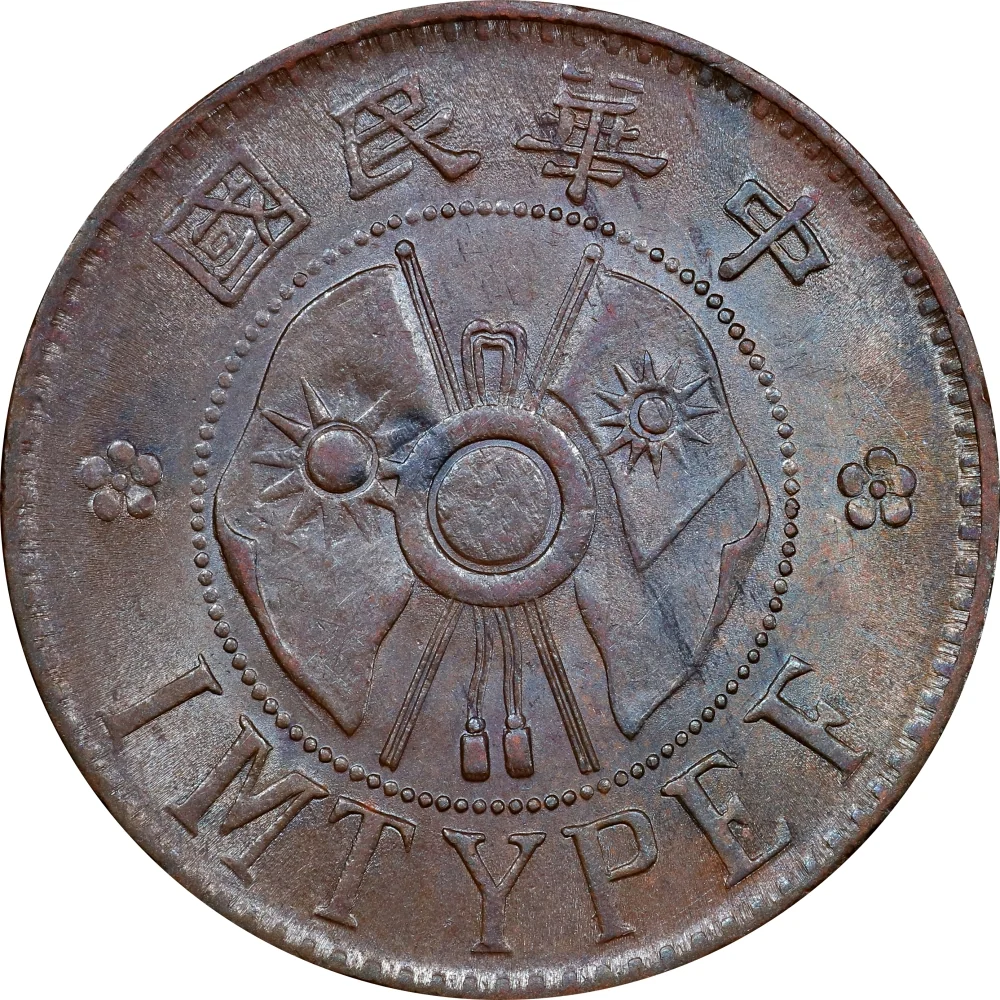
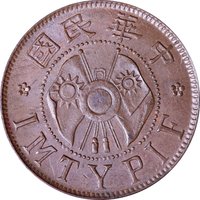
Two crossed flags with a central circle, featuring Chinese characters above and Wade-Giles transliteration below.
Inscription:
國民華中
IMTYPEF
IMTYPEF
Translation:
National Middle School
Language: Chinese
Reverse
Description:
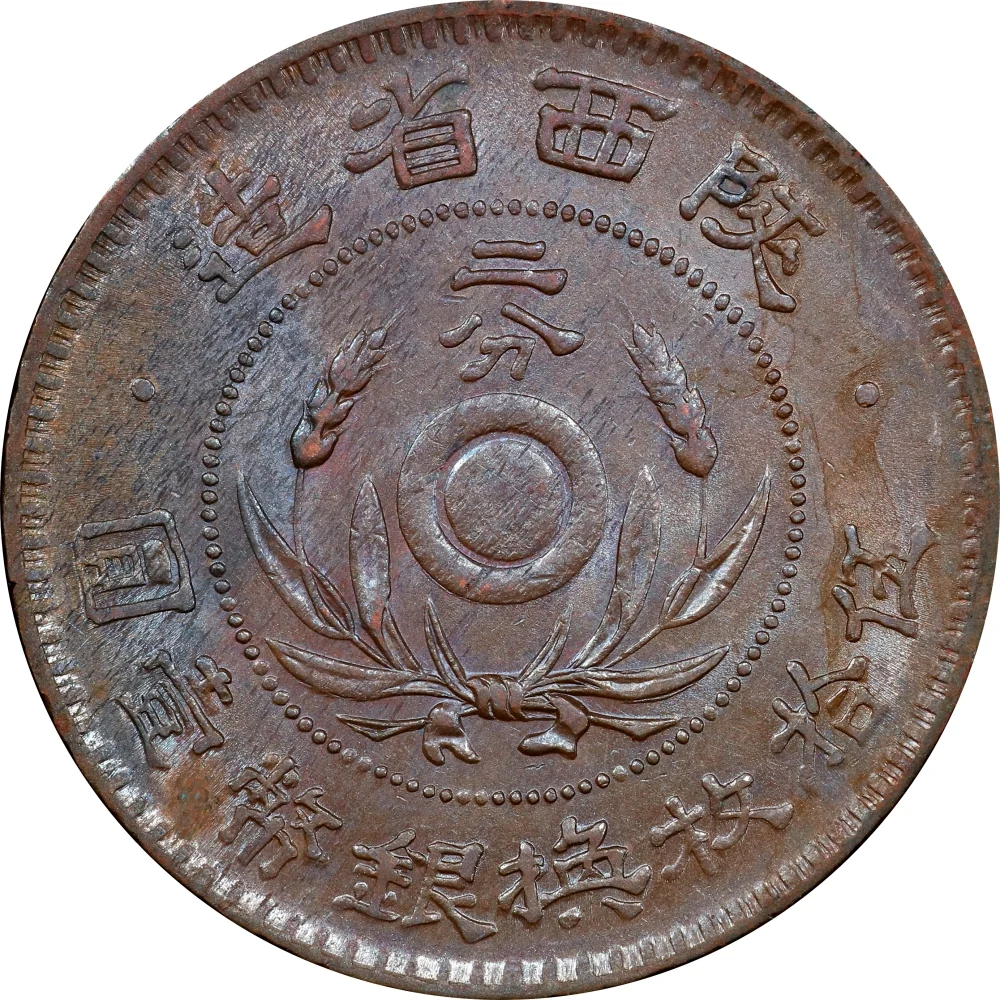
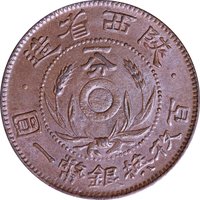
Circle in wreath, topped by two ideograms, encircled by more.
Inscription:
造省西陝
二
分
圓壹幣銀換枚拾伍
二
分
圓壹幣銀換枚拾伍
Translation:
Made in Shaanxi Province
Two
Fen
One Silver Coin Exchange Fifteen Pieces
Two
Fen
One Silver Coin Exchange Fifteen Pieces
Language: Chinese
Edge
Plain
Mintings
| Year | Mint Mark | Mintage | Quality | Collection |
|---|---|---|---|---|
| 1928 | — | — |
Historical background
In 1928, Shensi (Shaanxi) Province was engulfed in a severe and multifaceted currency crisis, a direct consequence of the wider political and military fragmentation of China during the Warlord Era. Following the collapse of the Beijing government's central authority, the province was under the control of local militarists, most notably the Guominjun (National People's Army) under Feng Yuxiang, who were engaged in constant warfare. To finance their armies and administrations, these warlords resorted to issuing unbacked provincial banknotes and coercively circulating debased copper coins and silver dollars, leading to rampant inflation and a complete loss of public confidence in paper currency.
The monetary landscape was a chaotic patchwork of competing and worthless scrip. The primary issuer was the Shensi Provincial Bank, which printed vast quantities of Shensi Provincial Bank Notes with little to no metallic reserve. As military fortunes waned and fiscal desperation grew, these notes depreciated rapidly, often becoming worthless within months of issue. Simultaneously, older currencies like the Fengtien notes from Manchuria and various "military requisition certificates" flooded the market, while genuine silver yuan and copper cash were hoarded, disappearing from daily transactions. This created a multi-tiered system where taxes had to be paid in silver, while salaries and market goods were paid for in rapidly depreciating paper.
The human cost was catastrophic. Hyperinflation wiped out savings, crippled market trade, and precipitated a severe famine in the northern part of the province, exacerbated by drought and the social disruption of war. Farmers and merchants reverted to barter, and the provincial economy teetered on collapse. This currency chaos in Shensi was a microcosm of the broader Chinese financial disintegration, starkly illustrating how warlord predation and the absence of a unified national monetary policy led directly to widespread economic suffering and instability.
The monetary landscape was a chaotic patchwork of competing and worthless scrip. The primary issuer was the Shensi Provincial Bank, which printed vast quantities of Shensi Provincial Bank Notes with little to no metallic reserve. As military fortunes waned and fiscal desperation grew, these notes depreciated rapidly, often becoming worthless within months of issue. Simultaneously, older currencies like the Fengtien notes from Manchuria and various "military requisition certificates" flooded the market, while genuine silver yuan and copper cash were hoarded, disappearing from daily transactions. This created a multi-tiered system where taxes had to be paid in silver, while salaries and market goods were paid for in rapidly depreciating paper.
The human cost was catastrophic. Hyperinflation wiped out savings, crippled market trade, and precipitated a severe famine in the northern part of the province, exacerbated by drought and the social disruption of war. Farmers and merchants reverted to barter, and the provincial economy teetered on collapse. This currency chaos in Shensi was a microcosm of the broader Chinese financial disintegration, starkly illustrating how warlord predation and the absence of a unified national monetary policy led directly to widespread economic suffering and instability.
💎 Very Rare