

50 fen – Yunnan Province
Add to wishlist
Circulating commemorative coins
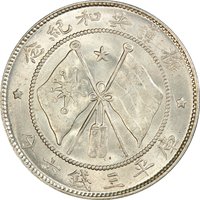
Commemoration: Support the Republic
China
Context
Year: 1916
Country: China
Issuer: Yunnan Province
Period:
(1912—1949)
Currency:
(1908—1949)
Demonetized: Yes
Material
References
Y: #
Numista: #42447
Value
Bullion value: $28.35
Obverse
Description:
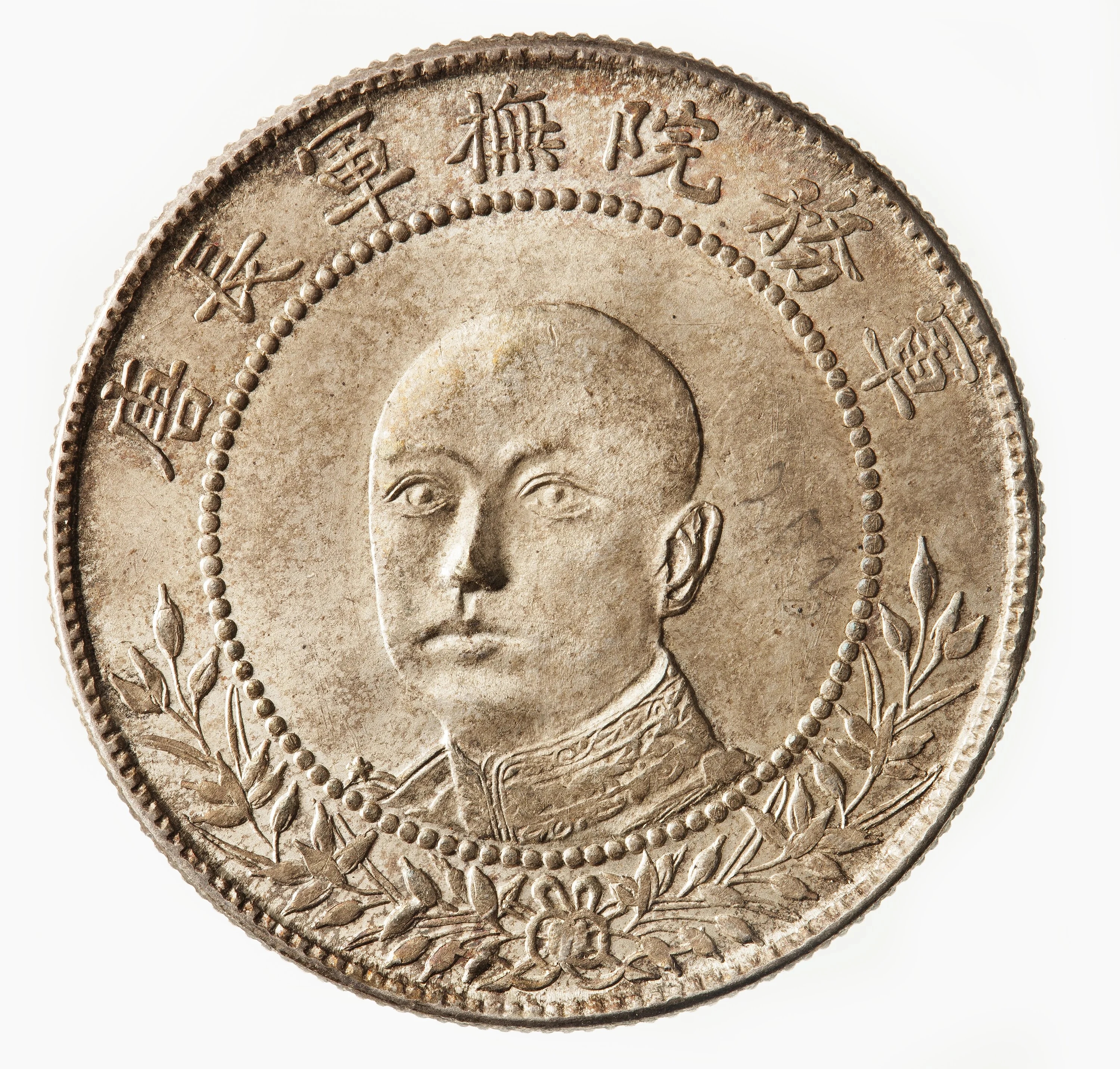
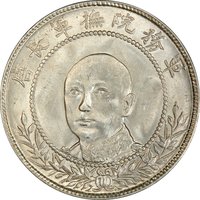
Bust of Tang Jiyao facing right, Chinese characters above.
Inscription:
唐長軍撫院務軍
Translation:
Tang, Military Commissioner of the Changjun Army, overseeing military affairs of the Grand Coordinator's office.
Script: Chinese
Language: Classical Chinese
Reverse
Edge
Reeded.
Categories
| Person> Politician |
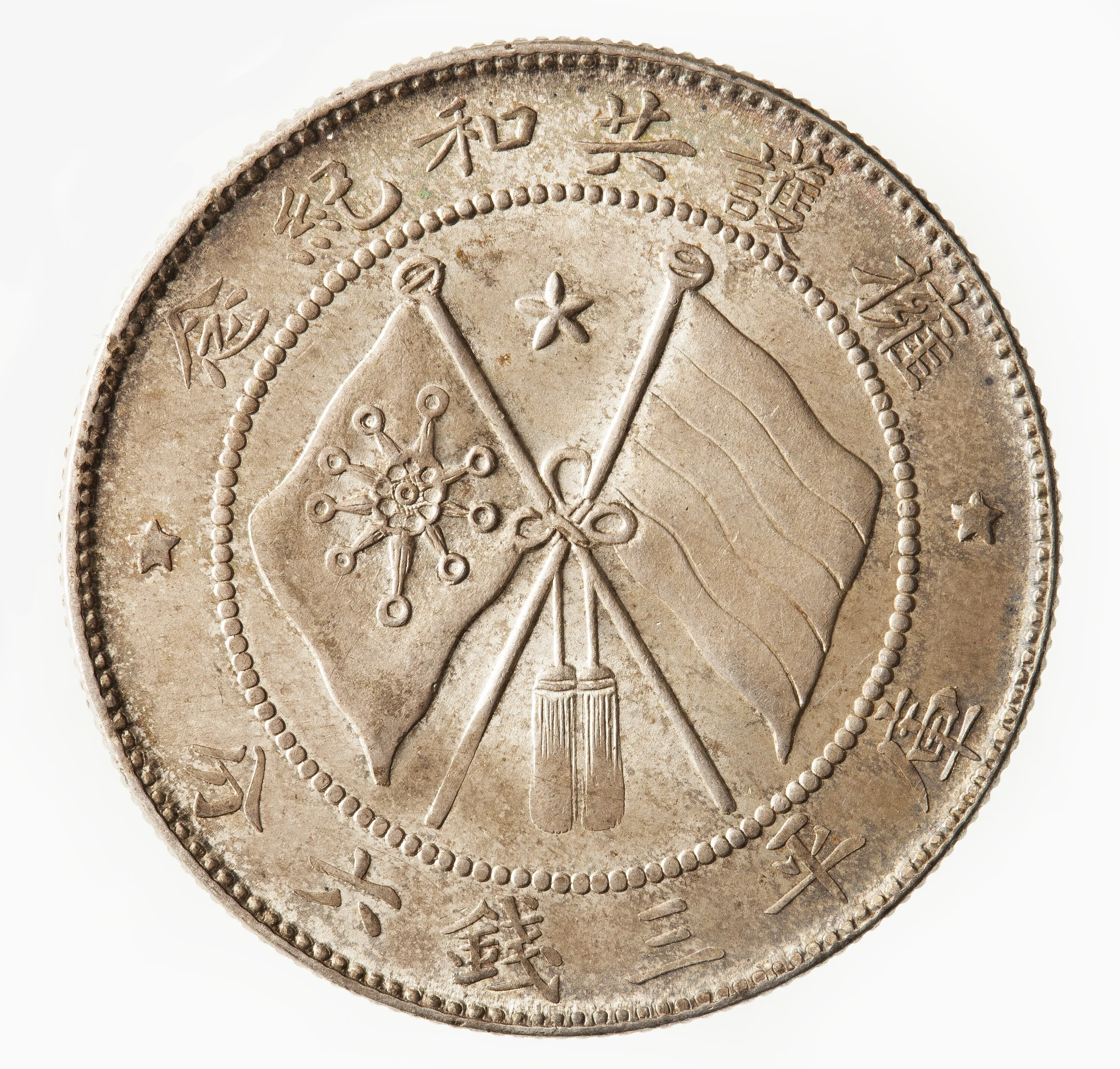
| Symbol> Flag |
Mintings
| Year | Mint Mark | Mintage | Quality | Collection |
|---|---|---|---|---|
| 1916 | — | — |
Historical background
In 1916, Yunnan Province was at the epicenter of a profound monetary crisis, a direct consequence of its pivotal role in launching the National Protection War against Yuan Shikai's imperial ambitions. To fund this military campaign, the Yunnan Provincial Government, under the leadership of Tang Jiyao, resorted to the excessive printing of paper notes known as Yunnan Provincial Bank Dollars. This unbacked issuance rapidly led to severe inflation, as the volume of currency in circulation far outstripped the government's silver reserves and the local economy's capacity. The situation was exacerbated by the province's physical and political isolation from China's financial centers, disrupting normal fiscal channels and trade.
The currency landscape became a chaotic three-tier system. At the top were scarce silver yuan coins (including French Indo-Chinese piastres from neighboring Tonkin, which circulated in southern Yunnan), which were hoarded for their intrinsic value. Next were the rapidly depreciating Yunnan Provincial Bank notes, which the public increasingly distrusted. At the bottom was a resurgence of sycee silver (silver ingots) and even barter in local markets, as people abandoned the unstable paper money. This fragmentation crippled commerce and placed immense hardship on soldiers and civilians alike, as wages and prices became wildly unstable.
This monetary turmoil was not merely an economic issue but a reflection of the broader political fragmentation of the Warlord Era. Yunnan's independent currency issuance was an assertion of its de facto autonomy from the weakened Beijing government. The crisis demonstrated how regional military and political ambitions directly undermined financial stability, a pattern repeated across China. The 1916 currency collapse in Yunnan thus stands as a stark case study of the interplay between warlord politics, wartime finance, and hyperinflation in the early Republic of China period.
The currency landscape became a chaotic three-tier system. At the top were scarce silver yuan coins (including French Indo-Chinese piastres from neighboring Tonkin, which circulated in southern Yunnan), which were hoarded for their intrinsic value. Next were the rapidly depreciating Yunnan Provincial Bank notes, which the public increasingly distrusted. At the bottom was a resurgence of sycee silver (silver ingots) and even barter in local markets, as people abandoned the unstable paper money. This fragmentation crippled commerce and placed immense hardship on soldiers and civilians alike, as wages and prices became wildly unstable.
This monetary turmoil was not merely an economic issue but a reflection of the broader political fragmentation of the Warlord Era. Yunnan's independent currency issuance was an assertion of its de facto autonomy from the weakened Beijing government. The crisis demonstrated how regional military and political ambitions directly undermined financial stability, a pattern repeated across China. The 1916 currency collapse in Yunnan thus stands as a stark case study of the interplay between warlord politics, wartime finance, and hyperinflation in the early Republic of China period.
✨ Legendary