

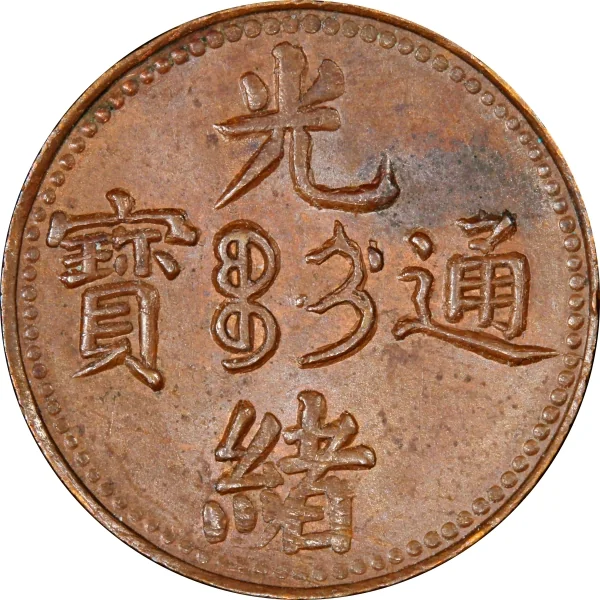
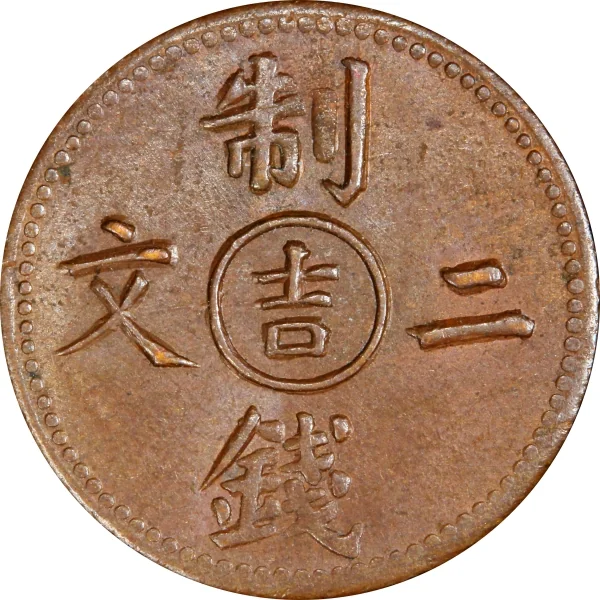
2 cashes – Kirin Province
Add to wishlist
China
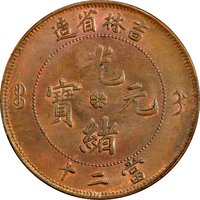
Obverse
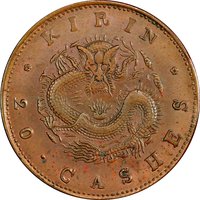
Reverse
Description:
Four Chinese ideograms arranged vertically, right to left, with one centered.
Inscription:
制
文吉二
錢
文吉二
錢
Translation:
Made in the second year of Zhiwen.
Language: Classical Chinese
Edge
Plain
Mints
| Name | Mark |
|---|---|
| Jilin Provincial Mint | — |
Mintings
| Year | Mint Mark | Mintage | Quality | Collection |
|---|---|---|---|---|
| 1905 | — | — |
Historical background
In 1905, Kirin Province (present-day Jilin, China) existed within a complex monetary ecosystem typical of the late Qing Dynasty, characterized by a lack of unified central control. The primary official currency was the silver tael, a unit of weight in which sycee (silver ingots) were cast, but its value and purity varied locally, causing confusion in trade. Alongside this, copper-alloy cash coins with square holes, strung in strings of 1,000 wen, served as the everyday fractional currency for the populace. However, the supply of these coins was erratic, leading to shortages and the circulation of privately minted and often debased coins, which further destabilized local markets.
Critically, the monetary landscape was dominated by foreign currencies, a direct result of imperial encroachment and economic influence. Following the Russo-Japanese War (1904-1905), which was largely fought on and around the territory of Kirin, both the Russian ruble and, increasingly, the Japanese yen circulated widely and authoritatively. Japanese currency, in particular, began to establish a strong foothold in southern Kirin following Japan's victory, used for larger transactions and alongside the Mexican silver dollar, another dominant trade coin in East Asian ports. This created a multi-layered system where state-issued currencies competed with regional bullion and powerful foreign coins.
The Qing government recognized the problems of monetary fragmentation and made attempts at reform. In the years leading up to 1905, there were provincial initiatives to mint modern, machine-struck copper coins (tongyuan) and silver coins (yinyuan) to standardize the currency. However, in Kirin in 1905, these new currencies were not yet dominant. The province stood at a monetary crossroads, caught between a decaying traditional system, tentative modernizing reforms, and the aggressive financial imperialism of foreign powers, with the recent Japanese victory signaling a decisive shift toward growing Japanese economic control in the region's financial life.
Critically, the monetary landscape was dominated by foreign currencies, a direct result of imperial encroachment and economic influence. Following the Russo-Japanese War (1904-1905), which was largely fought on and around the territory of Kirin, both the Russian ruble and, increasingly, the Japanese yen circulated widely and authoritatively. Japanese currency, in particular, began to establish a strong foothold in southern Kirin following Japan's victory, used for larger transactions and alongside the Mexican silver dollar, another dominant trade coin in East Asian ports. This created a multi-layered system where state-issued currencies competed with regional bullion and powerful foreign coins.
The Qing government recognized the problems of monetary fragmentation and made attempts at reform. In the years leading up to 1905, there were provincial initiatives to mint modern, machine-struck copper coins (tongyuan) and silver coins (yinyuan) to standardize the currency. However, in Kirin in 1905, these new currencies were not yet dominant. The province stood at a monetary crossroads, caught between a decaying traditional system, tentative modernizing reforms, and the aggressive financial imperialism of foreign powers, with the recent Japanese victory signaling a decisive shift toward growing Japanese economic control in the region's financial life.
✨ Legendary