

25 centavos – Costa Rica
Add to wishlist
Costa Rica
Context
Years: 1886–1887
Issuer: Costa Rica
Period:
(1848—1948)
Currency:
(1863—1896)
Demonetization: 24 October 1896
Total mintage: 301,640
Material
References
KM: #
Numista: #41968
Value
Bullion value: $11.70
Obverse
Description:
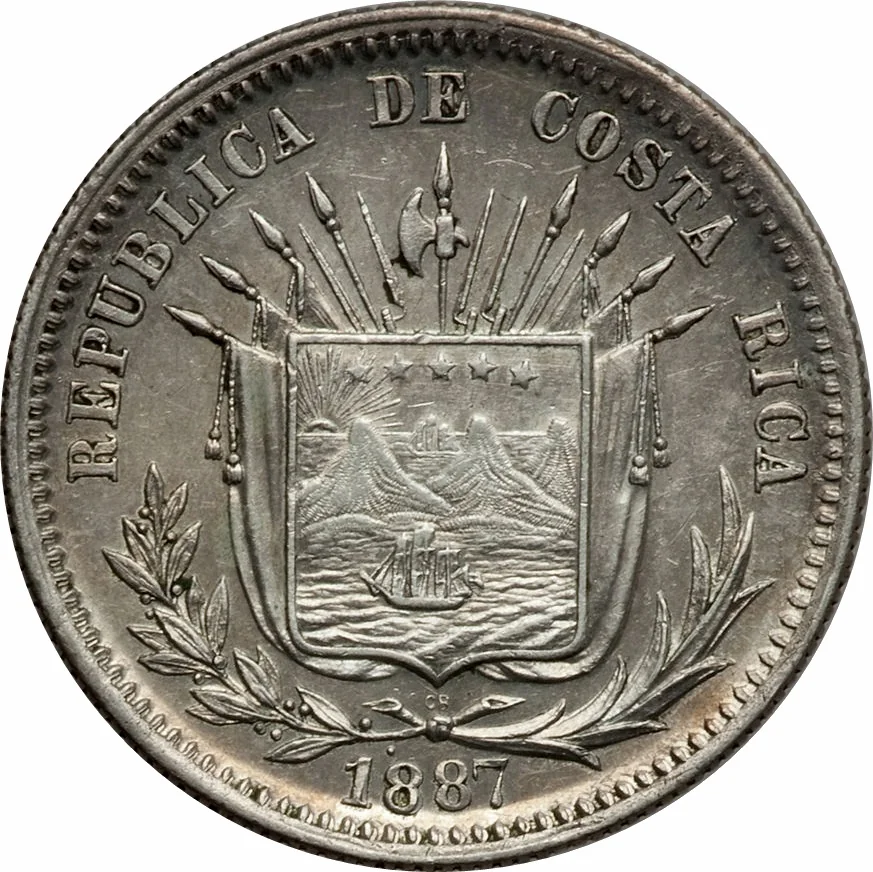
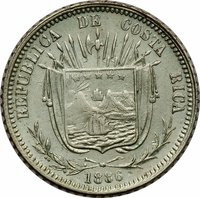
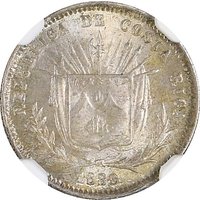
Coat of arms with wreath, legend above and date below.
Inscription:
REPUBLICA DE COSTA RICA
CB
1887
CB
1887
Translation:
REPUBLIC OF COSTA RICA
CB
1887
CB
1887
Script: Latin
Language: Spanish
Engraver: Guillermo Witting
Reverse
Description:
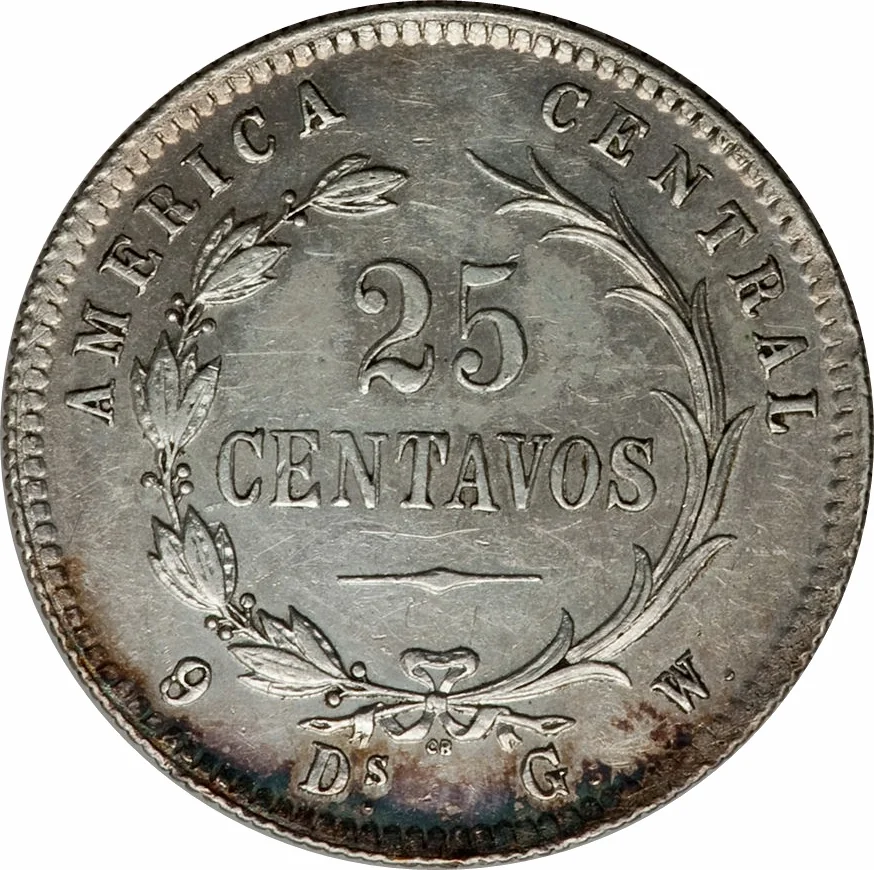
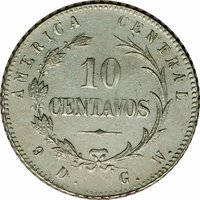
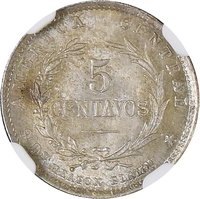
Wreath with value. Top: legend. Bottom: fineness and assayer's initials.
Inscription:
AMERICA CENTRAL
25 CENTAVOS
9D. G.W.
25 CENTAVOS
9D. G.W.
Translation:
CENTRAL AMERICA
25 CENTAVOS
9D. G.W.
25 CENTAVOS
9D. G.W.
Script: Latin
Language: Spanish
Engraver: Guillermo Witting
Edge
Categories
| Symbols> Coat of Arms |
| Symbol> Wreath |
Mints
| Name | Mark |
|---|---|
| Casa Nacional de Moneda de Costa Rica | — |
Mintings
| Year | Mint Mark | Mintage | Quality | Collection |
|---|---|---|---|---|
| 1886 | — | 100,000 | ||
| 1887 | — | 201,640 |
Historical background
In 1886, Costa Rica’s currency system was in a state of significant transition and disorder, characterized by a chaotic circulation of multiple, often devalued, coinages. The primary legal tender was the silver peso, but its value and acceptance were undermined by a flood of low-quality foreign coins, particularly from Peru, Bolivia, and Chile, known as "pesos fuertes" or "duros." These coins had varying silver contents and circulated alongside older Spanish colonial coins and even debased "macuquina" (cut or hammered) currency, creating a confusing and unreliable monetary environment for both commerce and government finance.
This instability was a direct legacy of the colonial period and the early post-independence decades, during which Costa Rica lacked a national mint. The government attempted to impose order through legislation, declaring only certain foreign coins as legal tender and setting official exchange rates, but these measures were largely ineffective in practice. The fundamental problem was a severe shortage of trustworthy, high-value currency for larger transactions and international trade, which stifled economic development and complicated fiscal policy. The circulation was essentially a fragmented bimetallic system without standardized national coinage.
Consequently, the year 1886 fell within a critical period of reform that would culminate in the Currency Law of 1896. The discussions and pressures evident in 1886 were pushing the country toward a definitive solution: the adoption of the gold standard and the creation of a distinct national currency, the colón, named after Christopher Columbus. Therefore, the situation in 1886 represents the final chapter of a protracted monetary crisis, setting the stage for the modernization and stabilization that would define Costa Rica’s financial system by the turn of the 20th century.
This instability was a direct legacy of the colonial period and the early post-independence decades, during which Costa Rica lacked a national mint. The government attempted to impose order through legislation, declaring only certain foreign coins as legal tender and setting official exchange rates, but these measures were largely ineffective in practice. The fundamental problem was a severe shortage of trustworthy, high-value currency for larger transactions and international trade, which stifled economic development and complicated fiscal policy. The circulation was essentially a fragmented bimetallic system without standardized national coinage.
Consequently, the year 1886 fell within a critical period of reform that would culminate in the Currency Law of 1896. The discussions and pressures evident in 1886 were pushing the country toward a definitive solution: the adoption of the gold standard and the creation of a distinct national currency, the colón, named after Christopher Columbus. Therefore, the situation in 1886 represents the final chapter of a protracted monetary crisis, setting the stage for the modernization and stabilization that would define Costa Rica’s financial system by the turn of the 20th century.
💎 Very Rare