

10 francs – Luxembourg
Add to wishlist
Luxembourg
Context
Year: 1929
Issuer: Luxembourg
Period:
Ruler: Charlotte
Currency:
(1854—2001)
Demonetization: 30 April 1949
Total mintage: 1,000,000
Material
References
KM: #
Numista: #4192
Value
Exchange value: 10 LUF
Bullion value: $24.92
Obverse
Description:
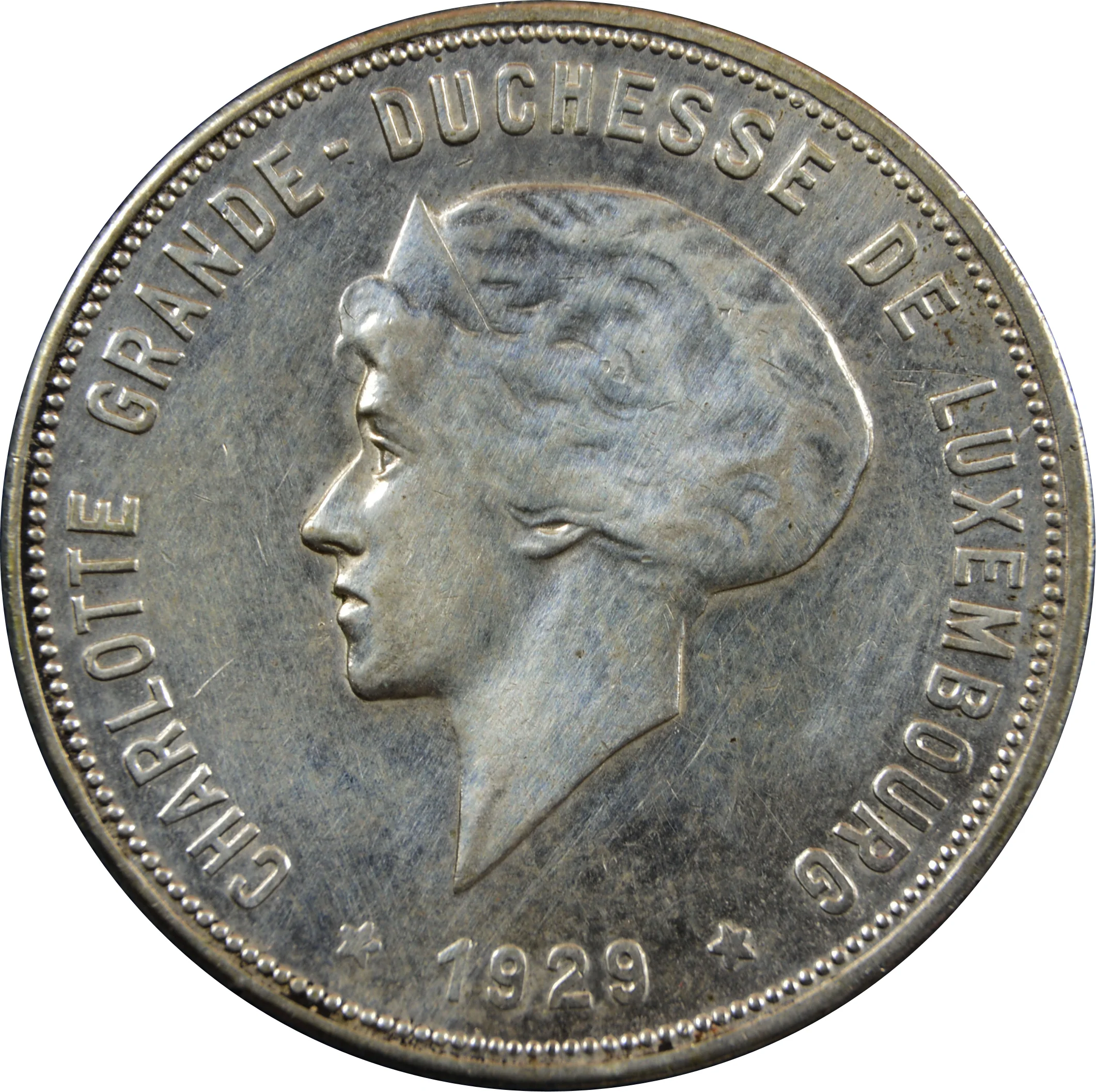
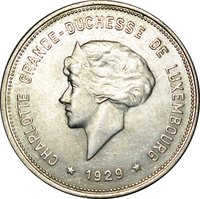
Left-facing portrait of Grand Duchess Charlotte of Luxembourg (1896–1985), encircled by the legend and mint year between stars. Grènetis border.
Inscription:
CHARLOTTE GRANDE-DUCHESSE DE LUXEMBOURG * 1929 *
Translation:
Charlotte Grand Duchess of Luxembourg * 1929 *
Script: Latin
Language: French
Engraver: Ludwig Habich
Designer: Roessler
Reverse
Description:
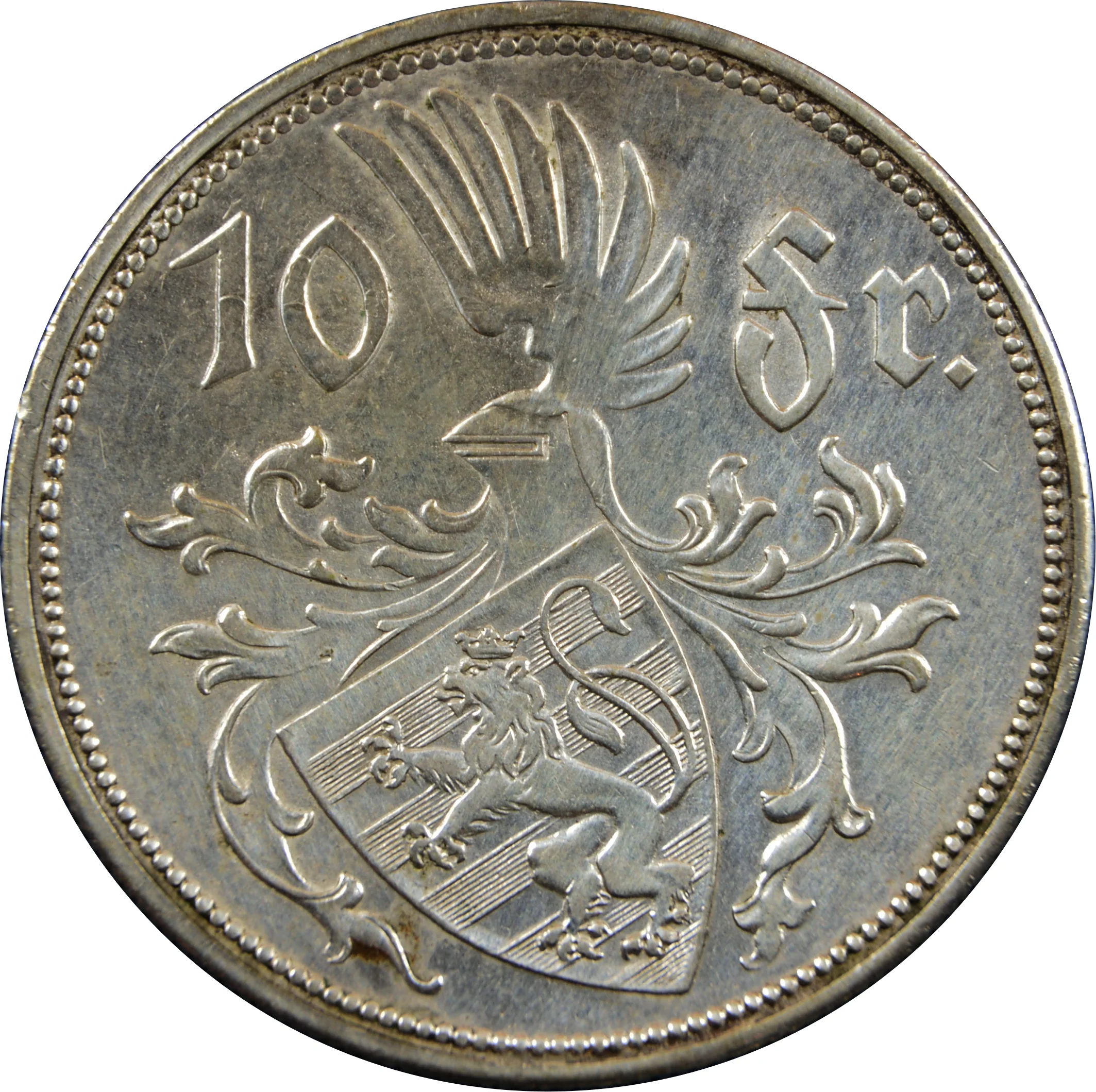
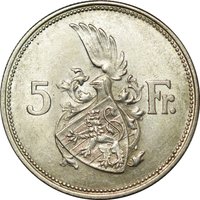
Luxembourgish shield tilted left, draped and helmeted, with a robber crest and flanking denomination. External grènetis.
Inscription:
10 fr.
Script: Latin
Engraver: Ludwig Habich
Designer: Roessler
Edge
Milled
Mints
| Name | Mark |
|---|---|
| Staatliche Münze Baden-Württemberg | — |
Mintings
| Year | Mint Mark | Mintage | Quality | Collection |
|---|---|---|---|---|
| 1929 | — | 1,000,000 |
🌱 Common