

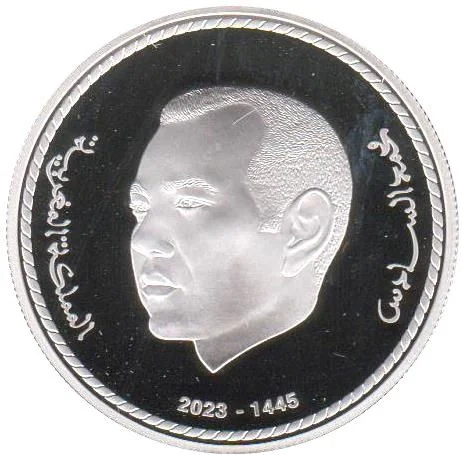
250 dirhams (Human Rights) – Morocco
Add to wishlist
Non-circulating coins
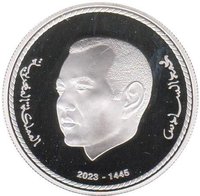
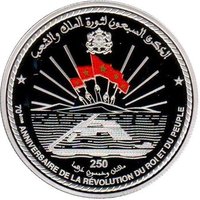
Commemoration: 75th anniversary of the Human Rights
Morocco
Context
Material
References
Numista: #418762
Value
Exchange value: 250 MAD
Bullion value: $63.98
Obverse
Reverse
Description:
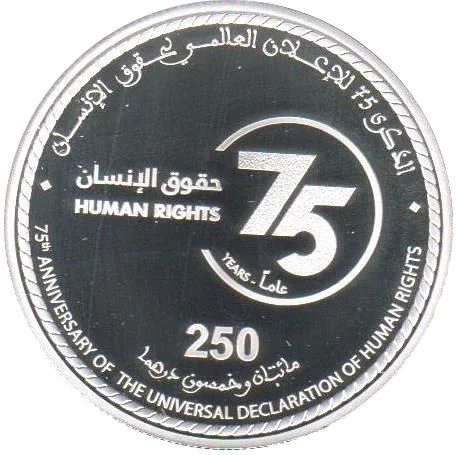
Stylized "75" with "Human Rights" in Arabic and French.
Inscription:
HUMAN RIGHTS 75 YEARS
75th ANNIVERSARY OF THE UNIVERSAL DECLARATION OF HUMAN RIGHTS
75th ANNIVERSARY OF THE UNIVERSAL DECLARATION OF HUMAN RIGHTS
Translation:
HUMAN RIGHTS 75 YEARS
75th ANNIVERSARY OF THE UNIVERSAL DECLARATION OF HUMAN RIGHTS
75th ANNIVERSARY OF THE UNIVERSAL DECLARATION OF HUMAN RIGHTS
Language: English
Edge
Categories
| Event> Revolution |
| Person> Monarch |
| Symbol> Flag |
| Symbols> Coat of Arms |
Mints
| Name | Mark |
|---|---|
| Dar As-Sikkah | — |
Mintings
| Year | Mint Mark | Mintage | Quality | Collection |
|---|---|---|---|---|
| 2023 | — | — |
Historical background
In 2023, Morocco's currency situation was characterized by a managed float regime, where the Moroccan dirham (MAD) remained pegged to a currency basket weighted 60% to the euro and 40% to the US dollar. This long-standing policy, managed by Bank Al-Maghrib (BAM), the central bank, provided stability but came under pressure from global economic forces. The year saw the dirham appreciate significantly against both anchor currencies, a trend that began in 2022. This appreciation was largely driven by robust inflows from tourism, strong remittances from the Moroccan diaspora, and increased foreign direct investment (FDI), all of which boosted foreign exchange reserves to comfortable levels.
However, this strength presented a dual challenge. While it helped curb imported inflation—a major concern globally—it also raised competitiveness issues for Moroccan exporters and key sectors like the automotive and phosphate industries, whose euro-denominated revenues translated into fewer dirhams. The central bank faced the delicate task of balancing these domestic economic concerns with the need to maintain monetary stability and control inflation, which remained a persistent though relatively managed problem compared to many peers.
Looking forward, the 2023 context set the stage for continued gradual modernization of Morocco's exchange rate framework. Authorities reiterated a commitment to moving toward a more flexible float, a move encouraged by international institutions like the IMF to better absorb external shocks. However, this transition was carefully calibrated to be gradual and conditional on achieving deeper fiscal reforms and strengthening the domestic financial market, ensuring that any shift would not jeopardize the hard-won macroeconomic stability that defined the dirham's performance throughout the year.
However, this strength presented a dual challenge. While it helped curb imported inflation—a major concern globally—it also raised competitiveness issues for Moroccan exporters and key sectors like the automotive and phosphate industries, whose euro-denominated revenues translated into fewer dirhams. The central bank faced the delicate task of balancing these domestic economic concerns with the need to maintain monetary stability and control inflation, which remained a persistent though relatively managed problem compared to many peers.
Looking forward, the 2023 context set the stage for continued gradual modernization of Morocco's exchange rate framework. Authorities reiterated a commitment to moving toward a more flexible float, a move encouraged by international institutions like the IMF to better absorb external shocks. However, this transition was carefully calibrated to be gradual and conditional on achieving deeper fiscal reforms and strengthening the domestic financial market, ensuring that any shift would not jeopardize the hard-won macroeconomic stability that defined the dirham's performance throughout the year.
✨ Legendary