


Obverse
Description:
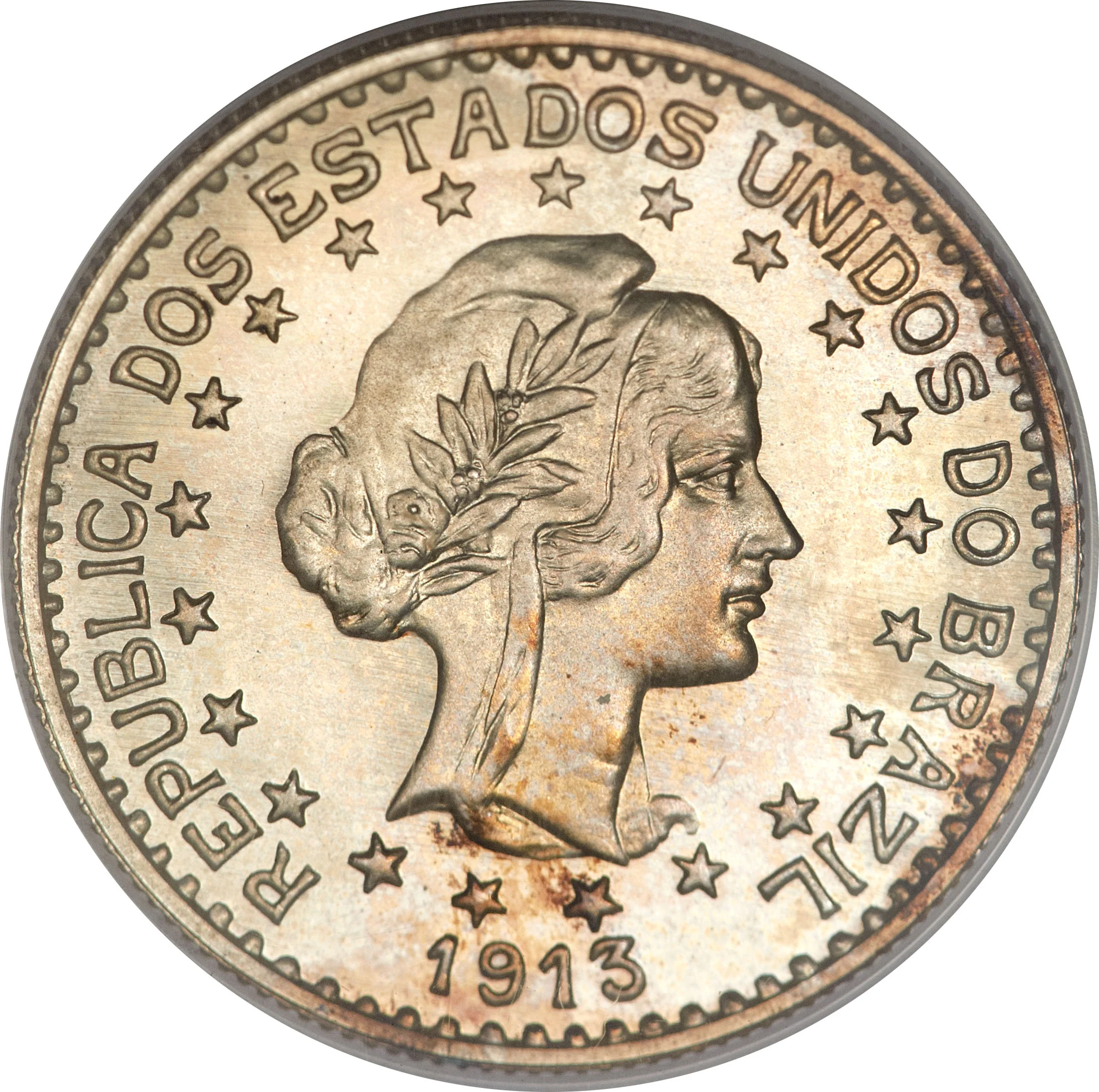
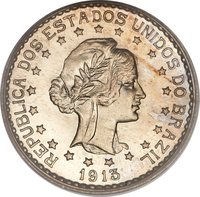
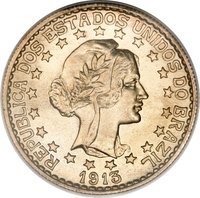
Liberty bust right, stars circle, date below.
Inscription:
REPUBLICA DOS ESTADOS UNIDOS DO BRAZIL
1913
1913
Translation:
REPUBLIC OF THE UNITED STATES OF BRAZIL
1913
1913
Script: Latin
Language: Portuguese
Reverse
Description:
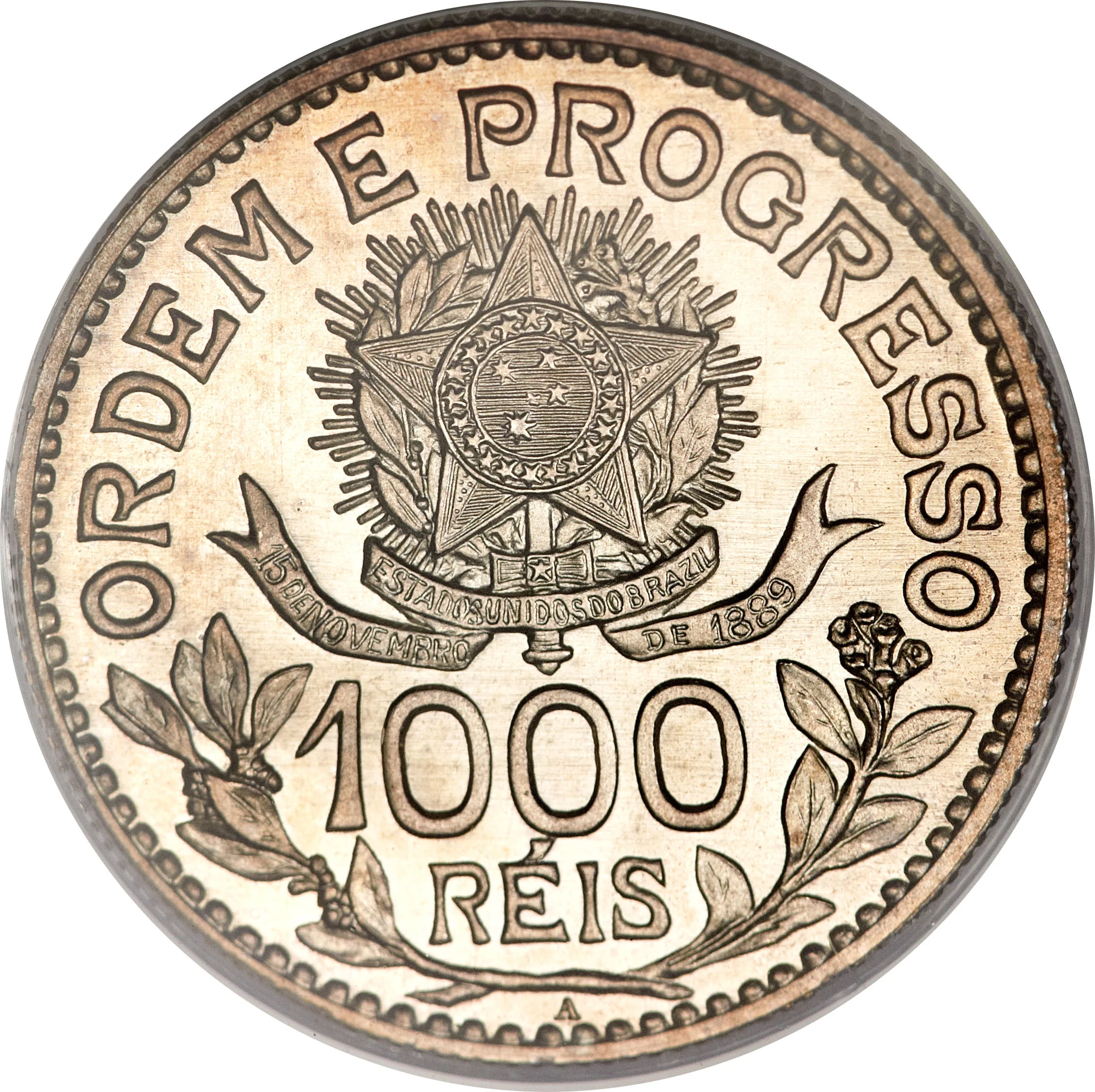
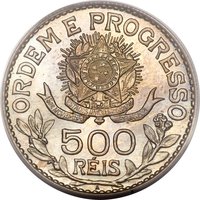
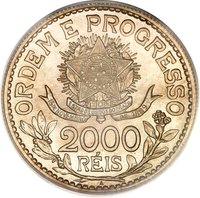
Brazilian arms above wreath, encircled by legend.
Inscription:
ORDEM E PROGRESSO
ESTADOS UNIDOS DO BRAZIL
15 DE NOVEMBRO DE 1889
1000
RÉIS
A
ESTADOS UNIDOS DO BRAZIL
15 DE NOVEMBRO DE 1889
1000
RÉIS
A
Translation:
Order and Progress
United States of Brazil
15 November 1889
1000
Réis
United States of Brazil
15 November 1889
1000
Réis
Script: Latin
Language: Portuguese
Edge
Reeded
Categories
| Symbol> Allegory |
| Symbol> Phrygian cap |
Mints
| Name | Mark |
|---|---|
| Berlin | A |
Mintings
| Year | Mint Mark | Mintage | Quality | Collection |
|---|---|---|---|---|
| 1913 | A | — |
Historical background
In 1913, Brazil's currency system was in a state of transition and fragility, still grappling with the aftermath of the encilhamento—a period of reckless financial speculation and inflation in the 1890s. The official currency was the mil-réis, a paper money whose value was not fixed to a specific metallic standard. While the country had officially adopted the gold standard in 1906 with the Caixa de Conversão (Conversion Office), which issued notes backed by gold reserves, this system was not fully stable or universally trusted. The economy remained heavily dependent on coffee exports, making the currency vulnerable to volatile international commodity prices and the whims of foreign creditors.
The primary monetary challenge was severe exchange rate instability. The value of the mil-réis fluctuated wildly on foreign markets, driven by trade imbalances and large outflows of gold to service foreign debt. The government's efforts to stabilize the currency through the 1906 funding loan (the Funding Loan) and the Conversion Office provided only temporary relief. By 1913, pressure was mounting again, as a decline in rubber exports (due to Asian competition) added to the strain already caused by coffee price fluctuations, testing the limits of the gold-backed system.
Consequently, Brazil's monetary landscape on the eve of World War I was one of precarious duality: a nominally gold-backed currency coexisted with deep-seated inflationary pressures and a fragile fiscal position. This instability would soon be exacerbated by the global war, which disrupted trade and capital flows. The inherent weaknesses exposed in 1913 ultimately led to the abandonment of the gold standard in 1914, marking the end of a brief and imperfect experiment and a return to a period of paper money inflation and devaluation.
The primary monetary challenge was severe exchange rate instability. The value of the mil-réis fluctuated wildly on foreign markets, driven by trade imbalances and large outflows of gold to service foreign debt. The government's efforts to stabilize the currency through the 1906 funding loan (the Funding Loan) and the Conversion Office provided only temporary relief. By 1913, pressure was mounting again, as a decline in rubber exports (due to Asian competition) added to the strain already caused by coffee price fluctuations, testing the limits of the gold-backed system.
Consequently, Brazil's monetary landscape on the eve of World War I was one of precarious duality: a nominally gold-backed currency coexisted with deep-seated inflationary pressures and a fragile fiscal position. This instability would soon be exacerbated by the global war, which disrupted trade and capital flows. The inherent weaknesses exposed in 1913 ultimately led to the abandonment of the gold standard in 1914, marking the end of a brief and imperfect experiment and a return to a period of paper money inflation and devaluation.
🌱 Common