

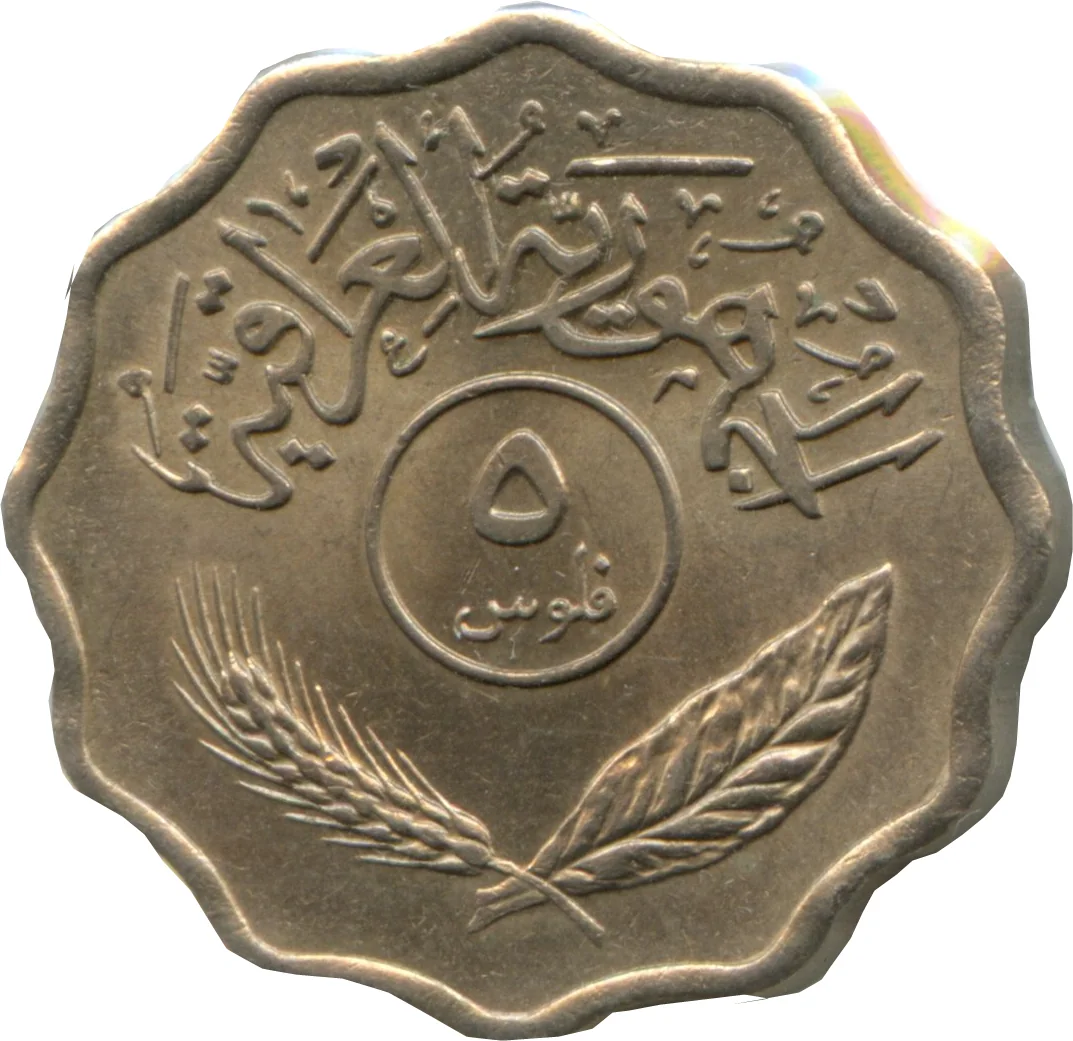
5 Fils – Iraq
Iraq
Context
Material
Diameter: 22 mm
Weight: 5 g
Thickness: 1.7 mm
Shape: Scalloped
Composition: Copper-nickel
Technique: Milled
Alignment: Medal alignment
flip
References
KM: #Click to copy to clipboard125
Numista: #4180
Value
Exchange value: 0.005 IQD
Obverse
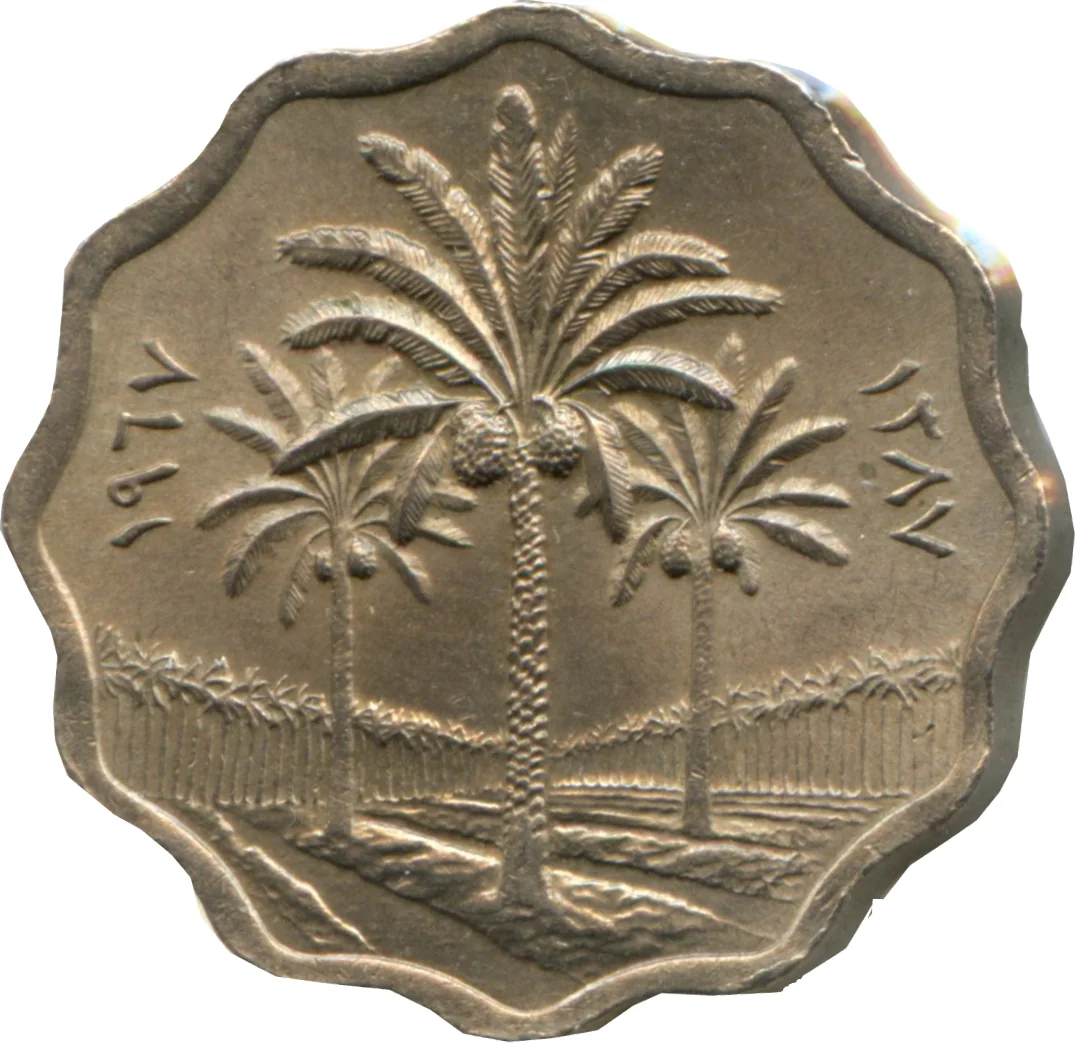
Reverse
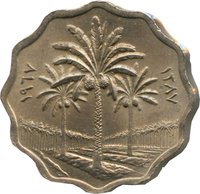
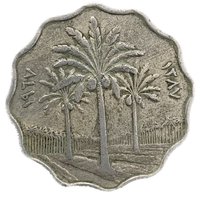
Description:
Three palms in front, trees lining both sides behind.
Inscription:
١٣٨٧ ١٩٦٧
Translation:
1387 1967
Script: Arabic
Languages: Western Arabic Numerals, Arabic
Engraver: Geoffrey Colley
Edge
Plain
Mints
| Name | Mark |
|---|---|
| Royal Mint (Tower Hill) | — |
Mintings
| Year | Mint Mark | Mintage | Quality | Collection |
|---|---|---|---|---|
| 1967 | — | 17,000,000 | ||
| 1971 | — | 15,000,000 |
Historical background
In 1967, Iraq's currency, the Iraqi dinar (IQD), operated under a fixed exchange rate regime pegged to the British pound sterling, a legacy of its historical economic ties. This peg provided a degree of stability but tied the currency's value directly to the performance of the British economy and the strength of sterling itself. The dinar was managed by the Central Bank of Iraq, established just over a decade prior in 1956, which held substantial foreign exchange reserves, primarily in sterling, to back the currency and maintain the peg.
The year fell within a period of relative economic stability for Iraq, buoyed by consistent oil revenues following the nationalization of the Iraq Petroleum Company's concessions in 1961. Oil exports provided the state with a reliable source of hard currency, which helped support the dinar's fixed rate and fund the ambitious development projects of President Abdul Rahman Arif's government. However, the economy remained largely state-directed and undiversified, making it vulnerable to external shocks and fluctuations in global oil prices.
Significantly, the Six-Day War in June 1967 created regional economic uncertainty, though its immediate direct impact on Iraq's currency was muted compared to the belligerent nations. The broader geopolitical tensions underscored the risks of a sterling peg, as pressure on the British pound in global markets was a recurring concern. Consequently, while the dinar itself remained stable in 1967, discussions were already underway within financial circles about the need to shift the peg to a more stable benchmark, a move that would eventually materialize in 1971 with a re-pegging to the U.S. dollar.
The year fell within a period of relative economic stability for Iraq, buoyed by consistent oil revenues following the nationalization of the Iraq Petroleum Company's concessions in 1961. Oil exports provided the state with a reliable source of hard currency, which helped support the dinar's fixed rate and fund the ambitious development projects of President Abdul Rahman Arif's government. However, the economy remained largely state-directed and undiversified, making it vulnerable to external shocks and fluctuations in global oil prices.
Significantly, the Six-Day War in June 1967 created regional economic uncertainty, though its immediate direct impact on Iraq's currency was muted compared to the belligerent nations. The broader geopolitical tensions underscored the risks of a sterling peg, as pressure on the British pound in global markets was a recurring concern. Consequently, while the dinar itself remained stable in 1967, discussions were already underway within financial circles about the need to shift the peg to a more stable benchmark, a move that would eventually materialize in 1971 with a re-pegging to the U.S. dollar.
🌱 Common