

3 Rubles – Soviet Union
Non-circulating coins
Commemoration: World Summit for Children
Russia
Context
Year: 1990
Country: Russia 
Issuer: Soviet Union 
Period:
(1922—1991)
Currency:
(1961—1991)
Demonetization: 1991
Total mintage: 20,000
Material
References
Y: #Click to copy to clipboard247
Numista: #41798
Value
Exchange value: 3 SUR
Bullion value: $88.39
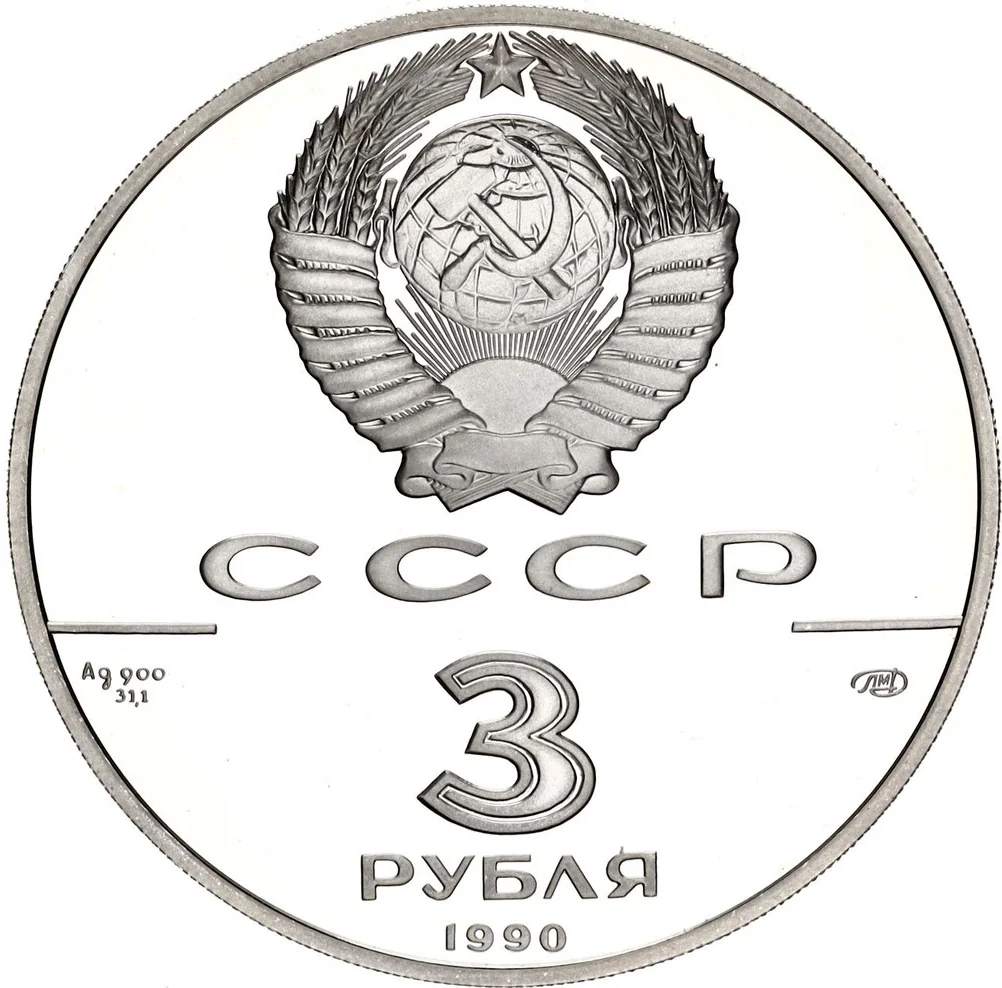
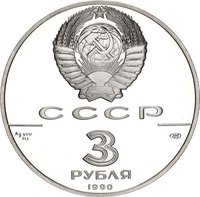
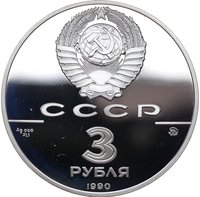
Obverse
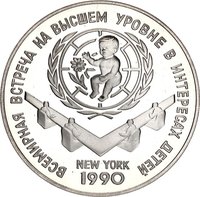
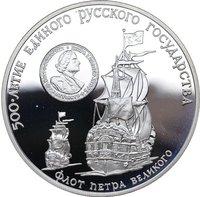
Reverse
Description:
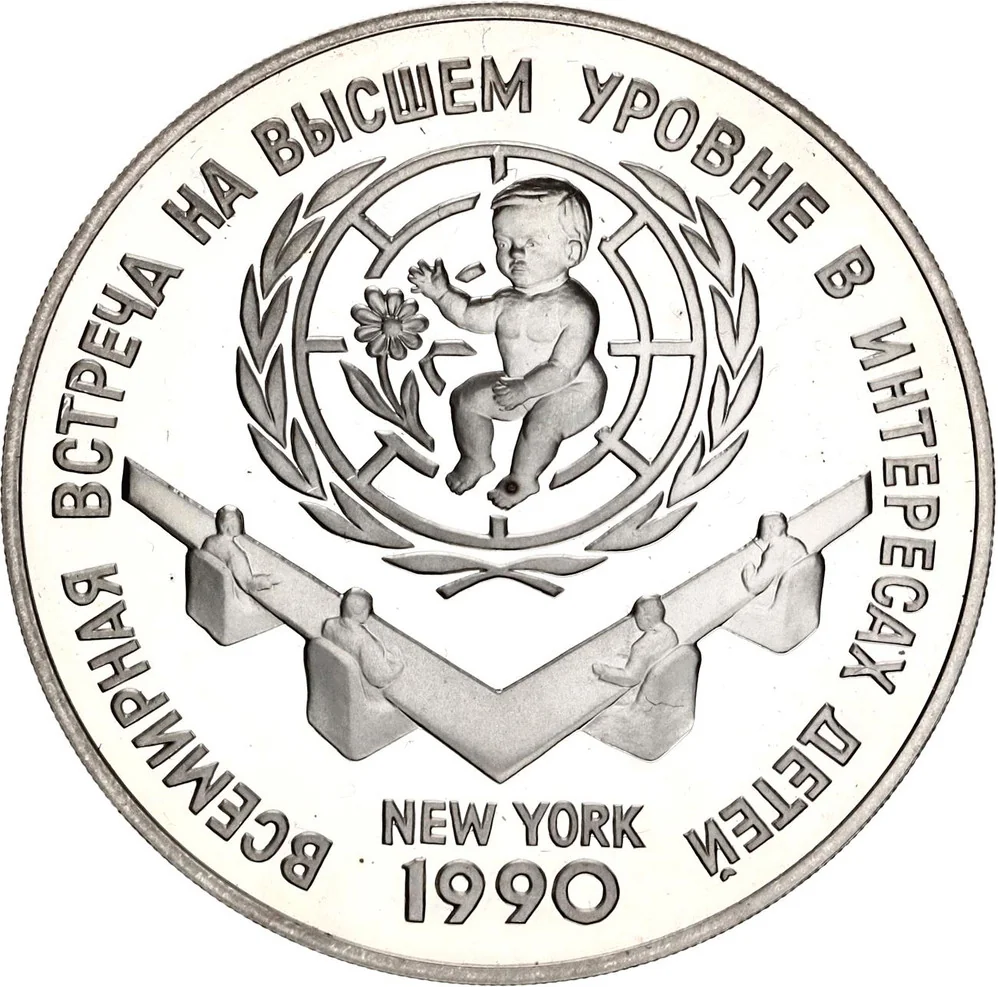
Baby and flower in wreath above seated figures around V-shape.
Inscription:
ВСЕМИРНАЯ ВСТРЕЧА НА ВЫСШЕМ УРОВНЕ В ИНТЕРЕСАХ ДЕТЕЙ
NEW YORK
1990
NEW YORK
1990
Translation:
WORLD SUMMIT IN THE INTERESTS OF CHILDREN
NEW YORK
1990
NEW YORK
1990
Script: Cyrillic
Language: Russian
Engraver: Nikolay Nosov
Edge
Reeded
Mints
| Name | Mark |
|---|---|
| Saint Petersburg | (ЛМД) |
Mintings
| Year | Mint Mark | Mintage | Quality | Collection |
|---|---|---|---|---|
| 1990 | ЛМД | 20,000 | Proof |
Historical background
By 1990, the Soviet Union's currency, the ruble, was in a state of profound crisis, a direct reflection of the collapsing command economy. The root cause was the massive and growing monetary overhang—a vast surplus of rubles in the hands of the population with few worthwhile goods to purchase. This imbalance was the result of decades of suppressed inflation, where the state printed money to cover budget deficits (exacerbated by falling oil prices and massive subsidies) while rigidly controlling the prices of basic necessities. Consequently, shelves in state stores were increasingly barren, as ration coupons were reintroduced for essential items, while a thriving black market and illegal currency exchanges flourished, where the ruble traded at a fraction of its official, meaningless exchange rate.
The situation created a dual monetary system. The official "non-cash" ruble used for transactions between state enterprises was entirely separate from the depreciated "cash" ruble used by citizens. Furthermore, a special "convertible ruble" for foreign trade was also disconnected from reality. Internally, the loss of confidence was absolute; citizens rushed to convert ruble savings into any tangible assets, from furniture to cars, accelerating economic disintegration. The republics of the USSR, seeking economic sovereignty, began issuing their own coupons and vouchers, further undermining the ruble's role as a unified currency and signaling the political unraveling of the Union itself.
The Gorbachev government's response was hesitant and ineffective. Reforms, like the poorly planned monetary confiscation of 1991, only deepened public distrust. The fundamental paradox was that price liberalization—necessary to end shortages—risked explosive hyperinflation given the massive monetary overhang, while maintaining controls guaranteed continued economic stagnation. This currency paralysis was a central factor in the failed negotiations for a new Union Treaty, as republics like Russia, under Yeltsin, sought control over their own financial systems. By the end of 1990, the ruble was functionally obsolete, setting the stage for the chaotic economic "shock therapy" and eventual currency reforms that would follow the USSR's dissolution in 1991.
The situation created a dual monetary system. The official "non-cash" ruble used for transactions between state enterprises was entirely separate from the depreciated "cash" ruble used by citizens. Furthermore, a special "convertible ruble" for foreign trade was also disconnected from reality. Internally, the loss of confidence was absolute; citizens rushed to convert ruble savings into any tangible assets, from furniture to cars, accelerating economic disintegration. The republics of the USSR, seeking economic sovereignty, began issuing their own coupons and vouchers, further undermining the ruble's role as a unified currency and signaling the political unraveling of the Union itself.
The Gorbachev government's response was hesitant and ineffective. Reforms, like the poorly planned monetary confiscation of 1991, only deepened public distrust. The fundamental paradox was that price liberalization—necessary to end shortages—risked explosive hyperinflation given the massive monetary overhang, while maintaining controls guaranteed continued economic stagnation. This currency paralysis was a central factor in the failed negotiations for a new Union Treaty, as republics like Russia, under Yeltsin, sought control over their own financial systems. By the end of 1990, the ruble was functionally obsolete, setting the stage for the chaotic economic "shock therapy" and eventual currency reforms that would follow the USSR's dissolution in 1991.
💎 Very Rare