

25 rupees – Seychelles
Add to wishlist
Non-circulating coins
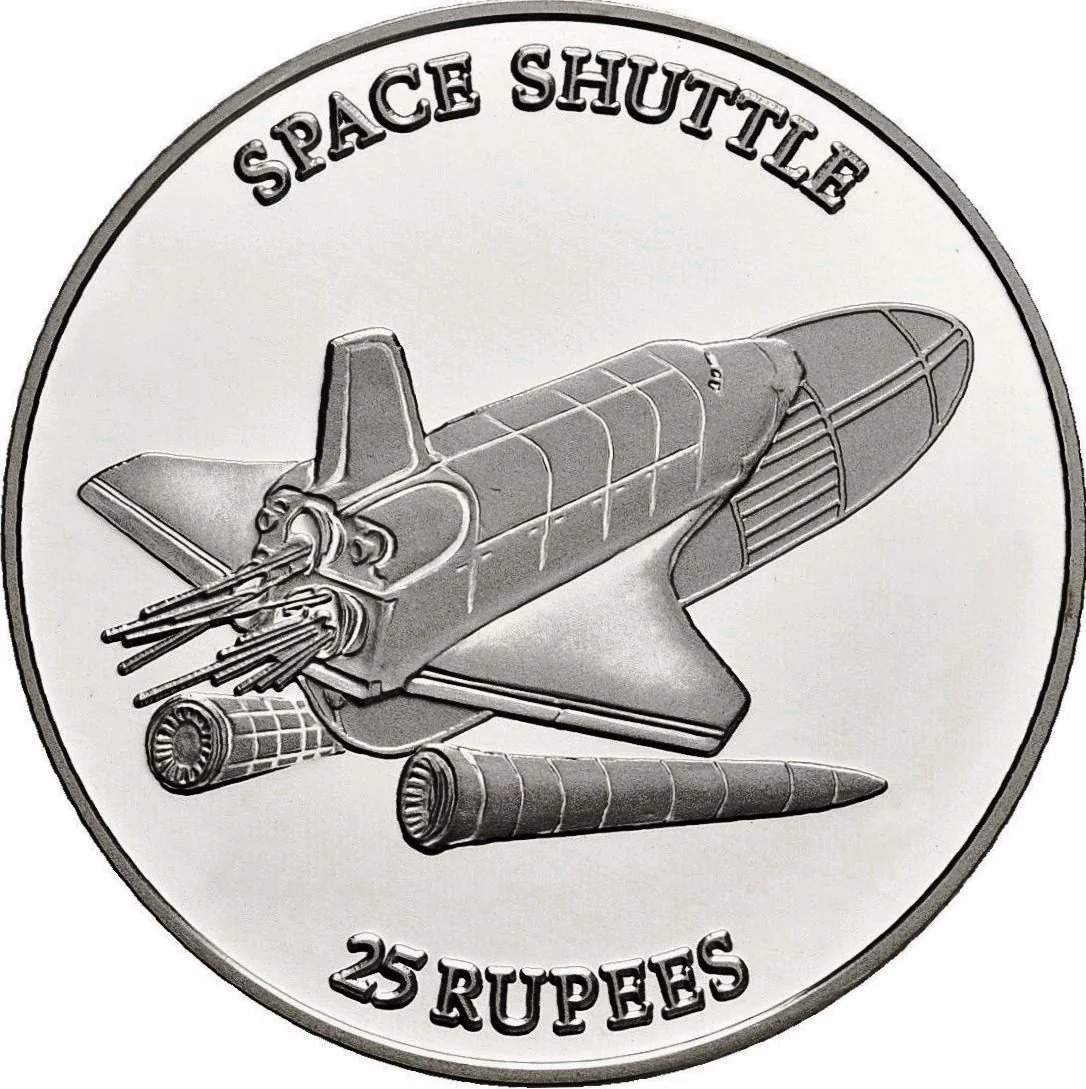
Commemoration: Space Shuttle
Seychelles
Context
Material
Diameter: 38.6 mm
Weight: 31.46 g
Silver Weight:: 29.10 g
Shape: Round
Composition: 92.5% Silver
Standard: Silver ounce
Magnetic: No
Technique: Milled
References
KM: #
Numista: #41622
Value
Exchange value: 25 SCR
Bullion value: $73.78
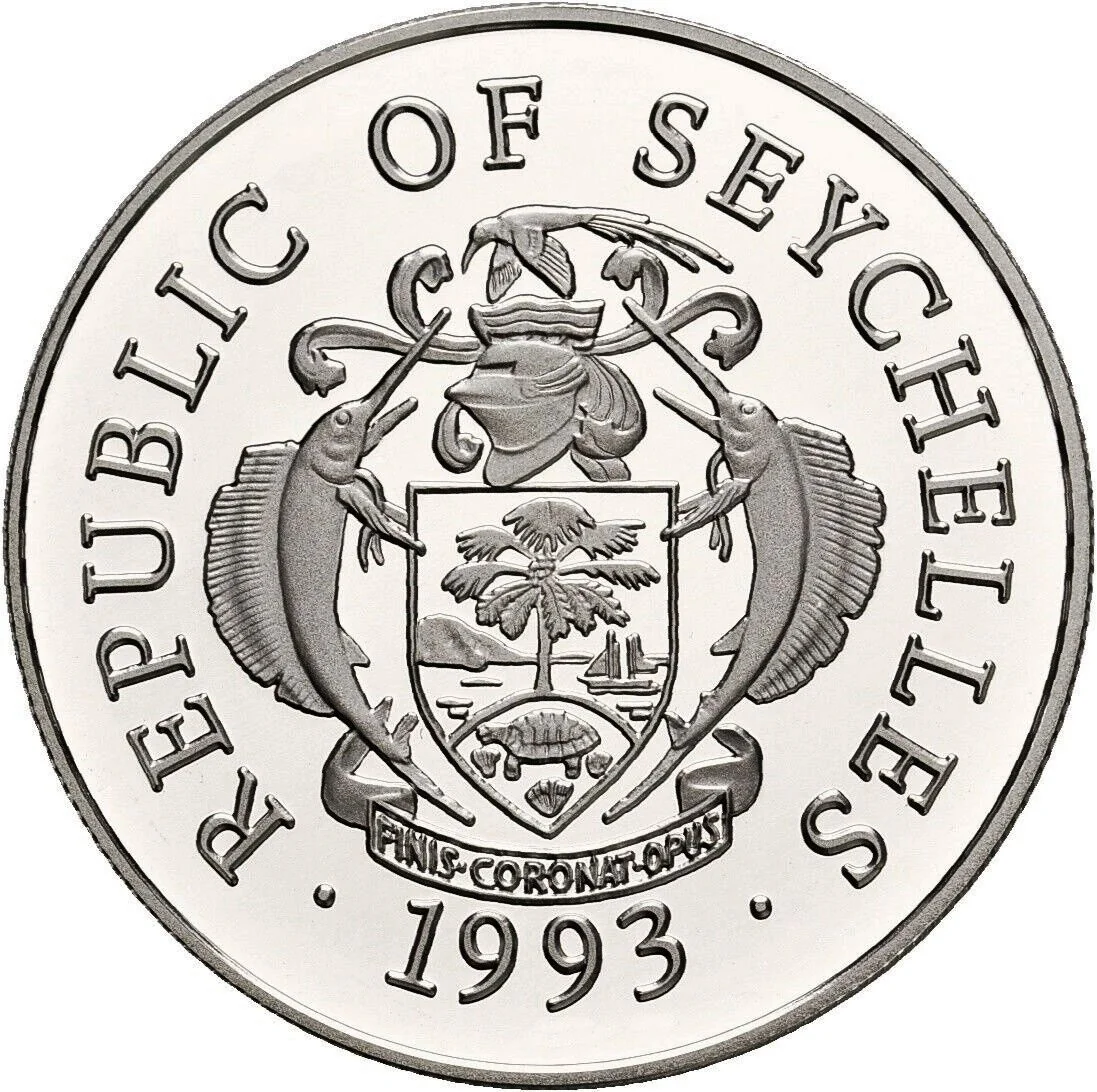
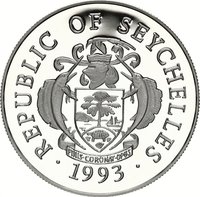
Obverse
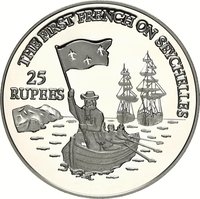
Reverse
Description:
"Columbia" ascending, boosters separating.
Inscription:
SPACE SHUTTLE
25 RUPEES
25 RUPEES
Script: Latin
Edge
Reeded
Categories
| Space |
Mints
| Name | Mark |
|---|---|
| Hamburgische Münze | — |
Mintings
| Year | Mint Mark | Mintage | Quality | Collection |
|---|---|---|---|---|
| 1993 | — | 10,000 | Proof |
Historical background
In 1993, the Seychellois economy was navigating a challenging transition. Following a period of significant external debt accumulation and fiscal imbalances in the late 1980s, the government, under President France-Albert René, had embarked on a structural adjustment program in partnership with the International Monetary Fund (IMF) and the World Bank. This program, initiated in the early 1990s, aimed to liberalize the tightly controlled economy, reduce the large public sector, and promote private enterprise. A central pillar of this reform was the move towards a more market-determined exchange rate for the Seychelles rupee (SCR), which was historically pegged and subject to severe foreign exchange controls.
The currency situation was characterized by a complex dual-exchange rate system. An official rate, set by the Central Bank of Seychelles, was used for government transactions and essential imports. Alongside this, a legal parallel market—the "Foreign Exchange Certificate" (FEC) system—operated at a significantly depreciated rate, reflecting the scarcity of hard currency. This created distortions, encouraged a black market, and hampered foreign investment. The scarcity of foreign exchange was a critical constraint, as the country's economy, heavily reliant on tourism and tuna exports, needed convertible currency to pay for imports of fuel, food, and machinery.
Therefore, 1993 represented a pivotal year of preparation for deeper monetary reform. Under the guidance of international financial institutions, authorities were laying the groundwork to unify the exchange rates and move towards a more flexible system. This involved gradual devaluations of the official rate, cautious liberalisation of current account transactions, and building foreign reserves. The reforms of this period set the stage for the more decisive step taken in November 1994, when the rupee was floated within a crawling band, marking the true beginning of Seychelles' journey towards a liberalised foreign exchange regime.
The currency situation was characterized by a complex dual-exchange rate system. An official rate, set by the Central Bank of Seychelles, was used for government transactions and essential imports. Alongside this, a legal parallel market—the "Foreign Exchange Certificate" (FEC) system—operated at a significantly depreciated rate, reflecting the scarcity of hard currency. This created distortions, encouraged a black market, and hampered foreign investment. The scarcity of foreign exchange was a critical constraint, as the country's economy, heavily reliant on tourism and tuna exports, needed convertible currency to pay for imports of fuel, food, and machinery.
Therefore, 1993 represented a pivotal year of preparation for deeper monetary reform. Under the guidance of international financial institutions, authorities were laying the groundwork to unify the exchange rates and move towards a more flexible system. This involved gradual devaluations of the official rate, cautious liberalisation of current account transactions, and building foreign reserves. The reforms of this period set the stage for the more decisive step taken in November 1994, when the rupee was floated within a crawling band, marking the true beginning of Seychelles' journey towards a liberalised foreign exchange regime.
💎 Extremely Rare