

1 dollar (Central Bank) – Eastern Caribbean States
Add to wishlist
Circulating commemorative coins
Commemoration: 25th Anniversary of the Central Bank
Context
Year: 2008
Issuer: Eastern Caribbean States
Issuing organization: Eastern Caribbean Central Bank
Ruler: Elizabeth II
Currency:
(since 1965)
Total mintage: 500,000
Material
References
KM: #
Numista: #14469
Value
Exchange value: 1 XCD
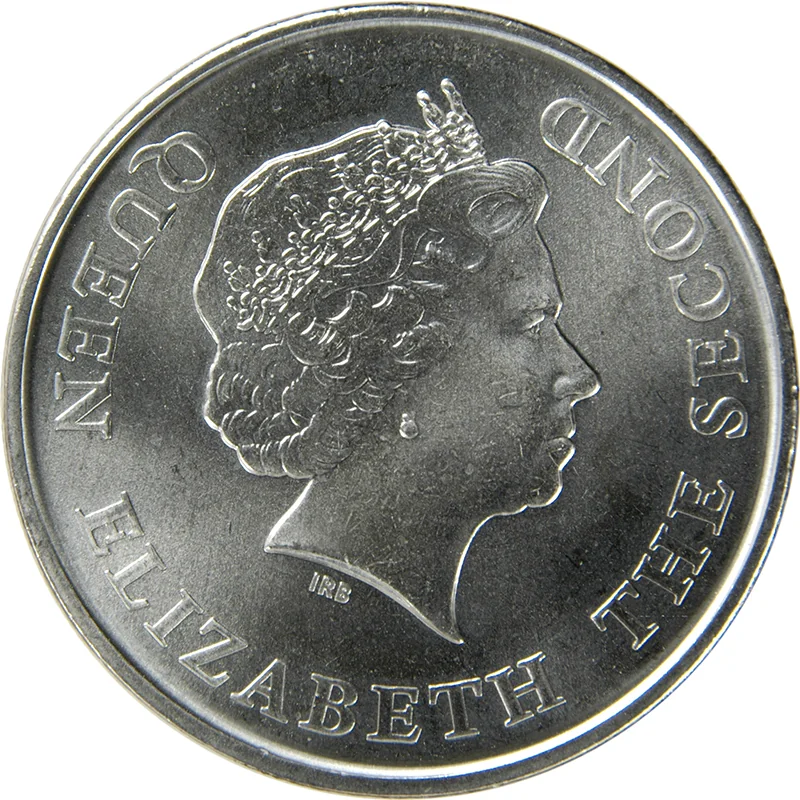
Obverse
Description:
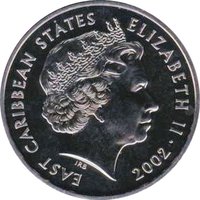
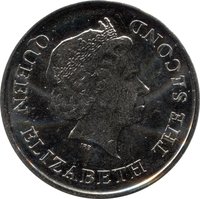
Queen Elizabeth II's profile facing right.
Inscription:
QUEEN ELIZABETH THE SECOND
IRB
IRB
Script: Latin
Engraver: Ian Rank-Broadley
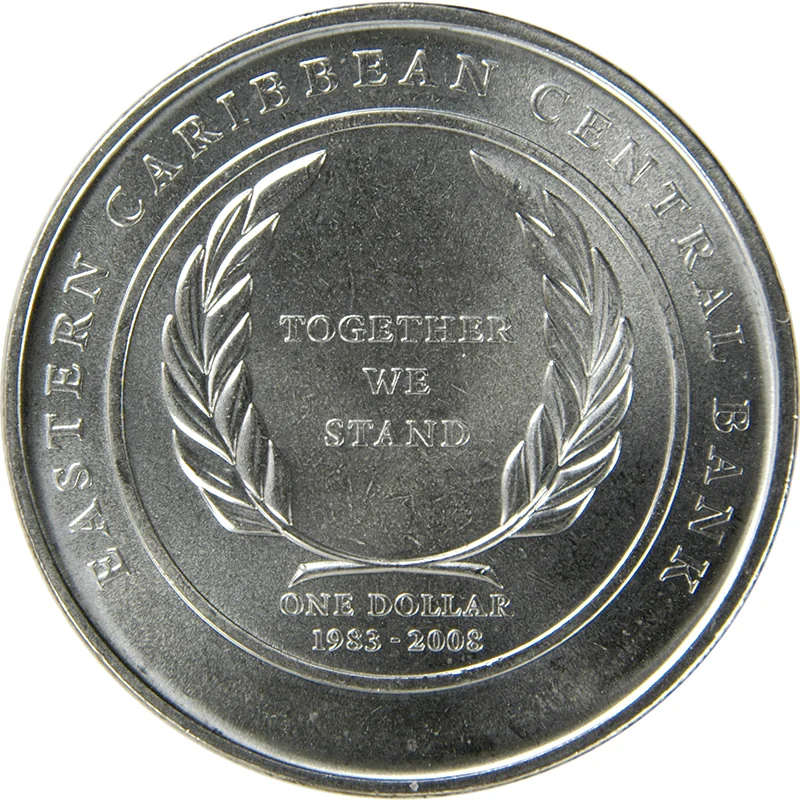
Reverse
Description:
Motto in wreath.
Inscription:
EASTERN CARIBBEAN CENTRAL BANK
TOGETHER
WE
STAND
ONE DOLLAR
1983-2008
TOGETHER
WE
STAND
ONE DOLLAR
1983-2008
Script: Latin
Edge
Reeded
Mintings
| Year | Mint Mark | Mintage | Quality | Collection |
|---|---|---|---|---|
| 2008 | — | 500,000 |
Historical background
The Eastern Caribbean Currency Union (ECCU) faced significant challenges in 2008, primarily stemming from the global financial crisis. The region's economies, heavily dependent on tourism and foreign direct investment, were hit hard as these sectors contracted sharply. This exposed underlying vulnerabilities, including high public debt levels—which averaged over 100% of GDP in some member states—and persistent fiscal deficits. The crisis strained the long-standing Eastern Caribbean Central Bank (ECCB) arrangement, which maintains a fixed exchange rate of EC$2.70 to US$1, raising concerns about the adequacy of foreign reserves to defend the peg.
In response, the ECCB and member governments implemented a coordinated strategy focused on preserving monetary stability. The central bank's primary objective was to safeguard the currency peg, a cornerstone of economic confidence for the region for decades. To achieve this, it maintained a conservative monetary policy, provided liquidity support to commercial banks, and closely monitored the foreign reserve cover, which remained above the statutory minimum but under pressure. Fiscal consolidation became a urgent priority, with the ECCB advocating for stringent measures to curb government spending and reduce debt, guided by the Eight Point Stabilization and Growth Program.
Ultimately, the fixed exchange rate regime was successfully maintained throughout the crisis, a testament to the ECCB's institutional credibility and the political commitment of member states. However, the events of 2008 starkly highlighted the structural fragilities of small, open economies within a monetary union. The aftermath accelerated calls for deeper regional economic integration, stronger fiscal discipline frameworks, and economic diversification to reduce vulnerability to external shocks, setting the policy agenda for the subsequent decade.
In response, the ECCB and member governments implemented a coordinated strategy focused on preserving monetary stability. The central bank's primary objective was to safeguard the currency peg, a cornerstone of economic confidence for the region for decades. To achieve this, it maintained a conservative monetary policy, provided liquidity support to commercial banks, and closely monitored the foreign reserve cover, which remained above the statutory minimum but under pressure. Fiscal consolidation became a urgent priority, with the ECCB advocating for stringent measures to curb government spending and reduce debt, guided by the Eight Point Stabilization and Growth Program.
Ultimately, the fixed exchange rate regime was successfully maintained throughout the crisis, a testament to the ECCB's institutional credibility and the political commitment of member states. However, the events of 2008 starkly highlighted the structural fragilities of small, open economies within a monetary union. The aftermath accelerated calls for deeper regional economic integration, stronger fiscal discipline frameworks, and economic diversification to reduce vulnerability to external shocks, setting the policy agenda for the subsequent decade.
🌱 Fairly Common