

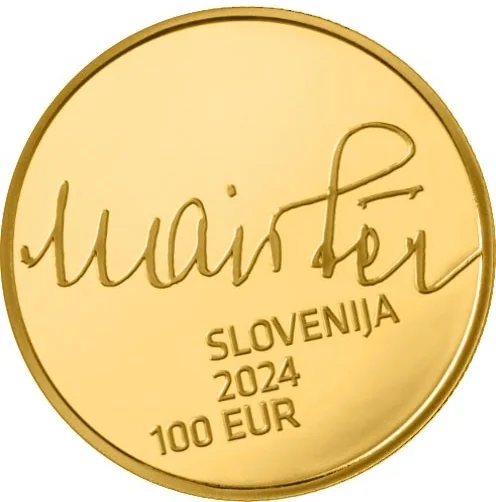
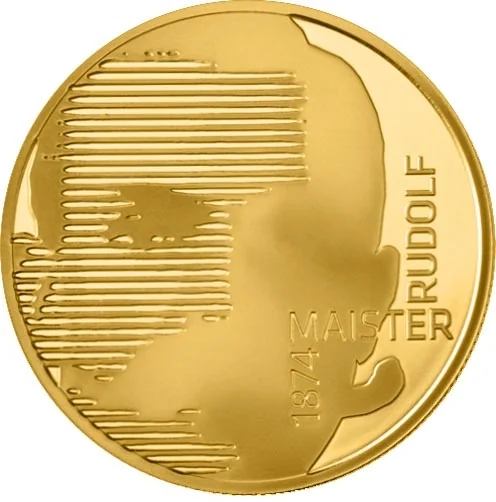
100 euro (Rudolf Maister) – Slovenia
Add to wishlist
Non-circulating coins
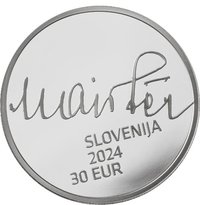
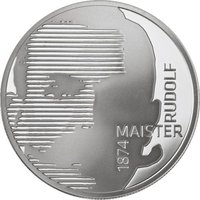
Commemoration: 150th anniversary of the birth of Rudolf Maister
Slovenia
Context
Material
References
KM: #
Numista: #413386
Value
Exchange value: 100 EUR
Bullion value: $967.19
Inflation-adjusted value: 104.60 EUR
Obverse
Edge
Categories
| Art> Literature |
| Art> Painting |
| Event> Birth anniversary |
| Person> Artist |
| Person> Military leader |
Mints
| Name | Mark |
|---|---|
| Imprensa Nacional - Casa da Moeda | — |
Mintings
| Year | Mint Mark | Mintage | Quality | Collection |
|---|---|---|---|---|
| 2024 | — | 750 | Proof |
Historical background
Slovenia enters 2024 as a stable member of the Eurozone, having adopted the euro in 2007. As such, its monetary policy is set by the European Central Bank (ECB), which continues its focus on combating inflation across the Eurozone. The primary domestic currency "situation" is therefore one of managing the impacts of ECB decisions, particularly high interest rates, on the Slovenian economy. While the shared currency provides macroeconomic stability and eliminates exchange rate risk with key trading partners, it also means Slovenia cannot set independent interest rates tailored solely to its own economic conditions, which include slowing GDP growth and inflation rates that have eased but remain a concern.
The key domestic discussions around currency in 2024 are not about reverting to the tolar but about the practical challenges of euro adoption in the digital age. A significant ongoing topic is the decline in cash usage and the push for digital financial inclusion, alongside implementing the EU's digital euro project, should it proceed. Furthermore, high inflation in previous years, though now moderating, has kept public attention on price levels and purchasing power, with some political discourse questioning the euro's role in price setting, though mainstream commitment to the currency remains unwavering.
Looking ahead, Slovenia's currency landscape in 2024 will be shaped by the ECB's potential shift towards lowering interest rates later in the year, which would provide relief for businesses and households with loans. The country's economic resilience, supported by strong exports and EU funding, is tested within the single currency framework. Ultimately, Slovenia's currency situation is characterized by the trade-offs of Eurozone membership: enjoying deep financial integration and stability while navigating the one-size-fits-all monetary policy of the ECB during a period of economic transition.
The key domestic discussions around currency in 2024 are not about reverting to the tolar but about the practical challenges of euro adoption in the digital age. A significant ongoing topic is the decline in cash usage and the push for digital financial inclusion, alongside implementing the EU's digital euro project, should it proceed. Furthermore, high inflation in previous years, though now moderating, has kept public attention on price levels and purchasing power, with some political discourse questioning the euro's role in price setting, though mainstream commitment to the currency remains unwavering.
Looking ahead, Slovenia's currency landscape in 2024 will be shaped by the ECB's potential shift towards lowering interest rates later in the year, which would provide relief for businesses and households with loans. The country's economic resilience, supported by strong exports and EU funding, is tested within the single currency framework. Ultimately, Slovenia's currency situation is characterized by the trade-offs of Eurozone membership: enjoying deep financial integration and stability while navigating the one-size-fits-all monetary policy of the ECB during a period of economic transition.
✨ Legendary