

25 Lira (National Assembly) – Turkey
Non-circulating coins
Commemoration: 50th Anniversary of the National Assembly in Ankara
Turkey
Context

Material
References
KM: #Click to copy to clipboard897
Numista: #41059
Value
Exchange value: 25 TRL
Bullion value: $35.10
Inflation-adjusted value: 404865128.44 TRL
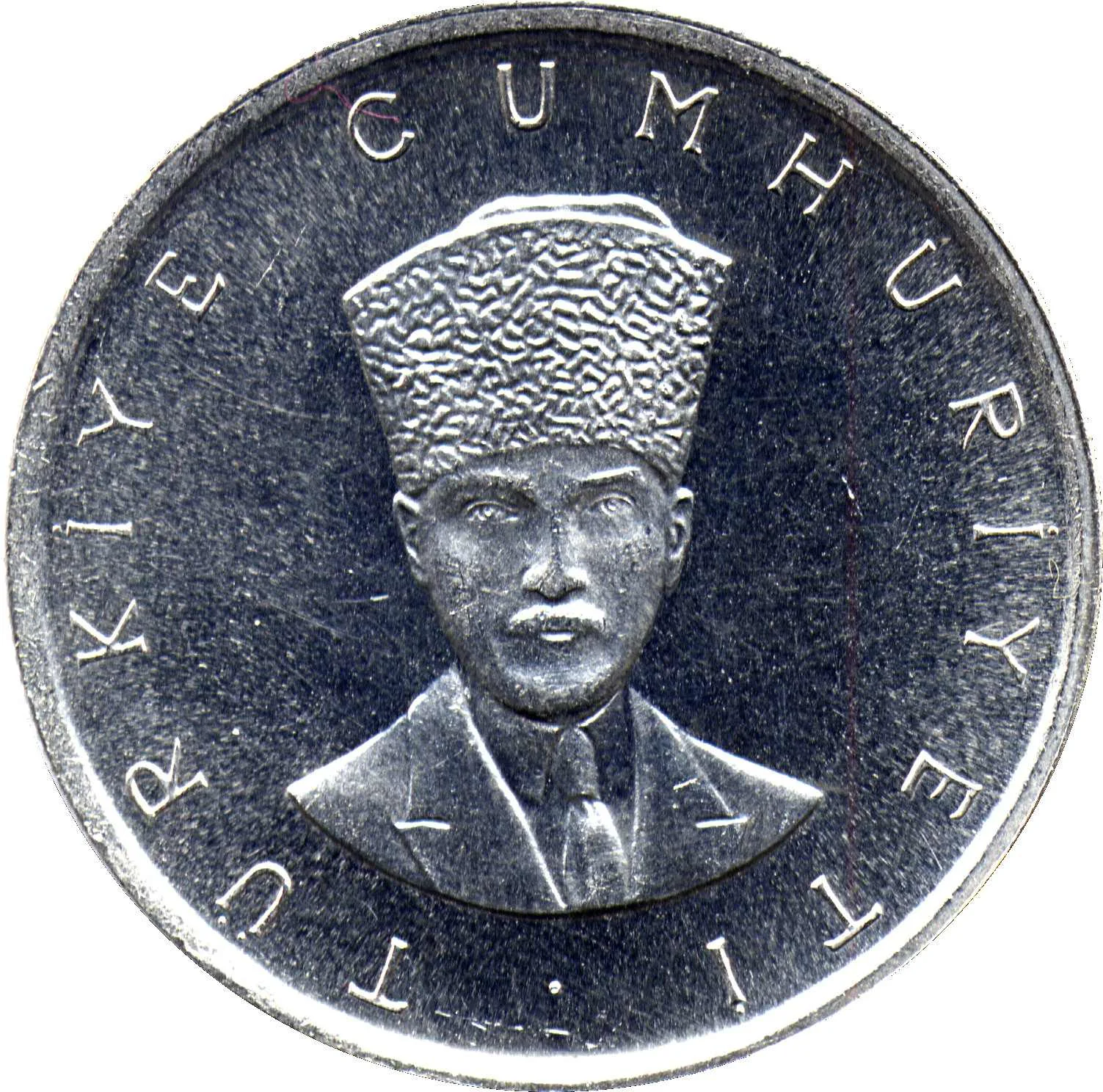
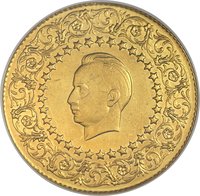
Obverse
Description:
Atatürk in 1920 dress.
Inscription:
TÜRKİYE CUMHURİYETİ
Translation:
REPUBLIC OF TURKEY
Script: Latin
Language: Turkish
Engraver: İsa Avni Kumuk
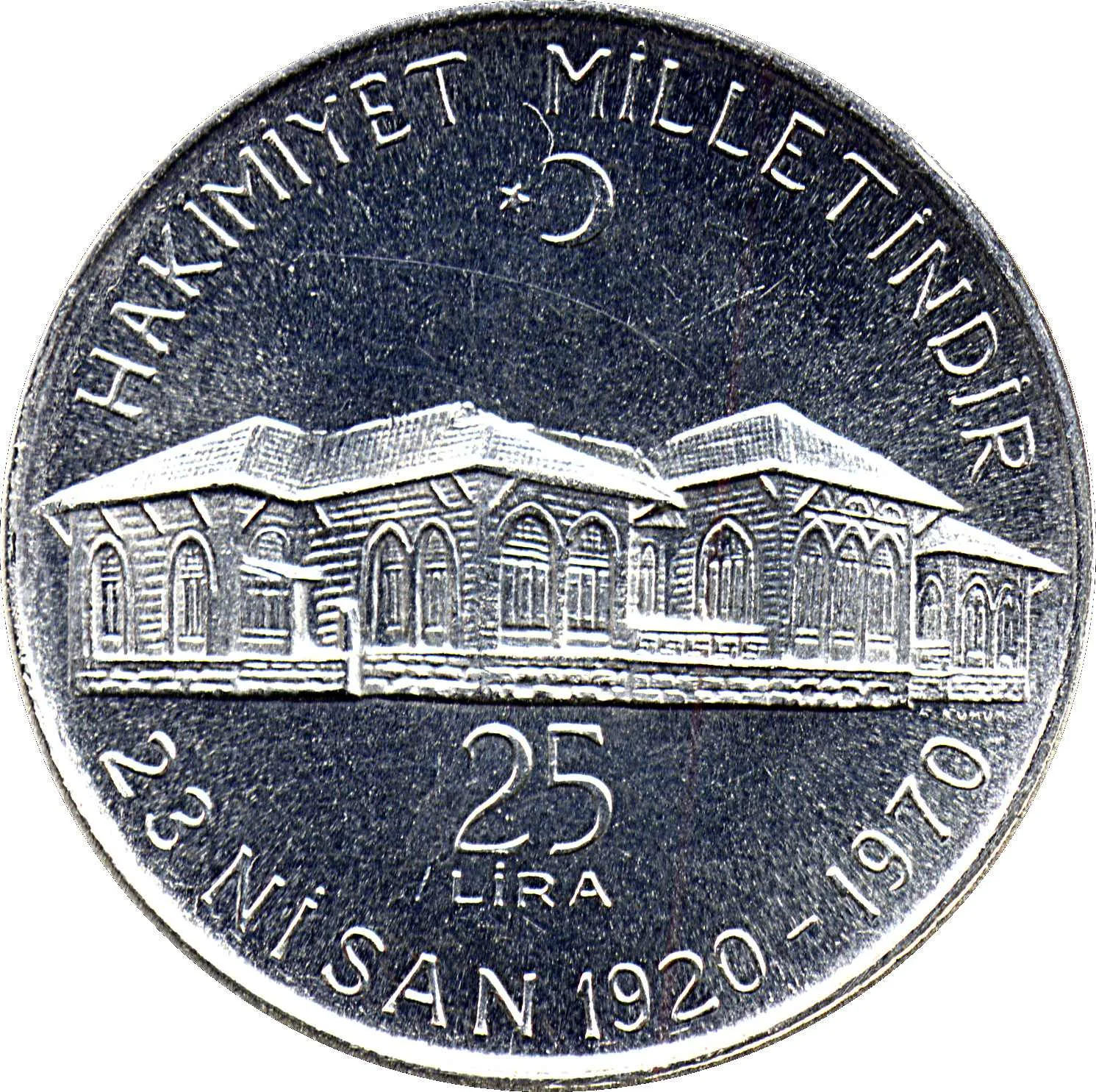
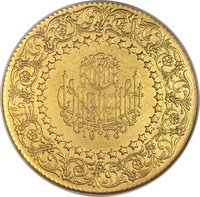
Reverse
Description:
First Turkish Parliament building.
Inscription:
HAKİMİYET MİLLETİNDİR.
23 NİSAN 1920-1970
25 LİRA
23 NİSAN 1920-1970
25 LİRA
Translation:
Sovereignty belongs to the Nation.
23 April 1920-1970
25 Lira
23 April 1920-1970
25 Lira
Script: Latin
Language: Turkish
Engraver: İsa Avni Kumuk
Edge
Reeded
Mintings
| Year | Mint Mark | Mintage | Quality | Collection |
|---|---|---|---|---|
| 1970 | — | 23,420 | ||
| 1970 | — | — | Proof |
Historical background
Turkey entered the 1970s in a state of profound economic instability, a legacy of the populist and inward-looking Import Substitution Industrialization (ISI) policies of the previous decade. While ISI had spurred initial industrial growth, it had created a fragile, inefficient economy reliant on heavy protectionism and chronic foreign exchange shortages. The fixed exchange rate regime, pegged to the US dollar since the 1960 devaluation, became increasingly unsustainable as the country ran persistent trade deficits, inflation accelerated, and foreign debt mounted. This overvalued lira discouraged exports and encouraged a booming black market for foreign currency, eroding the state's control over the economy.
The decade was marked by a series of severe balance of payments crises, most notably in 1970 and again later in the decade following the 1973 oil price shock. The government's response was typically a cycle of short-term stabilization plans, negotiated with the International Monetary Fund (IMF), which included sharp devaluations of the lira. For instance, in August 1970, the lira was devalued by 66% against the dollar, moving from 9 lira to 15 lira per dollar. These devaluations aimed to correct the overvaluation, boost exports, and secure crucial foreign loans, but they also dramatically increased the cost of imports and fueled inflationary spirals, severely eroding public purchasing power.
Underlying these currency crises was a toxic mix of political fragmentation and social unrest. Weak coalition governments, facing intense pressure from labor unions and business interests, consistently failed to implement lasting fiscal discipline. Instead, they resorted to printing money to finance large public sector deficits and subsidize state-owned enterprises, directly monetizing debt. This combination of loose fiscal policy, external shocks, and corrective devaluations created a vicious cycle of high inflation and currency depreciation, setting the stage for the full-blown economic and political chaos that would culminate in the military coup of 1980 and the subsequent radical neoliberal reforms.
The decade was marked by a series of severe balance of payments crises, most notably in 1970 and again later in the decade following the 1973 oil price shock. The government's response was typically a cycle of short-term stabilization plans, negotiated with the International Monetary Fund (IMF), which included sharp devaluations of the lira. For instance, in August 1970, the lira was devalued by 66% against the dollar, moving from 9 lira to 15 lira per dollar. These devaluations aimed to correct the overvaluation, boost exports, and secure crucial foreign loans, but they also dramatically increased the cost of imports and fueled inflationary spirals, severely eroding public purchasing power.
Underlying these currency crises was a toxic mix of political fragmentation and social unrest. Weak coalition governments, facing intense pressure from labor unions and business interests, consistently failed to implement lasting fiscal discipline. Instead, they resorted to printing money to finance large public sector deficits and subsidize state-owned enterprises, directly monetizing debt. This combination of loose fiscal policy, external shocks, and corrective devaluations created a vicious cycle of high inflation and currency depreciation, setting the stage for the full-blown economic and political chaos that would culminate in the military coup of 1980 and the subsequent radical neoliberal reforms.
🌟 Limited