

¼ dollar – United States
Add to wishlist
Non-circulating coins
Commemoration: Effigy Mounds National Monument
United States
Context
Year: 2017
Issuer: United States
Period:
(since 1776)
Currency:
(since 1785)
Subdivision: ¼ dollar = 25 Cents
Total mintage: 466,711
Material
References
KM: #
Numista: #102839
Value
Exchange value: ¼ USD = $0.25
Bullion value: $14.04
Inflation-adjusted value: 0.33 USD
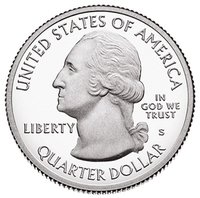
Obverse
Description:
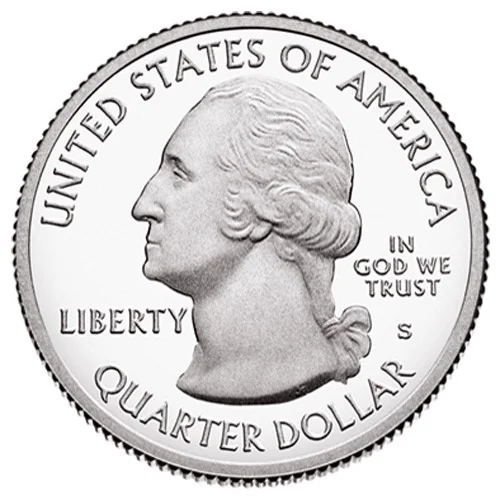
Left-profile portrait of George Washington, first U.S. President (1789–1797).
Inscription:
UNITED STATES OF AMERICA
LIBERTY
IN GOD WE TRUST
QUARTER DOLLAR
LIBERTY
IN GOD WE TRUST
QUARTER DOLLAR
Script: Latin
Engraver: William Cousins
Designer: John Flanagan
Reverse
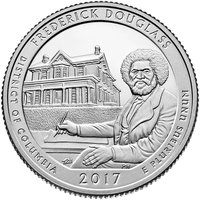
Description:
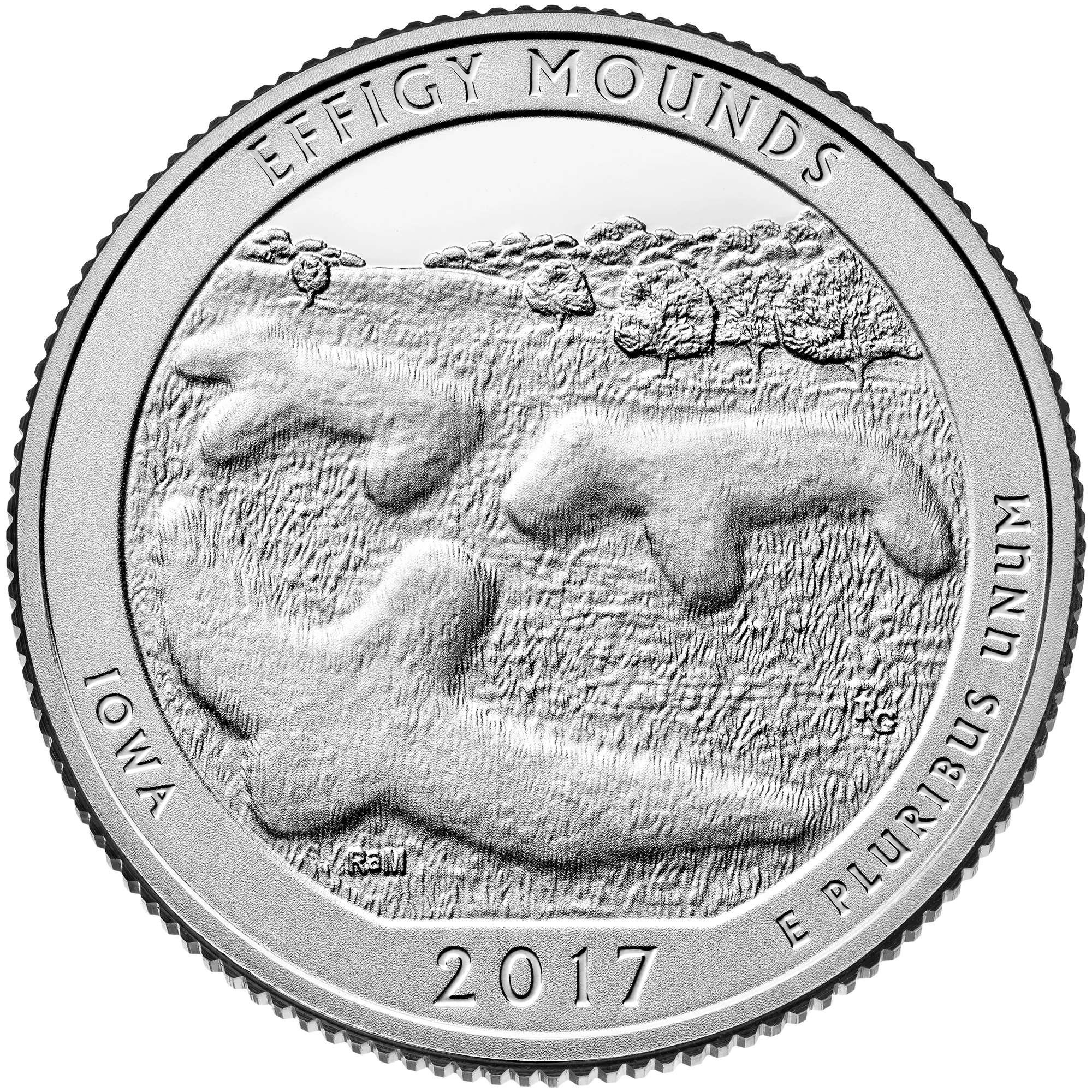
Aerial view of the Marching Bear Mounds.
Inscription:
EFFIGY MOUNDS
IOWA
2017
E PLURIBUS UNUM
IOWA
2017
E PLURIBUS UNUM
Script: Latin
Engraver: Renata Gordon
Designer: Richard Masters
Edge
Reeded
Mints
| Name | Mark |
|---|---|
| United States Mint of San Francisco | S |
Mintings
| Year | Mint Mark | Mintage | Quality | Collection |
|---|---|---|---|---|
| 2017 | S | 466,711 | Proof |
Historical background
In 2017, the United States currency situation was characterized by a period of monetary policy normalization following the extraordinary measures taken after the 2008 financial crisis. The Federal Reserve, under Chair Janet Yellen, was in the process of gradually raising the federal funds rate, implementing a second hike in March and a third in June, moving the target range to 1.00-1.25%. This reflected confidence in a strengthening labor market and a moderate economic expansion, with inflation remaining persistently below the Fed's 2% target but showing signs of gradual increase. The Fed also continued its plan to slowly unwind its massive balance sheet, which had ballooned to over $4.5 trillion due to quantitative easing (QE) programs, announcing in September that it would begin reducing its holdings of Treasury and mortgage-backed securities that October.
The U.S. dollar itself experienced significant volatility throughout the year. It began 2017 near 14-year highs, buoyed by expectations for pro-growth policies from the newly inaugurated Trump administration, including tax cuts and infrastructure spending. However, the "Trump Trade" faded as legislative progress stalled, and the dollar index (DXY) fell over 10% during the year, marking its worst annual performance since 2003. This decline was driven by a combination of political uncertainty, synchronized global growth boosting other currencies, and a more cautious Fed than some had anticipated. A weaker dollar had mixed effects, making U.S. exports more competitive but increasing the cost of imports.
Domestically, there was no major legislative action regarding physical currency or the dollar's status, though the year saw the continued rollout of the new $100 bill (first introduced in 2013) and ongoing public and congressional debate about the potential for a digital dollar. The economic backdrop was one of steady, if unspectacular, growth, which provided the foundation for the Fed's careful tightening path. Ultimately, 2017 was a transitional year where the focus shifted from crisis-era stimulus to managing a growing economy, setting the stage for further rate hikes and balance sheet reduction in 2018 under new Fed leadership.
The U.S. dollar itself experienced significant volatility throughout the year. It began 2017 near 14-year highs, buoyed by expectations for pro-growth policies from the newly inaugurated Trump administration, including tax cuts and infrastructure spending. However, the "Trump Trade" faded as legislative progress stalled, and the dollar index (DXY) fell over 10% during the year, marking its worst annual performance since 2003. This decline was driven by a combination of political uncertainty, synchronized global growth boosting other currencies, and a more cautious Fed than some had anticipated. A weaker dollar had mixed effects, making U.S. exports more competitive but increasing the cost of imports.
Domestically, there was no major legislative action regarding physical currency or the dollar's status, though the year saw the continued rollout of the new $100 bill (first introduced in 2013) and ongoing public and congressional debate about the potential for a digital dollar. The economic backdrop was one of steady, if unspectacular, growth, which provided the foundation for the Fed's careful tightening path. Ultimately, 2017 was a transitional year where the focus shifted from crisis-era stimulus to managing a growing economy, setting the stage for further rate hikes and balance sheet reduction in 2018 under new Fed leadership.

🌟 Uncommon