

1 dollar (Perth Mint) – Australia
Add to wishlist
Non-circulating coins
Commemoration: Perth Mint 125th Anniversary
Australia
Context
Material
Diameter: 40.9 mm
Weight: 31.11 g
Silver Weight:: 31.11 g
Thickness: 3.5 mm
Shape: Round
Composition: 99.99% Silver
Standard: Silver ounce
Magnetic: No
Technique: Milled
Alignment: Medal alignment
flip
References
KM: #
Numista: #409571
Value
Exchange value: 1 AUD
Bullion value: $79.37
Inflation-adjusted value: 1.04 AUD
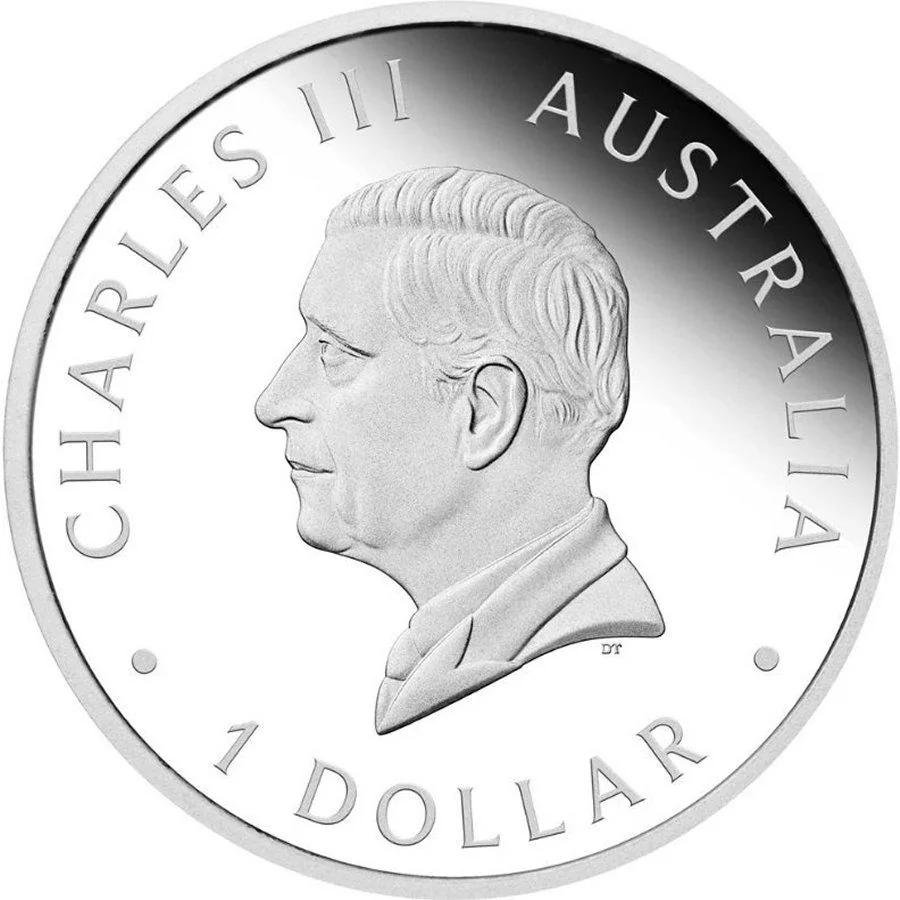
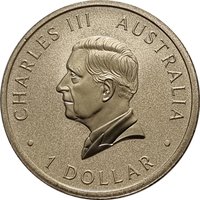
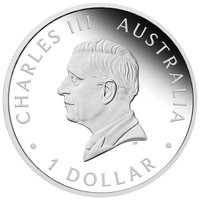
Obverse
Description:
Uncrowned portrait of King Charles III facing left.
Inscription:
CHARLES III
AUSTRALIA
1 DOLLAR
DT
AUSTRALIA
1 DOLLAR
DT
Script: Latin
Designer: Dan Thorne
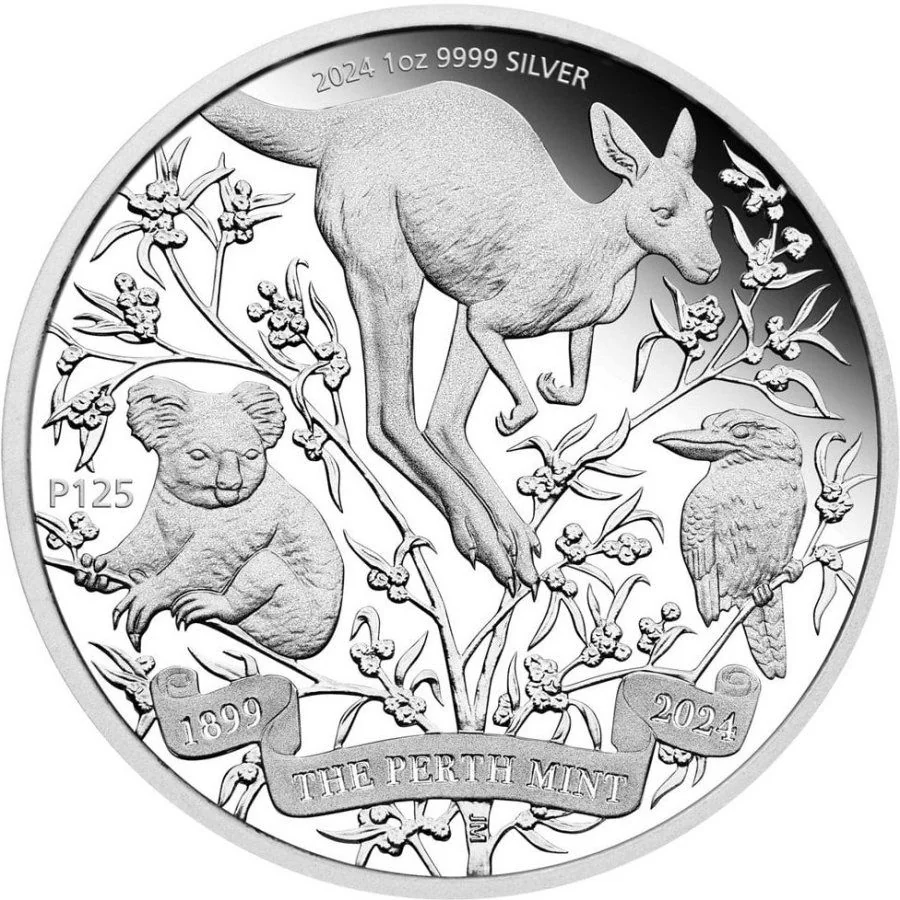
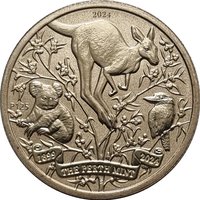
Reverse
Description:
Australian golden wattle framing a kangaroo, kookaburra, and koala.
Inscription:
2024 1oz 9999 SILVER
P125
1899 THE PERTH MINT 2024
JM
P125
1899 THE PERTH MINT 2024
JM
Script: Latin
Designer: Jennifer McKenna
Edge
Reeded
Mints
| Name | Mark |
|---|---|
| Perth Mint | P125 |
Historical background
Australia's currency landscape in 2024 is defined by a period of persistent inflation and a cautious, data-dependent Reserve Bank of Australia (RBA). Having raised the official cash rate to a 12-year high of 4.35% in November 2023, the RBA has held steady through the first half of 2024, signalling a delicate balancing act. While inflation has moderated from its peak, it remains stubbornly above the 2-3% target band, driven by persistent pressures in services, housing, and insurance costs. This has created a "higher for longer" interest rate environment, dampening consumer spending and placing significant strain on mortgage holders, but the central bank is prioritising a sustainable return to target over premature rate cuts.
The Australian dollar (AUD) has consequently been influenced by this monetary policy divergence with other major economies, particularly the United States. For much of the early year, the AUD traded in a relatively narrow band, often dipping below 65 US cents, as expectations for delayed US Federal Reserve rate cuts bolstered the US dollar. However, the currency remains sensitive to shifts in global risk sentiment and commodity prices. Strong demand for Australia's key exports—iron ore, coal, and liquefied natural gas—has provided underlying support, helping to offset some of the interest rate differential pressures and maintain a substantial trade surplus.
Looking ahead, the key domestic focus is on the trajectory of inflation and the labour market. Any signs of a more rapid cooling in price pressures or a material rise in unemployment could bring forward expectations for RBA easing, potentially weakening the AUD. Conversely, resilient economic data would prolong the rate hold. Externally, the currency's path will be shaped by the pace of monetary policy shifts in the US and China's economic performance, which dictates demand for Australian commodities. The overall picture is one of a currency navigating a complex transition from a tightening cycle to a eventual normalization, with stability being a key objective for policymakers.
The Australian dollar (AUD) has consequently been influenced by this monetary policy divergence with other major economies, particularly the United States. For much of the early year, the AUD traded in a relatively narrow band, often dipping below 65 US cents, as expectations for delayed US Federal Reserve rate cuts bolstered the US dollar. However, the currency remains sensitive to shifts in global risk sentiment and commodity prices. Strong demand for Australia's key exports—iron ore, coal, and liquefied natural gas—has provided underlying support, helping to offset some of the interest rate differential pressures and maintain a substantial trade surplus.
Looking ahead, the key domestic focus is on the trajectory of inflation and the labour market. Any signs of a more rapid cooling in price pressures or a material rise in unemployment could bring forward expectations for RBA easing, potentially weakening the AUD. Conversely, resilient economic data would prolong the rate hold. Externally, the currency's path will be shaped by the pace of monetary policy shifts in the US and China's economic performance, which dictates demand for Australian commodities. The overall picture is one of a currency navigating a complex transition from a tightening cycle to a eventual normalization, with stability being a key objective for policymakers.

🌟 Limited