

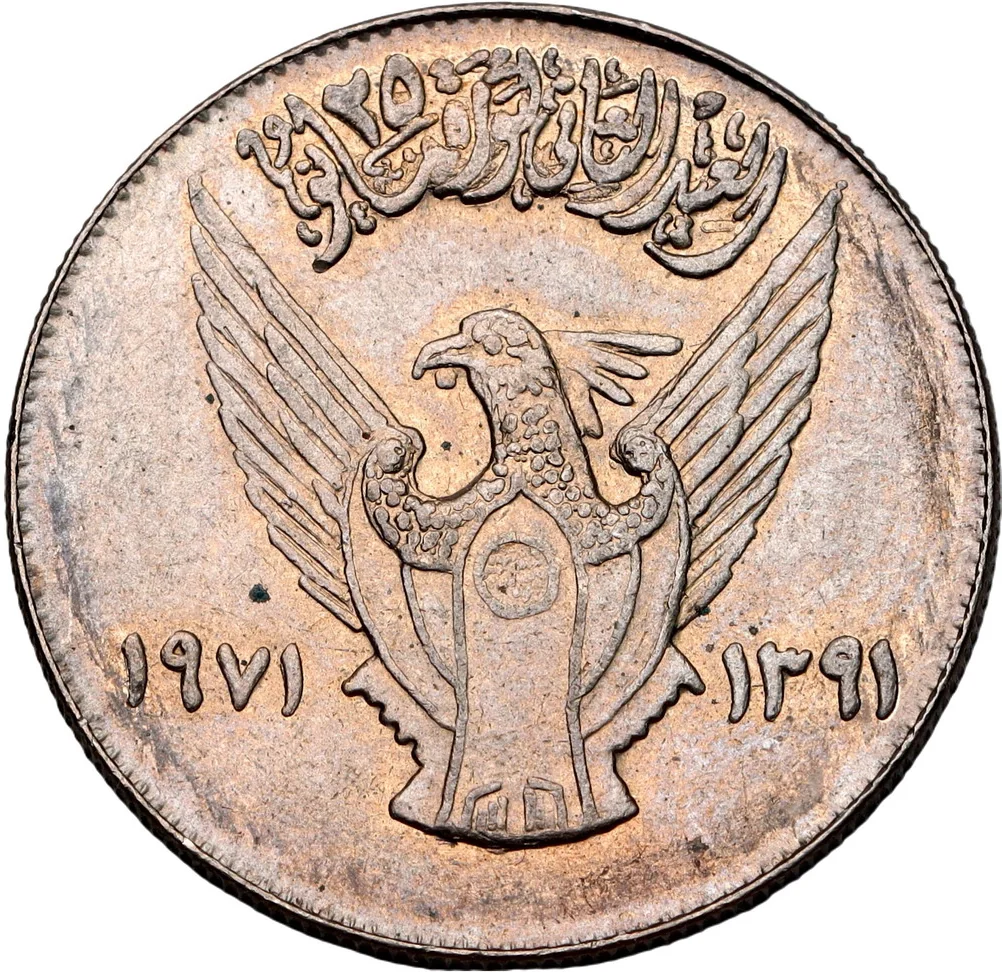
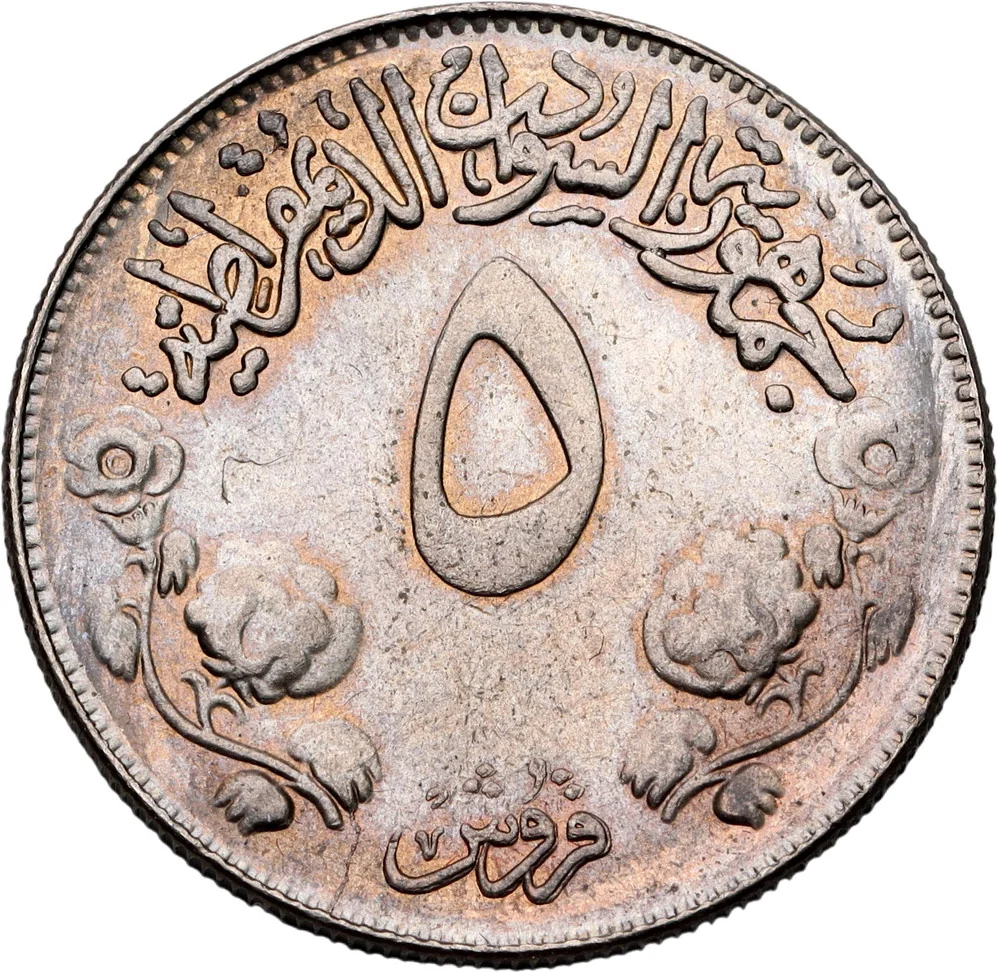
5 piastres (Revolution) – Sudan
Add to wishlist
Circulating commemorative coins
Commemoration: 2nd Anniversary of Revolution
Sudan
Context
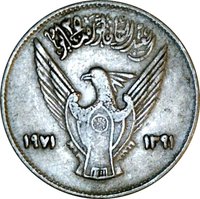
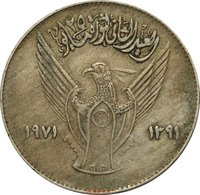
Year: 1971
Islamic (Hijri) Year:: 1391
Issuer: Sudan
Period:
(1969—1985)
Currency:
(1956—1992)
Demonetization: 8 June 1992
Total mintage: 500,000
Material
Diameter: 23.5 mm
Weight: 5 g
Shape: Round
Composition: Copper-nickel
Technique: Milled
Alignment: Medal alignment
flip
References
KM: #
Numista: #40903
Value
Exchange value: 0.05 SDP
Obverse
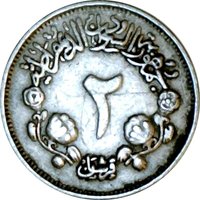
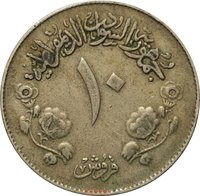
Reverse
Edge
Reeded
Mintings
| Year | Mint Mark | Mintage | Quality | Collection |
|---|---|---|---|---|
| 1971 | — | 500,000 |
Historical background
In 1971, Sudan's currency situation was intrinsically linked to the nation's post-independence economic ambitions and political turbulence. The Sudanese pound (SDG), introduced in 1956 to replace the Egyptian pound, was pegged to sterling and managed by the Currency Board. However, the government of President Gaafar Nimeiry, who came to power in a 1969 coup, sought greater economic sovereignty and control over monetary policy to fund ambitious development projects. This led to the establishment of the Bank of Sudan in February 1960, but by 1971, the underlying pressures of nationalization policies and significant public spending began to strain the currency's stability.
The year itself was marked by a profound political crisis that directly impacted economic confidence. In July 1971, a brief but intense communist coup attempt against Nimeiry was crushed, leading to a severe crackdown. This instability shook investor confidence and exacerbated existing economic weaknesses, including a growing budget deficit and inflationary pressures. While a major devaluation would not occur until 1978, the events of 1971 highlighted the vulnerability of the currency to political shocks and unsustainable fiscal policies, setting the stage for future economic challenges.
Consequently, the currency situation in 1971 was one of underlying fragility masked by a fixed exchange rate. The state-driven economic model, combined with the political fallout from the failed coup, increased reliance on deficit financing and sowed the seeds for the inflation and balance of payments problems that would escalate later in the decade. The period thus represents a critical juncture where political decisions began to directly undermine the stability of the Sudanese pound, moving the country away from the relative stability of the Currency Board era toward a more volatile and managed monetary environment.
The year itself was marked by a profound political crisis that directly impacted economic confidence. In July 1971, a brief but intense communist coup attempt against Nimeiry was crushed, leading to a severe crackdown. This instability shook investor confidence and exacerbated existing economic weaknesses, including a growing budget deficit and inflationary pressures. While a major devaluation would not occur until 1978, the events of 1971 highlighted the vulnerability of the currency to political shocks and unsustainable fiscal policies, setting the stage for future economic challenges.
Consequently, the currency situation in 1971 was one of underlying fragility masked by a fixed exchange rate. The state-driven economic model, combined with the political fallout from the failed coup, increased reliance on deficit financing and sowed the seeds for the inflation and balance of payments problems that would escalate later in the decade. The period thus represents a critical juncture where political decisions began to directly undermine the stability of the Sudanese pound, moving the country away from the relative stability of the Currency Board era toward a more volatile and managed monetary environment.
⭐ Somewhat Rare