

5 Hryven (Ukrainian UNESCO Membership) – Ukraine
Non-circulating coins
Commemoration: 50th Anniversary of Ukrainian UNESCO Membership
Ukraine
Context
Year: 2004
Issuer: Ukraine 
Issuing organization: National Bank of Ukraine
Period:
(since 1991)
Currency:
(since 1996)
Total mintage: 50,000
Material
References
KM: #Click to copy to clipboard220
Numista: #14443
Value
Exchange value: 5 UAH
Obverse
Description:
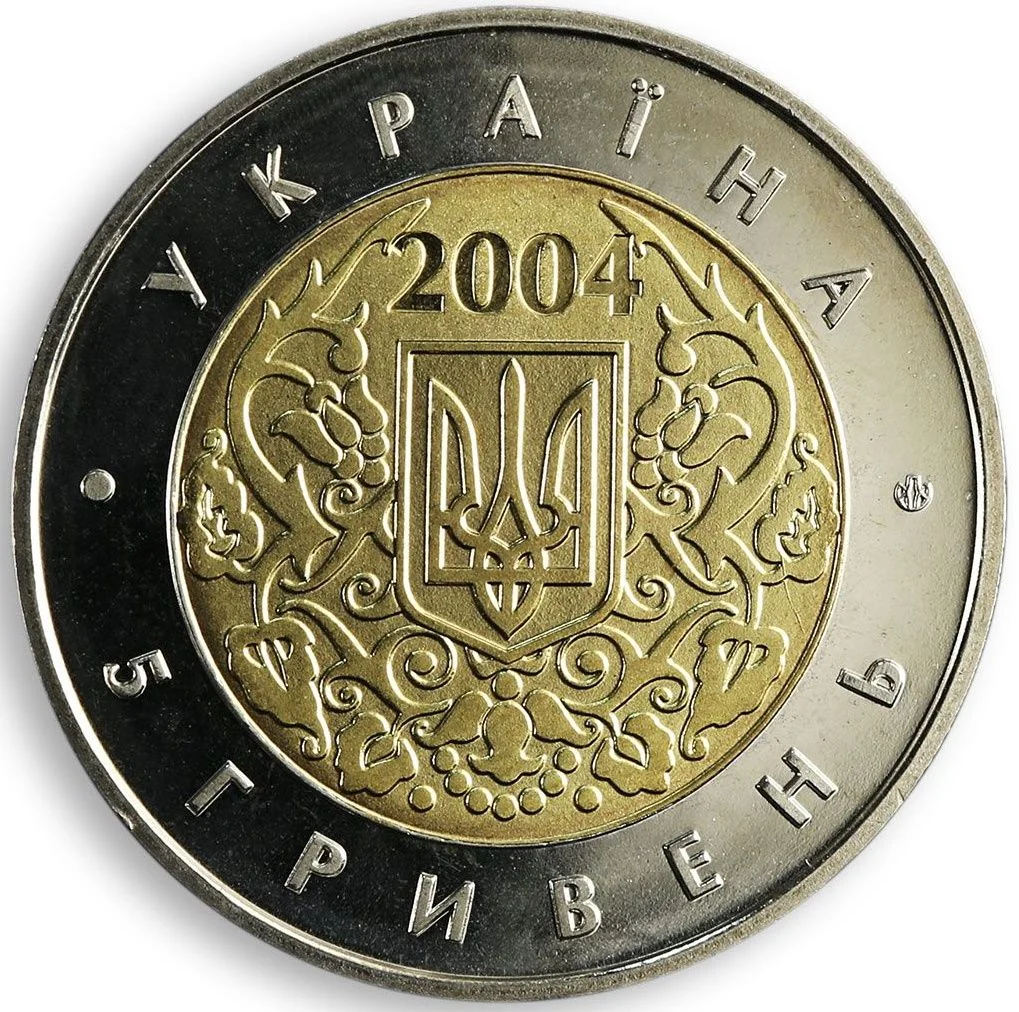
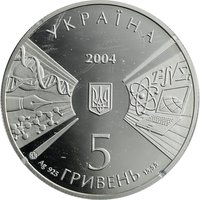
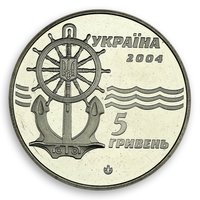
The inner ring features Ukraine’s small National Emblem against a stylized ornament, with the year 2004 above. The outer circle bears the inscriptions: УКРАЇНА, 5, ГРИВЕНЬ, and the NBU Mint logotype.
Inscription:
УКРАÏНА
2004
5 ГРИВЕНЬ
2004
5 ГРИВЕНЬ
Translation:
UKRAINE
2004
5 HRYVNIAS
2004
5 HRYVNIAS
Script: Cyrillic
Language: Ukrainian
Designer and engraver: Sviatoslav Ivanenko
Reverse
Description:
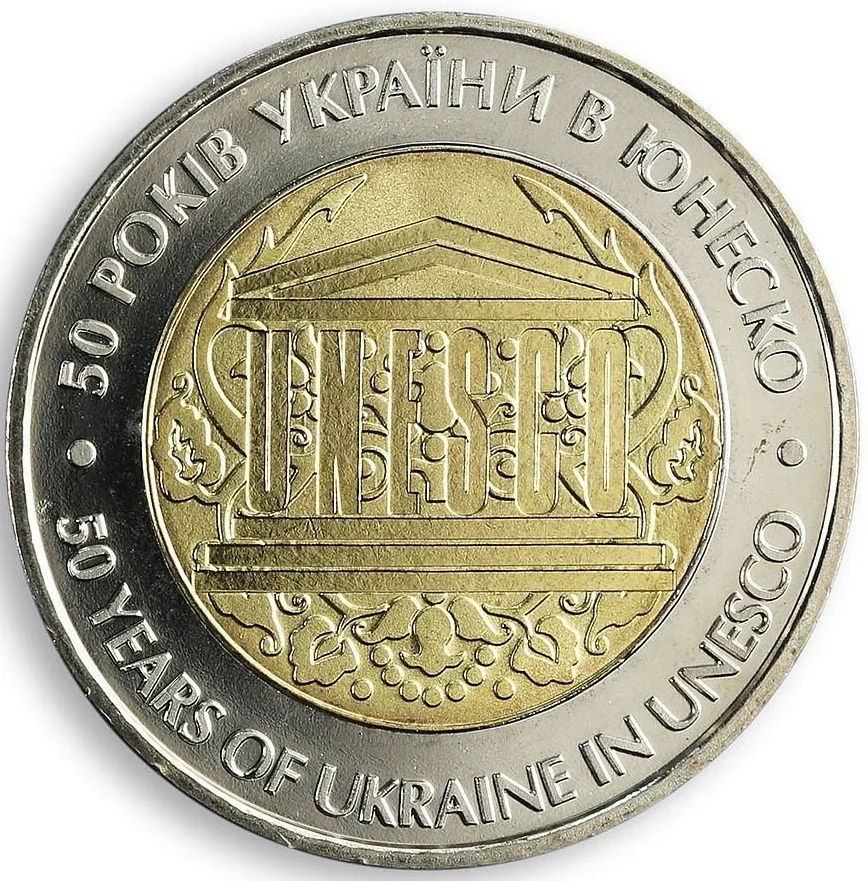
Against a stylized ornament, the UNESCO logo appears inside the ring, surrounded by the inscriptions: "50 РОКІВ УКРАЇНИ В ЮНЕСКО" and "50 YEARS OF UKRAINE IN UNESCO."
Inscription:
50 РОКIВ УКРАÏНИ В ЮНЕСКО
· 50 YEARS OF UKRAINE IN UNESCO ·
UNESCO
· 50 YEARS OF UKRAINE IN UNESCO ·
UNESCO
Translation:
50 Years of Ukraine in UNESCO
Script: Cyrillic
Designer and engraver: Sviatoslav Ivanenko
Edge
Reeded
Categories
| Organization> UNESCO |
Mints
| Name | Mark |
|---|---|
| National Bank of Ukraine Banknote Printing and Minting Works | — |
Mintings
| Year | Mint Mark | Mintage | Quality | Collection |
|---|---|---|---|---|
| 2004 | — | 50,000 |
Historical background
In 2004, Ukraine's currency, the hryvnia (UAH), operated under a managed floating exchange rate regime, pegged loosely to the US dollar within a narrow band set by the National Bank of Ukraine (NBU). This policy aimed to provide stability and curb inflation following the currency's introduction in 1996 after the hyperinflation of the early post-Soviet years. However, the period was marked by significant underlying pressures. Years of robust economic growth, driven largely by rising global prices for Ukraine's key steel and chemical exports, led to strong capital inflows. This created upward pressure on the hryvnia, forcing the NBU to frequently intervene in foreign exchange markets by buying dollars to maintain its peg and prevent excessive appreciation, which would hurt export competitiveness.
The currency's stability was fundamentally intertwined with the political crisis that defined the year—the Orange Revolution. The fraudulent presidential election in November and the subsequent mass protests created profound political uncertainty, shaking investor confidence. This triggered capital flight and increased demand for foreign currency, testing the NBU's reserves and its commitment to the peg. The central bank was forced to spend heavily to support the hryvnia, highlighting the vulnerability of the fixed exchange rate to political shocks. The situation underscored a growing contradiction between a rigid exchange rate and the need for an independent monetary policy to manage domestic economic conditions.
By year's end, the political resolution in favor of Viktor Yushchenko averted an immediate currency crisis, but the events of 4 exposed critical weaknesses. The pressure on reserves and the economy's dependence on volatile commodity exports set the stage for future policy debates. These debates would eventually lead to a shift towards a more flexible exchange rate in the following years, as maintaining a strict peg was seen as increasingly unsustainable for Ukraine's evolving market economy and its exposure to both political and external economic shocks.
The currency's stability was fundamentally intertwined with the political crisis that defined the year—the Orange Revolution. The fraudulent presidential election in November and the subsequent mass protests created profound political uncertainty, shaking investor confidence. This triggered capital flight and increased demand for foreign currency, testing the NBU's reserves and its commitment to the peg. The central bank was forced to spend heavily to support the hryvnia, highlighting the vulnerability of the fixed exchange rate to political shocks. The situation underscored a growing contradiction between a rigid exchange rate and the need for an independent monetary policy to manage domestic economic conditions.
By year's end, the political resolution in favor of Viktor Yushchenko averted an immediate currency crisis, but the events of 4 exposed critical weaknesses. The pressure on reserves and the economy's dependence on volatile commodity exports set the stage for future policy debates. These debates would eventually lead to a shift towards a more flexible exchange rate in the following years, as maintaining a strict peg was seen as increasingly unsustainable for Ukraine's evolving market economy and its exposure to both political and external economic shocks.
🌟 Uncommon