

100 kroner – Denmark
Add to wishlist
Non-circulating coins
Commemoration: International Polar Year
Denmark
Context
Material
Diameter: 38 mm
Weight: 31.1 g
Silver Weight:: 31.07 g
Shape: Round
Composition: 99.9% Silver
Standard: Silver ounce
Magnetic: No
Technique: Milled
Alignment: Medal alignment
flip
References
KM: #
Numista: #40874
Value
Exchange value: 100 DKK
Bullion value: $76.73
Inflation-adjusted value: 132.26 DKK
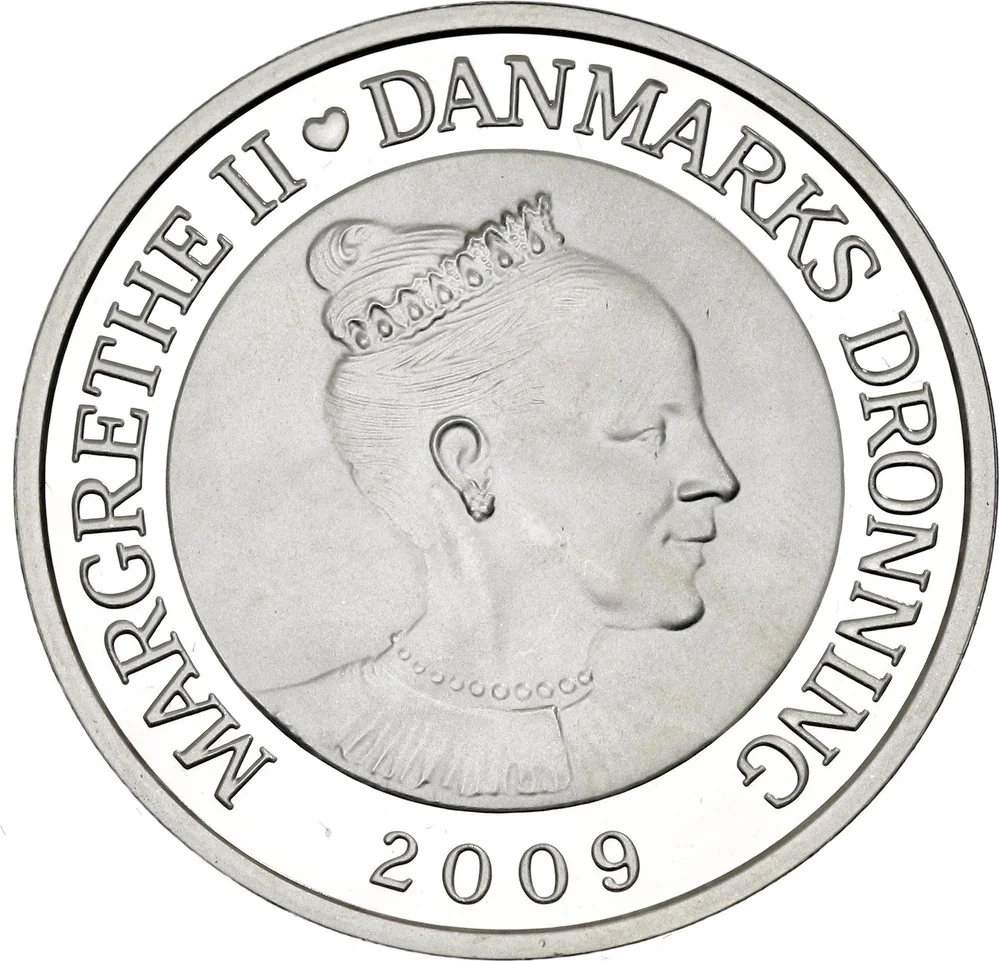
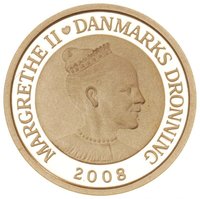
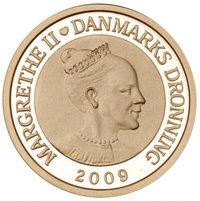
Obverse
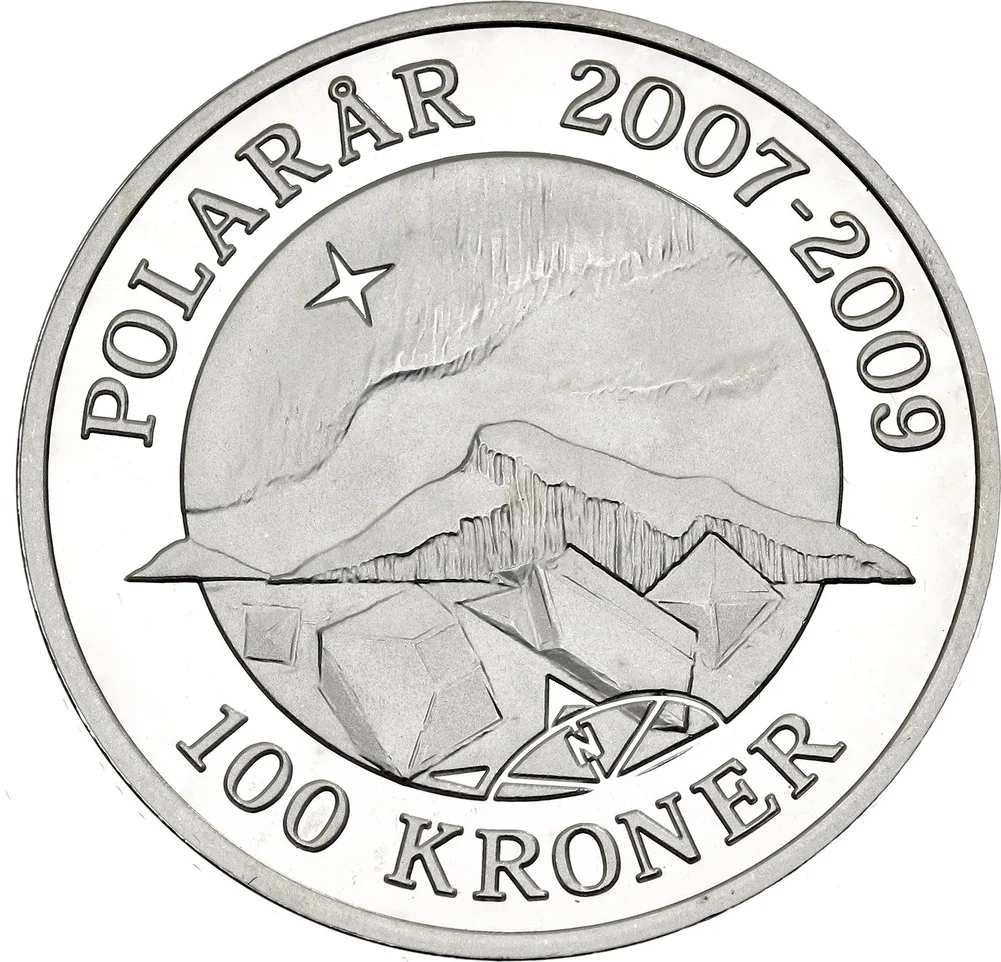
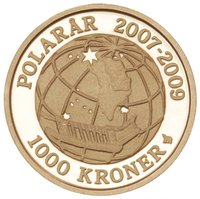
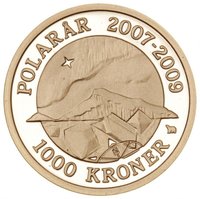
Reverse
Description:
Arctic Aurora
Inscription:
POLARÅR
2007-2009
100 KRONER
2007-2009
100 KRONER
Translation:
Polar Year
2007-2009
100 Kroner
2007-2009
100 Kroner
Script: Latin
Language: Norwegian
Engraver: Morten Stræde
Edge
Mints
| Name | Mark |
|---|---|
| Royal Danish Mint | — |
Mintings
| Year | Mint Mark | Mintage | Quality | Collection |
|---|---|---|---|---|
| 2009 | — | 10,600 | Proof |
Historical background
In 2009, Denmark's currency situation was defined by its long-standing policy of maintaining a stable exchange rate between the Danish krone (DKK) and the euro. Since 1999, Denmark had participated in the European Exchange Rate Mechanism II (ERM II), pegging the krone to the euro within a narrow band of ±2.25%. This policy, supported by the Danish central bank (Danmarks Nationalbank), was a cornerstone of economic stability, providing a credible anchor for inflation and interest rates while the country retained its opt-out from adopting the single currency.
The global financial crisis, which intensified in late 2008, created significant pressure on this arrangement in 2009. As investors sought safe-haven assets, there was substantial capital inflow into Denmark, leading to upward pressure on the krone. To maintain the peg and prevent the krone from appreciating beyond its permitted limit, Danmarks Nationalbank was forced to intervene heavily in foreign exchange markets, selling kroner and buying foreign currency. Concurrently, it aggressively cut interest rates, bringing its key policy rate below that of the European Central Bank (ECB) to discourage speculative inflows.
Despite the turbulent global environment, the peg held firm throughout 2009, demonstrating its resilience. The situation underscored Denmark's commitment to a fixed exchange rate as its primary monetary policy objective, even at the cost of forfeiting an independent interest rate policy tailored to the domestic business cycle. By year's end, the krone remained stable, and the crisis had, if anything, reinforced political and economic consensus for the fixed exchange rate regime as a defensive shield against financial market volatility, rather than prompting any serious debate about joining the eurozone.
The global financial crisis, which intensified in late 2008, created significant pressure on this arrangement in 2009. As investors sought safe-haven assets, there was substantial capital inflow into Denmark, leading to upward pressure on the krone. To maintain the peg and prevent the krone from appreciating beyond its permitted limit, Danmarks Nationalbank was forced to intervene heavily in foreign exchange markets, selling kroner and buying foreign currency. Concurrently, it aggressively cut interest rates, bringing its key policy rate below that of the European Central Bank (ECB) to discourage speculative inflows.
Despite the turbulent global environment, the peg held firm throughout 2009, demonstrating its resilience. The situation underscored Denmark's commitment to a fixed exchange rate as its primary monetary policy objective, even at the cost of forfeiting an independent interest rate policy tailored to the domestic business cycle. By year's end, the krone remained stable, and the crisis had, if anything, reinforced political and economic consensus for the fixed exchange rate regime as a defensive shield against financial market volatility, rather than prompting any serious debate about joining the eurozone.
💎 Very Rare