

1 cent – Straits Settlements
Add to wishlist
Malaysia
Context
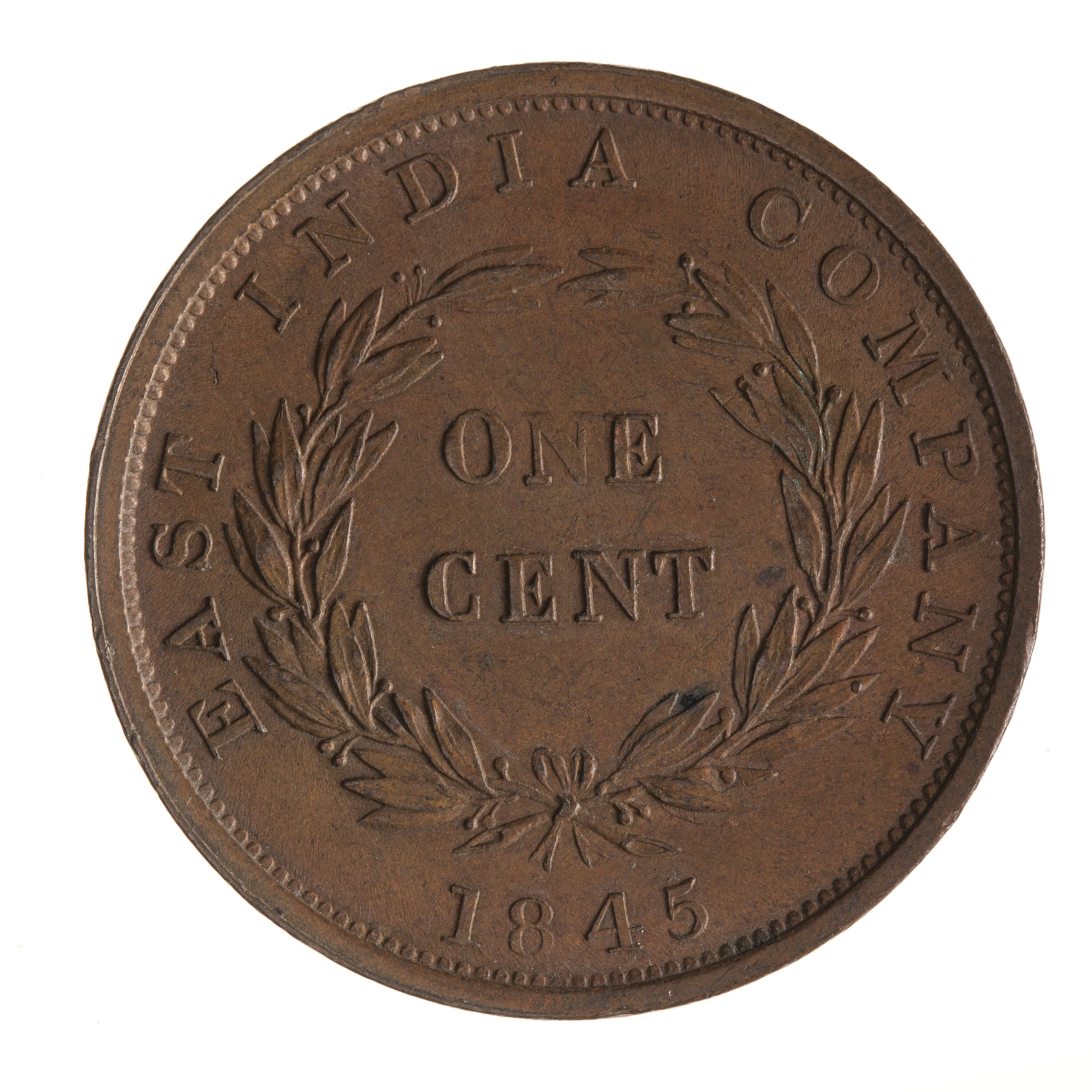
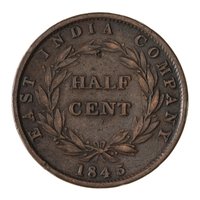
Year: 1845
Country: Malaysia
Issuer: Straits Settlements
Issuing organization: East India Company
Ruler: Victoria
Currency:
(1845—1939)
Demonetized: Yes
Total mintage: 18,525,893
Material
References
KM: #
Numista: #4086
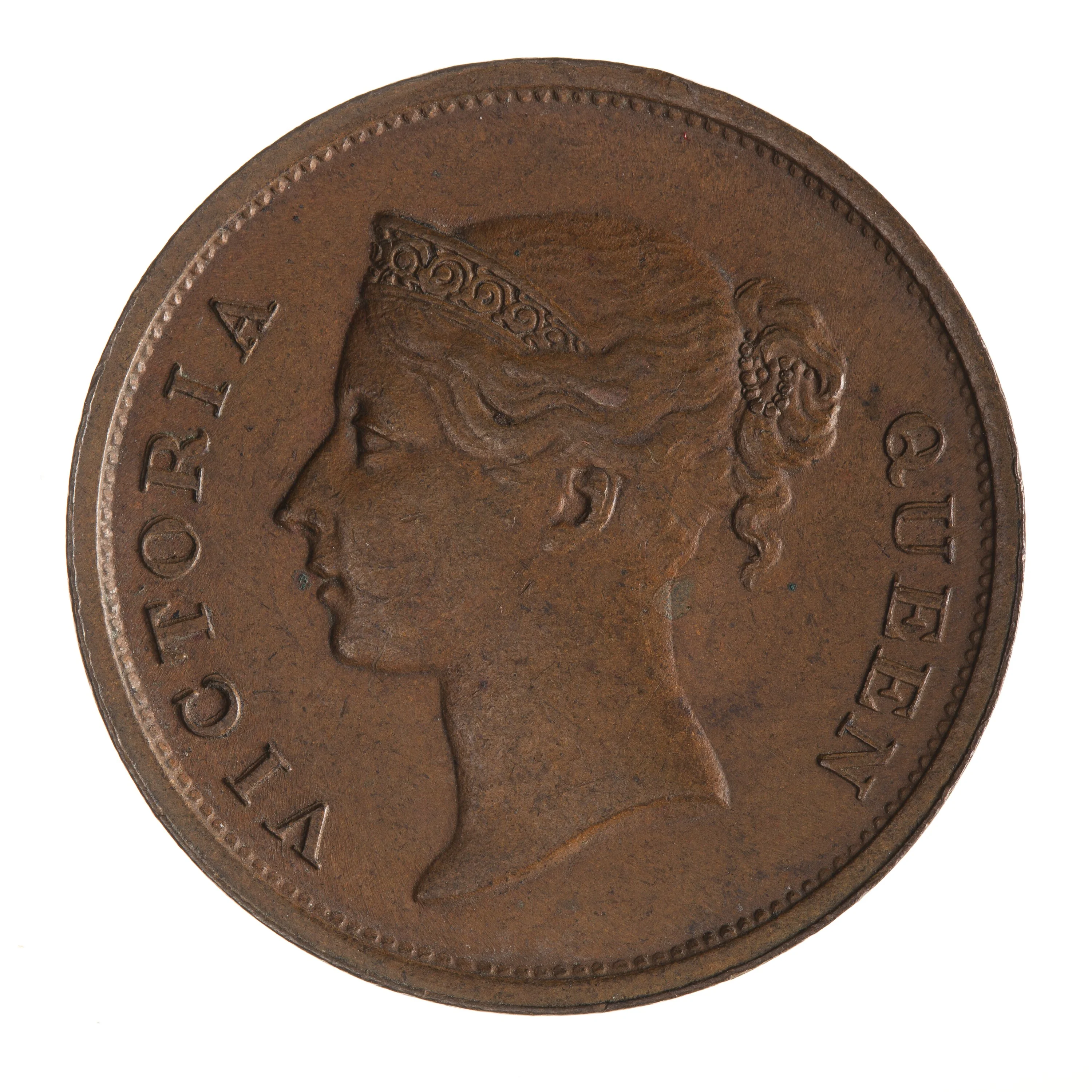
Obverse
Description:
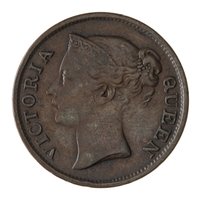
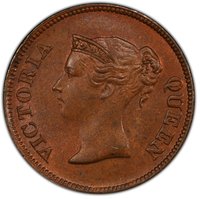
Crowned left-facing bust.
Inscription:
VICTORIA QUEEN
Script: Latin
Engraver: William Wyon
Reverse
Edge
Plain
Mints
| Name | Mark |
|---|---|
| Kolkata / Calcutta / Murshidabad | — |
Mintings
| Year | Mint Mark | Mintage | Quality | Collection |
|---|---|---|---|---|
| 1845 | — | — | Proof | |
| 1845 | — | 18,525,893 |
Historical background
In 1845, the currency situation in the Straits Settlements (comprising Penang, Singapore, and Malacca) was one of profound complexity and frustration. The official currency was the Indian rupee, as the Settlements were administered under the Bengal Presidency of British India. However, this rupee system was deeply unpopular and dysfunctional for local trade. The primary reason was that the Straits' economy was overwhelmingly driven by trade with the Malay Archipelago and China, where the de facto standard was the Spanish or Mexican silver dollar. Merchants had to constantly convert between rupees and these silver dollars, incurring exchange losses and navigating chaotic, fluctuating rates.
This monetary chaos was exacerbated by a severe shortage of small change. The East India Company was reluctant to supply sufficient copper and silver fractional coinage, leading to a proliferation of unofficial tokens, cut coins, and currencies from neighbouring regions like the Dutch guilder and various South American republics' dollars. The result was a bazaar of competing coins where values were determined by weight and fineness rather than face value, making everyday transactions cumbersome and ripe for dispute. The merchant community, especially in Singapore, was vocally campaigning for a switch to a dollar-based system, arguing it was essential for commercial stability.
Consequently, 1845 stands as a pivotal year just before a major reform. Bowing to intense pressure, the Indian government finally authorised the introduction of the "Indian Rupee Coinage Ordinance" in 1845, which came into effect in Singapore in 1847. This ordinance attempted to streamline the system by making the rupee the sole legal tender and demonetising other silver dollars, but it ultimately failed to address core issues. The unpopularity of this measure would directly lead, within a few years, to the Straits Settlements being separated from Indian administration in 1867 and eventually adopting its own Straits dollar in 1903. Thus, 1845 represents the height of a dysfunctional monetary order and the beginning of its official, though initially clumsy, reorganisation.
This monetary chaos was exacerbated by a severe shortage of small change. The East India Company was reluctant to supply sufficient copper and silver fractional coinage, leading to a proliferation of unofficial tokens, cut coins, and currencies from neighbouring regions like the Dutch guilder and various South American republics' dollars. The result was a bazaar of competing coins where values were determined by weight and fineness rather than face value, making everyday transactions cumbersome and ripe for dispute. The merchant community, especially in Singapore, was vocally campaigning for a switch to a dollar-based system, arguing it was essential for commercial stability.
Consequently, 1845 stands as a pivotal year just before a major reform. Bowing to intense pressure, the Indian government finally authorised the introduction of the "Indian Rupee Coinage Ordinance" in 1845, which came into effect in Singapore in 1847. This ordinance attempted to streamline the system by making the rupee the sole legal tender and demonetising other silver dollars, but it ultimately failed to address core issues. The unpopularity of this measure would directly lead, within a few years, to the Straits Settlements being separated from Indian administration in 1867 and eventually adopting its own Straits dollar in 1903. Thus, 1845 represents the height of a dysfunctional monetary order and the beginning of its official, though initially clumsy, reorganisation.
🌱 Common