


1 Pound – Egypt
Non-circulating coins
Commemoration: 1988 Nobel Prize for Literature
Egypt
Context
Year: 1988
Islamic (Hijri) Year: 1409
Issuer: Egypt 
Period:
(since 1971)
Currency:
(since 1916)
Total mintage: 1,000
Material

References
KM: #Click to copy to clipboard661
Numista: #407767
Value
Exchange value: 1 EGP
Bullion value: $1165.74
Obverse
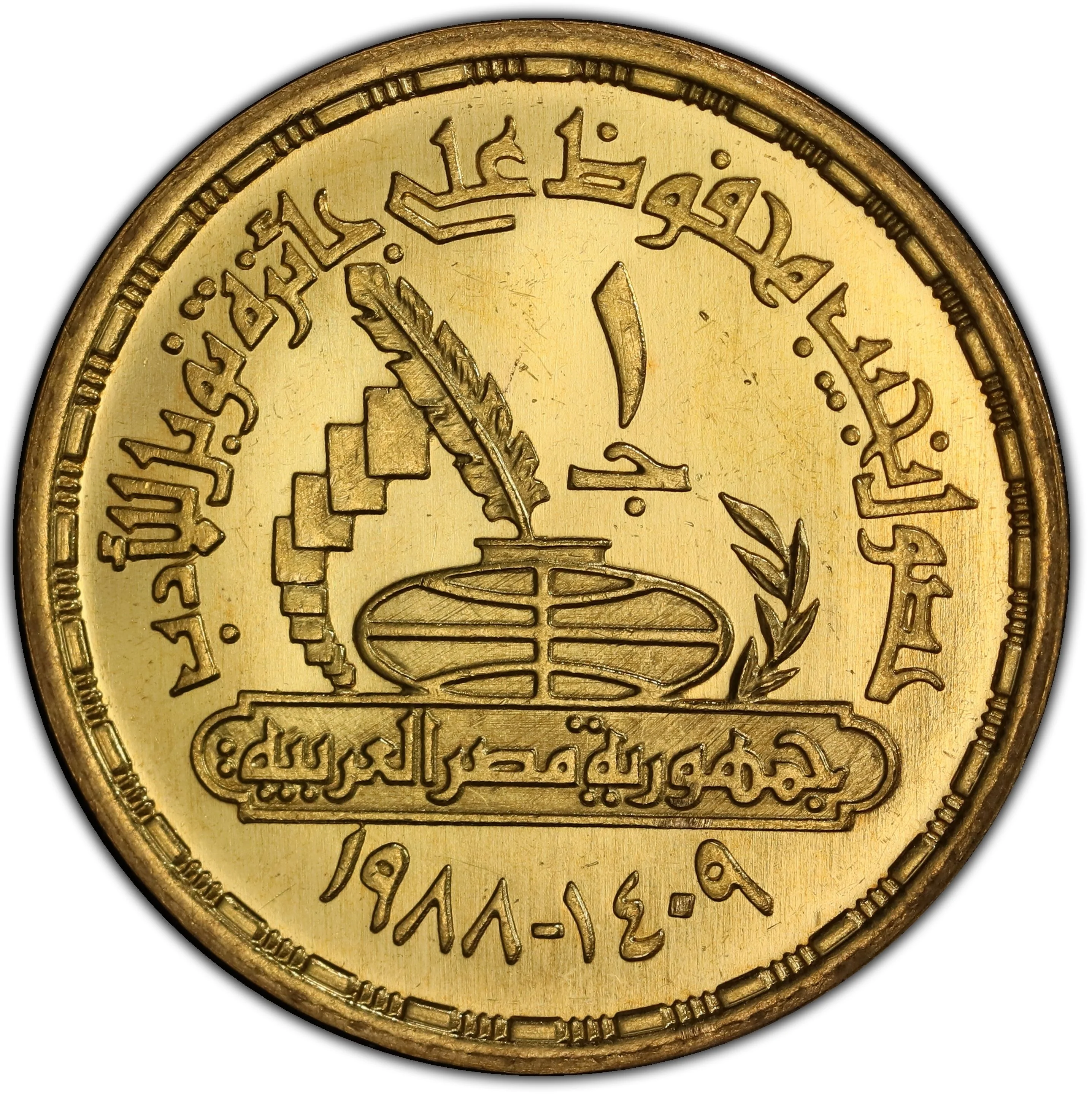
Description:
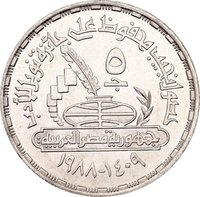
Globe inkwell divides date and denomination.
Inscription:
حصول نجيب محفوظ على جائزة نوبل للأدب
١جـ
جمهورية مصر العربية
١٤٠٩-١٩٨٨
١جـ
جمهورية مصر العربية
١٤٠٩-١٩٨٨
Translation:
Naguib Mahfouz winning the Nobel Prize for Literature.
1 Guinea
Arab Republic of Egypt
1409-1988
1 Guinea
Arab Republic of Egypt
1409-1988
Script: Arabic (naskh)
Language: Arabic
Reverse
Description:
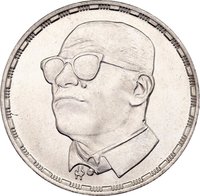
Naguib Mahfouz, Nobel Laureate, left profile.
Edge
Reeded
Categories
| Art> Literature |
Mints
| Name | Mark |
|---|---|
| Egyptian Mint Authority | — |
Mintings
| Year | Mint Mark | Mintage | Quality | Collection |
|---|---|---|---|---|
| 1988 | — | 1,000 |
Historical background
In 1988, Egypt's currency situation was characterized by a strained and complex dual-exchange rate system, a legacy of economic pressures from the previous decade. The country maintained an official fixed rate for the Egyptian pound, which was significantly overvalued and used for government transactions and essential imports. Alongside this existed a more influential parallel "black market" rate, which reflected the currency's true market value and was used for most other transactions. This disparity created major distortions, encouraging capital flight, stifling investment, and fostering a widespread culture of currency speculation and rent-seeking.
The root causes lay in the economic policies of the 1970s, which, despite an initial boom, led to large fiscal deficits, heavy external borrowing, and soaring inflation. By the mid-1980s, a collapse in oil prices, a decline in remittances, and falling Suez Canal revenues triggered a severe foreign currency crisis. The government, hesitant to implement drastic reforms, relied on external aid and debt rescheduling while using its scarce hard currency reserves to defend the unsustainable official exchange rate. This policy drained reserves without addressing fundamental imbalances, perpetuating scarcity and a thriving black market.
Consequently, by 1988, the Egyptian economy was in a state of suspended correction. The black market premium was substantial, undermining formal economic planning and creating inefficiencies. The situation highlighted the urgent need for a structural adjustment program, setting the stage for the more decisive reforms that would follow in the early 1990s. These later reforms, negotiated with the IMF and World Bank, would eventually unify the exchange rates and devalue the pound, moving Egypt toward a more market-determined currency system.
The root causes lay in the economic policies of the 1970s, which, despite an initial boom, led to large fiscal deficits, heavy external borrowing, and soaring inflation. By the mid-1980s, a collapse in oil prices, a decline in remittances, and falling Suez Canal revenues triggered a severe foreign currency crisis. The government, hesitant to implement drastic reforms, relied on external aid and debt rescheduling while using its scarce hard currency reserves to defend the unsustainable official exchange rate. This policy drained reserves without addressing fundamental imbalances, perpetuating scarcity and a thriving black market.
Consequently, by 1988, the Egyptian economy was in a state of suspended correction. The black market premium was substantial, undermining formal economic planning and creating inefficiencies. The situation highlighted the urgent need for a structural adjustment program, setting the stage for the more decisive reforms that would follow in the early 1990s. These later reforms, negotiated with the IMF and World Bank, would eventually unify the exchange rates and devalue the pound, moving Egypt toward a more market-determined currency system.
✨ Legendary