

250 Rupees (World Wildlife Fund) – Nepal
Non-circulating coins
Commemoration: 25th Anniversary of the World Wildlife Fund
Nepal
Context
Year: 1986
Vikram Samvat Year: 2043
Issuer: Nepal 
Ruler: Birendra Bir Bikram Shah
Currency:
(since 1932)
Total mintage: 25,000
Material
References
KM: #Click to copy to clipboard1026
Numista: #40622
Value
Exchange value: 250 NPR
Bullion value: $52.16
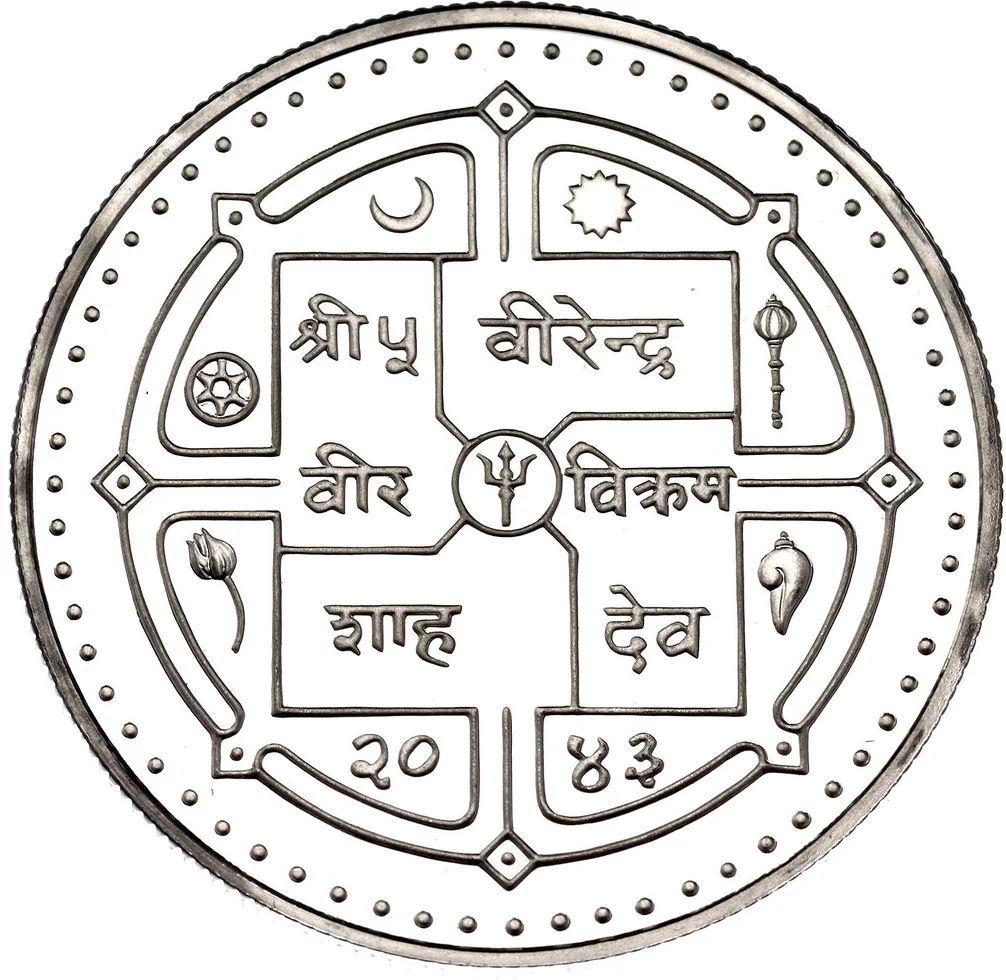
Obverse
Description:
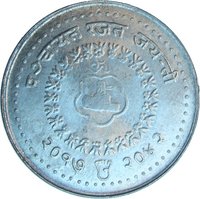
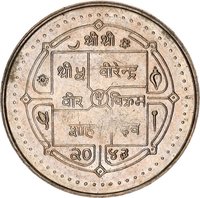
Classic style
Reverse
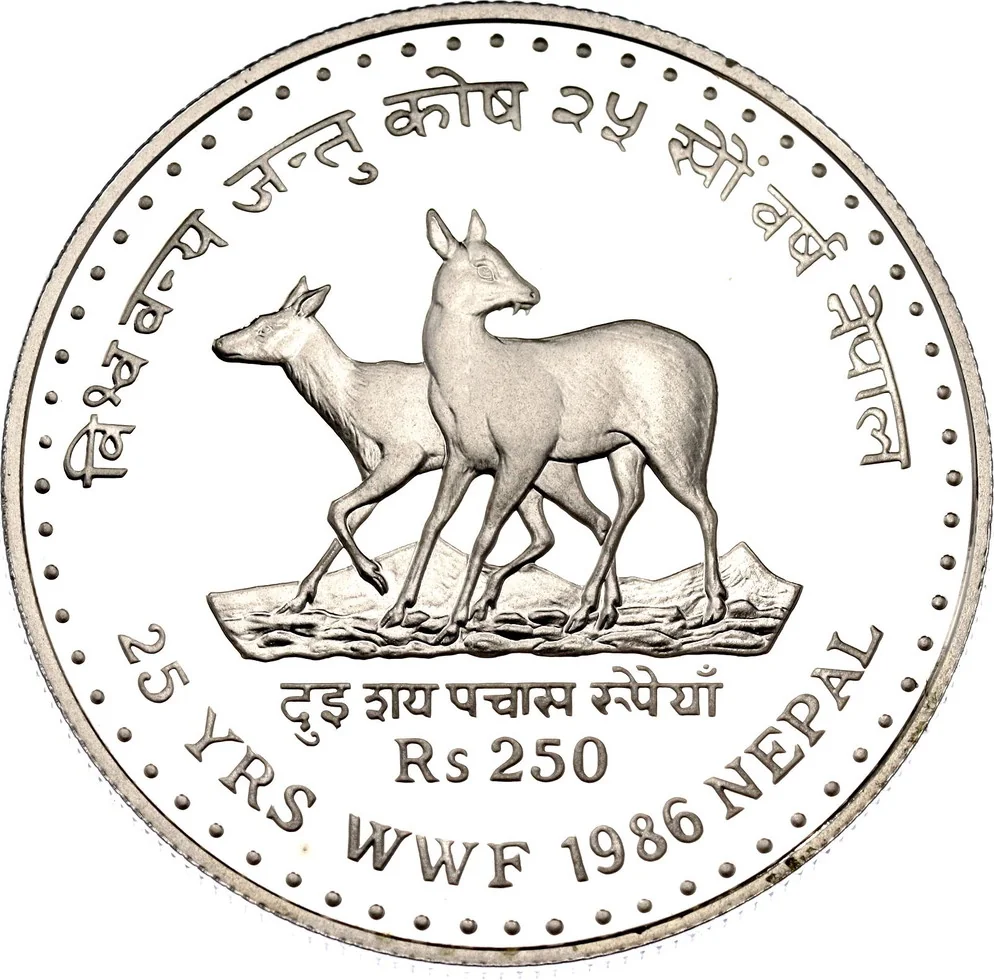
Description:
Musk deer are small, solitary animals known for the musk pod males produce.
Inscription:
Rs 250
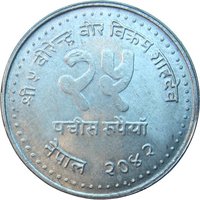
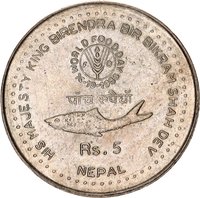
25 YRS WWF 1986 NEPAL
25 YRS WWF 1986 NEPAL
Edge
Milled
Categories
| Organization> WWF |
Mints
| Name | Mark |
|---|---|
| Royal Mint | — |
Mintings
| Year | Mint Mark | Mintage | Quality | Collection |
|---|---|---|---|---|
| 1986 | — | 25,000 | Proof |
Historical background
In 1986, Nepal's currency situation was characterized by a tightly controlled and dual exchange rate system, heavily influenced by its economic and geographic dependency on India. The Nepalese rupee (NRs) was pegged to the Indian rupee (INR) at a fixed rate of 1.45 NRs to 1 INR for official transactions, a parity maintained since 1960. This formal link was crucial for trade, as India was Nepal's dominant trading partner, but it also constrained Nepal's independent monetary policy and exposed its economy to inflationary pressures originating in India.
Alongside this official rate, a vibrant black market for foreign exchange, particularly for US dollars, operated due to restrictive currency regulations. The government maintained a complex system of import licensing and foreign exchange allocations, creating scarcity and a premium for hard currency outside official channels. This disparity was driven by the needs of traders, the growing tourism sector, and individuals seeking assets abroad, all of whom were willing to pay more than the official rate to circumvent bureaucratic hurdles and access foreign currency.
The overall economic context was one of a predominantly agricultural, least-developed country with limited industrial base. Revenue generation was weak, and the budget often relied on foreign aid. Consequently, the currency controls of 1986 reflected a protective stance aimed at conserving scarce foreign reserves and managing the balance of payments. However, this system created distortions, encouraged corruption, and was increasingly seen as inefficient, foreshadowing the economic liberalization and exchange rate reforms that would begin in the early 1990s.
Alongside this official rate, a vibrant black market for foreign exchange, particularly for US dollars, operated due to restrictive currency regulations. The government maintained a complex system of import licensing and foreign exchange allocations, creating scarcity and a premium for hard currency outside official channels. This disparity was driven by the needs of traders, the growing tourism sector, and individuals seeking assets abroad, all of whom were willing to pay more than the official rate to circumvent bureaucratic hurdles and access foreign currency.
The overall economic context was one of a predominantly agricultural, least-developed country with limited industrial base. Revenue generation was weak, and the budget often relied on foreign aid. Consequently, the currency controls of 1986 reflected a protective stance aimed at conserving scarce foreign reserves and managing the balance of payments. However, this system created distortions, encouraged corruption, and was increasingly seen as inefficient, foreshadowing the economic liberalization and exchange rate reforms that would begin in the early 1990s.
⭐ Somewhat Rare