

2 centavos – Ecuador
Add to wishlist
Ecuador
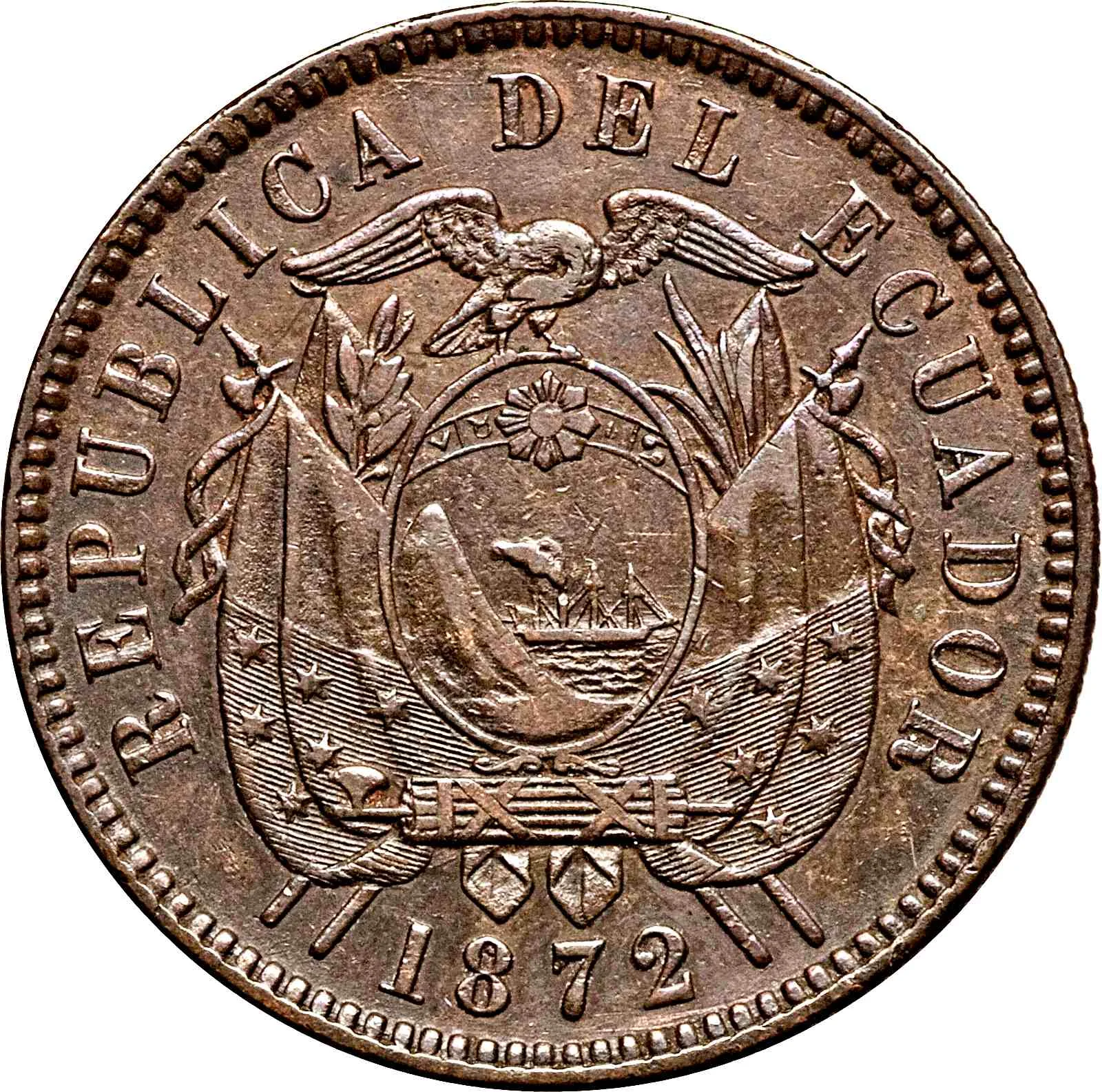
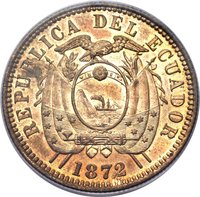
Obverse
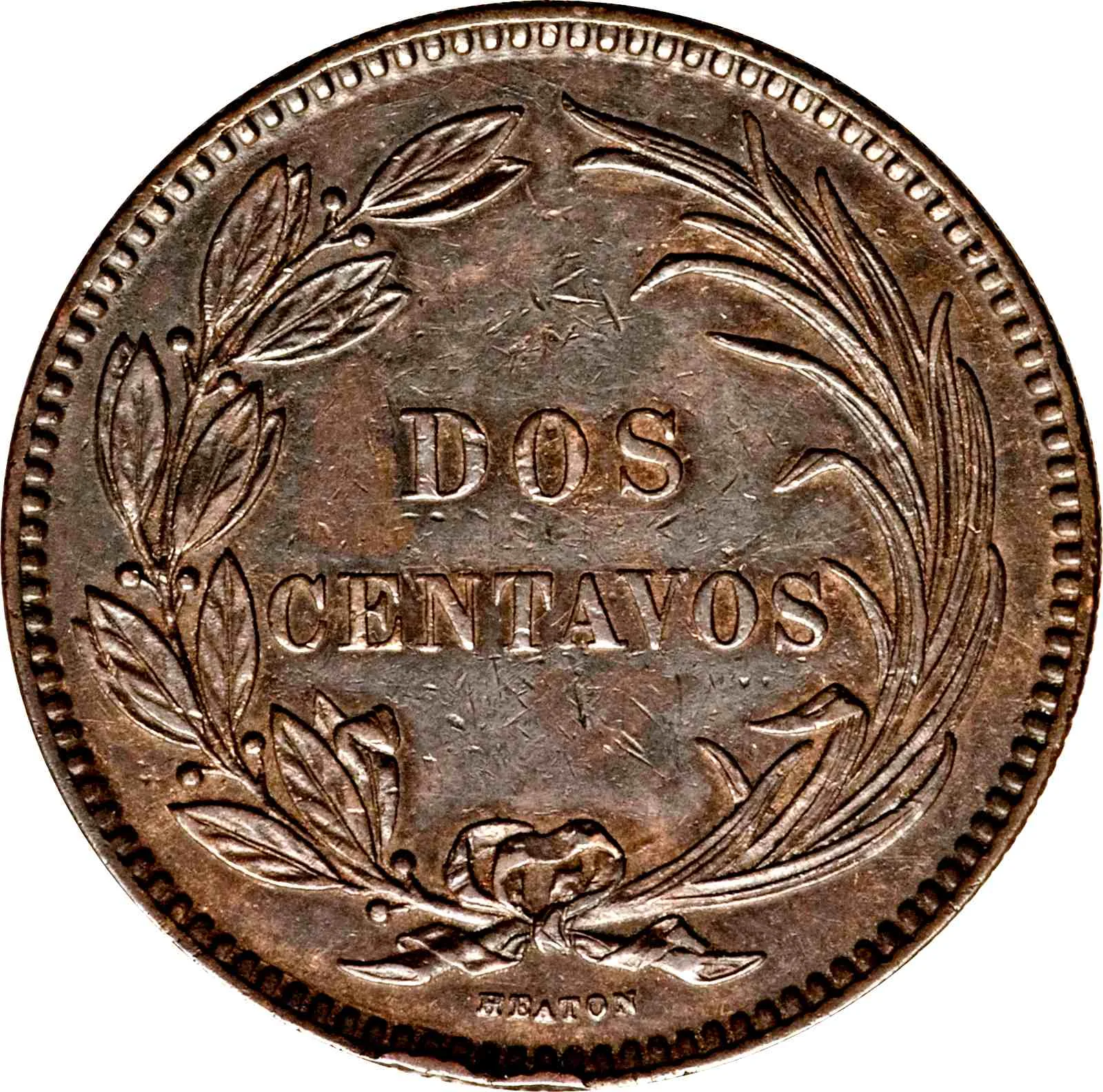
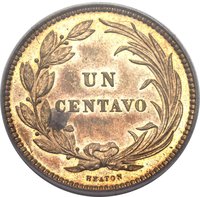
Reverse
Edge
Reeded
Mints
| Name | Mark |
|---|---|
| Heaton and Sons / The Mint Birmingham | — |
Mintings
| Year | Mint Mark | Mintage | Quality | Collection |
|---|---|---|---|---|
| 1872 | — | — | Proof | |
| 1872 | HEATON | — |
Historical background
In 1872, Ecuador's currency situation was characterized by profound instability and fragmentation, a direct legacy of its turbulent early post-independence decades. The country lacked a unified national currency, with a chaotic mix of foreign and domestic coins circulating. Spanish colonial reales, Colombian pesos, Peruvian soles, and even French francs were used alongside a limited number of coins minted in Quito. This monetary anarchy, combined with chronic government deficits financed by debasing coinage, led to wildly fluctuating exchange rates and crippling uncertainty for both domestic commerce and international trade.
The root of the problem was twofold: a severe shortage of precious metals for minting and a complete absence of paper money or a central banking authority. The government's attempts to introduce fiduciary coinage (coins with face value higher than their metal content) often failed due to a lack of public trust. Furthermore, the export-driven economy, reliant on cacao, was vulnerable to global price swings, causing frequent balance-of-payments crises that drained specie from the country. This environment made long-term investment perilous and complicated simple transactions, as merchants constantly had to assess the weight and origin of each coin.
This monetary disarray occurred within a specific political context: the conservative regime of President Gabriel García Moreno, which had brought a degree of political stability since 1860. While García Moreno focused on infrastructure and clerical authority, comprehensive monetary reform remained elusive. The persistent currency chaos of 1872 thus underscored the fundamental weakness of the state's economic institutions and highlighted a critical obstacle to national consolidation. It set the stage for future, more concerted efforts at monetary reform that would eventually lead to the adoption of the sucre as the sole national currency in 1884.
The root of the problem was twofold: a severe shortage of precious metals for minting and a complete absence of paper money or a central banking authority. The government's attempts to introduce fiduciary coinage (coins with face value higher than their metal content) often failed due to a lack of public trust. Furthermore, the export-driven economy, reliant on cacao, was vulnerable to global price swings, causing frequent balance-of-payments crises that drained specie from the country. This environment made long-term investment perilous and complicated simple transactions, as merchants constantly had to assess the weight and origin of each coin.
This monetary disarray occurred within a specific political context: the conservative regime of President Gabriel García Moreno, which had brought a degree of political stability since 1860. While García Moreno focused on infrastructure and clerical authority, comprehensive monetary reform remained elusive. The persistent currency chaos of 1872 thus underscored the fundamental weakness of the state's economic institutions and highlighted a critical obstacle to national consolidation. It set the stage for future, more concerted efforts at monetary reform that would eventually lead to the adoption of the sucre as the sole national currency in 1884.
💎 Very Rare