

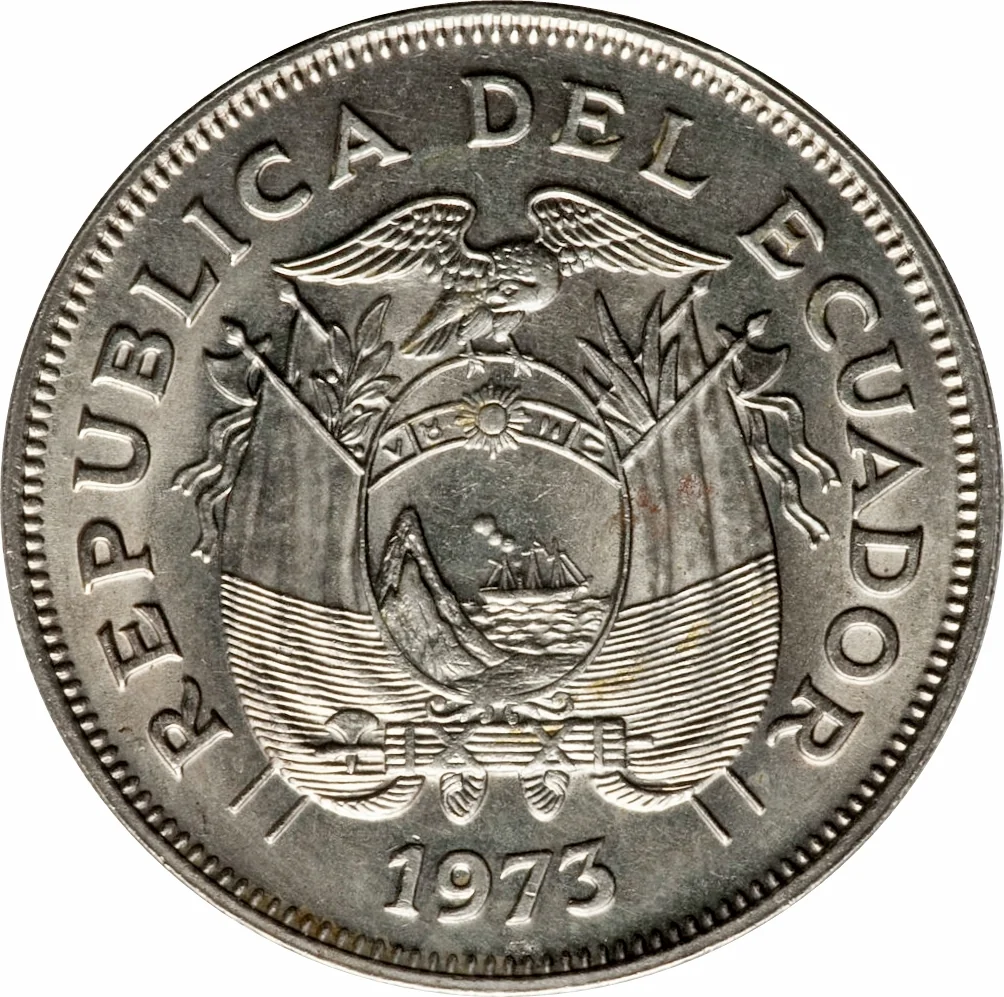
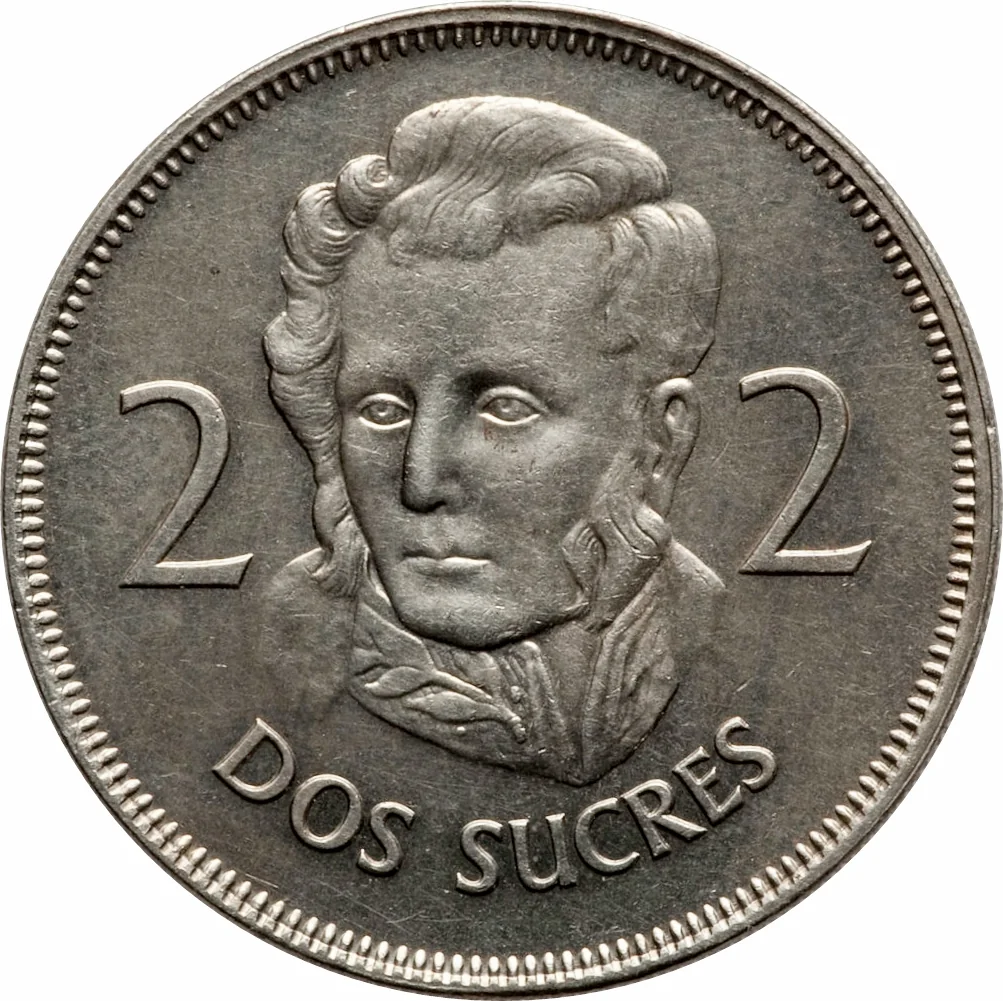
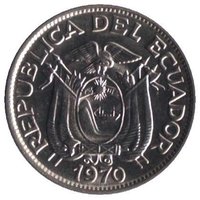
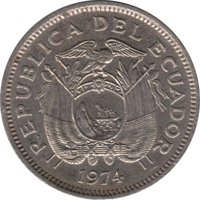
Obverse
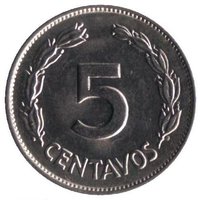
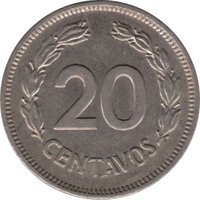
Reverse
Edge
Mints
| Name | Mark |
|---|---|
| Royal Mint | — |
Mintings
| Year | Mint Mark | Mintage | Quality | Collection |
|---|---|---|---|---|
| 1973 | — | 2,000,000 |
Historical background
In 1973, Ecuador’s currency situation was defined by its recent transition from the Ecuadorian sucre (ECS) to a U.S. dollar-pegged system within the framework of the Bretton Woods agreement. The country had officially pegged its sucre to the U.S. dollar at a fixed rate of 25 sucres per dollar since 1970, a move intended to provide monetary stability and combat the high inflation that had plagued the currency in the 1960s. This peg was managed by the Central Bank of Ecuador, which held dollar reserves to back the currency and maintain the fixed exchange rate, fostering a period of relative predictability for trade and investment.
This stability, however, existed within a context of significant external pressures. The global Bretton Woods system of fixed exchange rates had collapsed in 1971, leading major currencies to float. While Ecuador maintained its own dollar peg, the devaluation of the U.S. dollar internationally created complex trade dynamics. More importantly, 1973 was the year of the global oil crisis, which had a profound dual impact on Ecuador. As a newly emerging oil exporter following the discovery of major reserves in the Amazon, the country experienced a sudden and massive influx of petrodollars, which bolstered foreign reserves and government revenues but also began to generate inflationary pressures and a phenomenon known as "Dutch Disease," where other export sectors became less competitive.
Consequently, the currency regime of 1973 was at a pivotal point. The fixed peg provided short-term stability and managed the initial shock of new oil wealth, but it also masked underlying economic distortions. The influx of dollars increased the money supply and fueled government spending, setting the stage for future inflationary challenges that would strain the fixed exchange rate in the coming decade. Thus, while the sucre appeared stable on the surface, the foundations were being altered by oil revenues, laying the groundwork for the severe economic crises and eventual dollarization that would occur decades later.
This stability, however, existed within a context of significant external pressures. The global Bretton Woods system of fixed exchange rates had collapsed in 1971, leading major currencies to float. While Ecuador maintained its own dollar peg, the devaluation of the U.S. dollar internationally created complex trade dynamics. More importantly, 1973 was the year of the global oil crisis, which had a profound dual impact on Ecuador. As a newly emerging oil exporter following the discovery of major reserves in the Amazon, the country experienced a sudden and massive influx of petrodollars, which bolstered foreign reserves and government revenues but also began to generate inflationary pressures and a phenomenon known as "Dutch Disease," where other export sectors became less competitive.
Consequently, the currency regime of 1973 was at a pivotal point. The fixed peg provided short-term stability and managed the initial shock of new oil wealth, but it also masked underlying economic distortions. The influx of dollars increased the money supply and fueled government spending, setting the stage for future inflationary challenges that would strain the fixed exchange rate in the coming decade. Thus, while the sucre appeared stable on the surface, the foundations were being altered by oil revenues, laying the groundwork for the severe economic crises and eventual dollarization that would occur decades later.
💎 Very Rare