

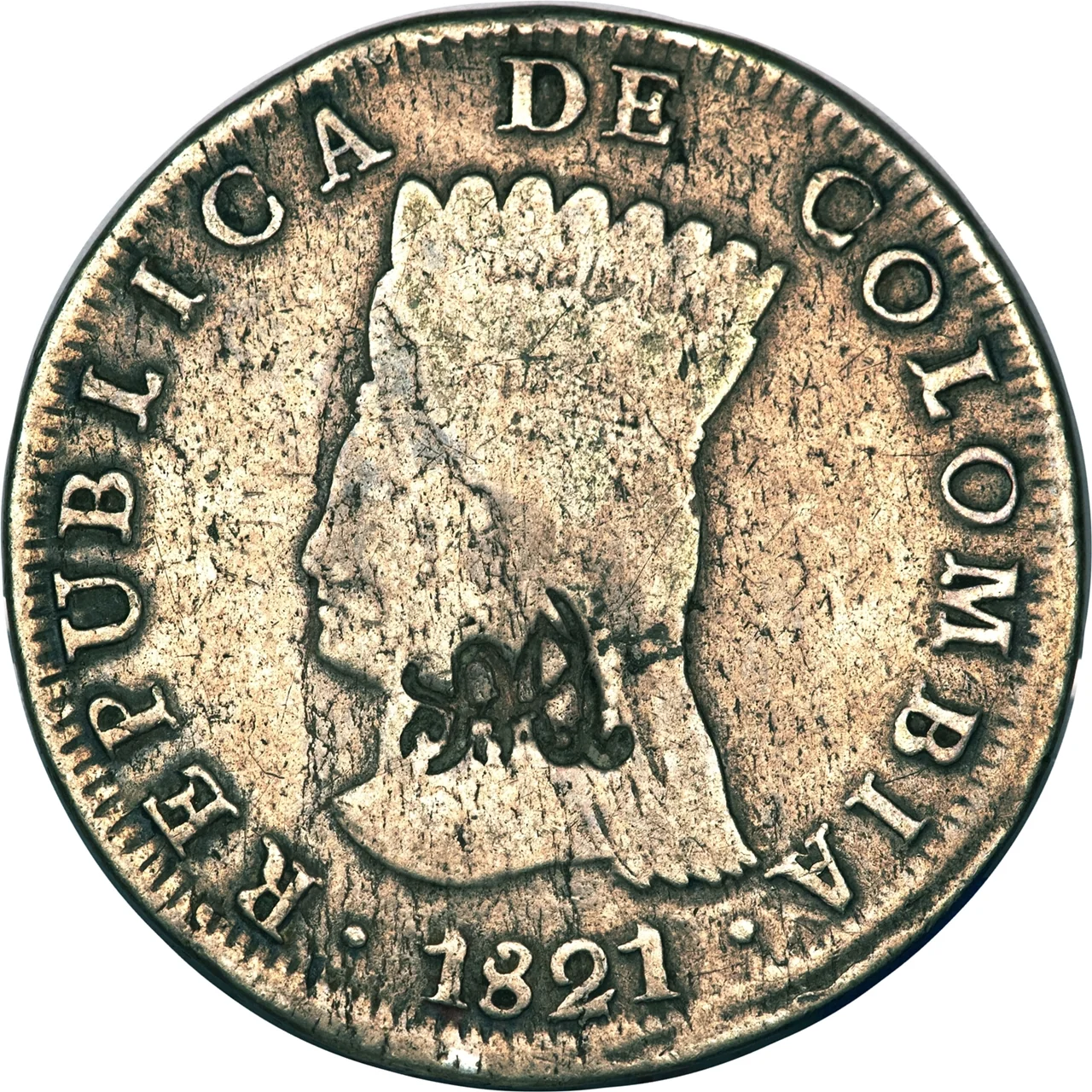
8 reales – Ecuador
Add to wishlist
Ecuador
Material
Diameter: 37 mm
Weight: 23 g
Silver Weight:: 15.32 g
Shape: Round
Composition: 66.6% Silver
Magnetic: No
Techniques: Milled, Counterstamped
Alignment: Coin alignment
flip
References
KM: #
Numista: #40598
Value
Bullion value: $37.58
Obverse
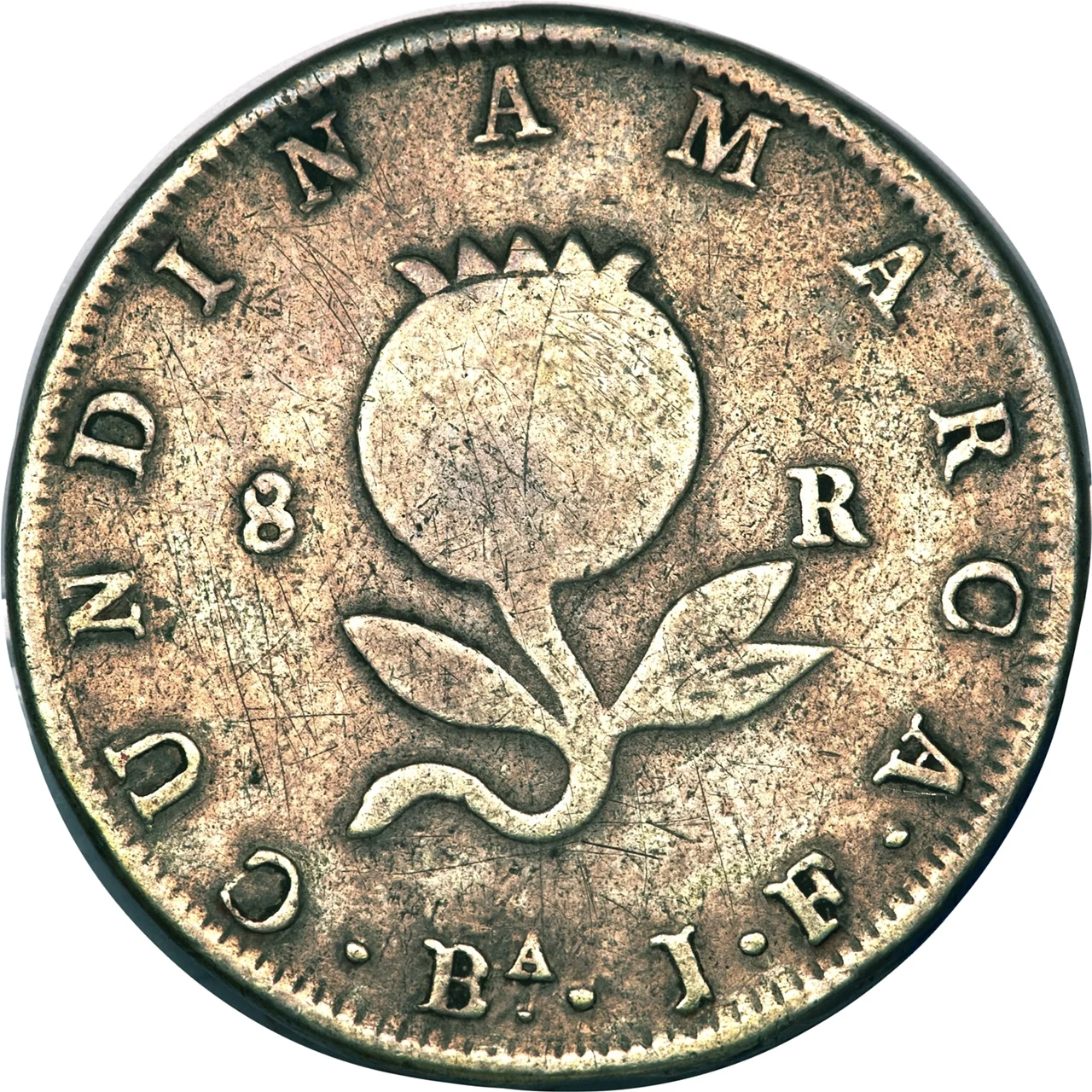
Reverse
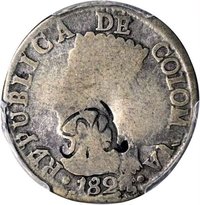
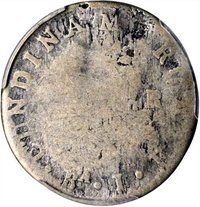
Description:
A pomegranate (symbolizing New Granada) encircled by text.
Inscription:
CUNDINAMARCA
J.F
8R
Ba
J.F
8R
Ba
Script: Latin
Edge
Mints
| Name | Mark |
|---|---|
| Bogota Mint | Ba |
Historical background
In 1820, Ecuador was not yet an independent nation but a region within the Spanish colonial Viceroyalty of New Granada, embroiled in the wider Spanish American wars of independence. The monetary situation was therefore a direct extension of the collapsing Spanish imperial system. The primary circulating currency was the Spanish colonial real, with 8 reales equaling one silver peso (or dollar). However, the protracted warfare had severely disrupted mining, trade, and administrative control, leading to widespread currency scarcity. This scarcity crippled local economies and hampered the ability of both royalist and patriot forces to pay troops and secure supplies, fueling economic instability.
The vacuum created by the shortage of official coinage was filled by a chaotic mix of alternative mediums of exchange. These included cut and countermarked coins from various origins, low-quality crude mintings from provisional patriot authorities, and even tokens issued by private merchants. Notably, foreign coins, especially Peruvian and Mexican silver pesos, circulated heavily alongside the Spanish pieces. This fragmentation meant that the "currency system" was less a system and more a disordered bazaar of metallic values, where the worth of a coin depended heavily on its origin, silver content, and the credibility of its issuer.
This monetary disarray was both a symptom and a cause of the profound political transition underway. For the emerging patriot forces, controlling minting houses—like the one in Quito—became a strategic objective, as the ability to issue currency was essential for asserting sovereignty and funding the war effort. The year 1820, which saw key battles like the victory at the Battle of Pichincha in 1822 still ahead, was thus a period where the old colonial monetary order was crumbling, but no stable, unified national currency had yet emerged to take its place, reflecting the region's uncertain and contested path toward nationhood.
The vacuum created by the shortage of official coinage was filled by a chaotic mix of alternative mediums of exchange. These included cut and countermarked coins from various origins, low-quality crude mintings from provisional patriot authorities, and even tokens issued by private merchants. Notably, foreign coins, especially Peruvian and Mexican silver pesos, circulated heavily alongside the Spanish pieces. This fragmentation meant that the "currency system" was less a system and more a disordered bazaar of metallic values, where the worth of a coin depended heavily on its origin, silver content, and the credibility of its issuer.
This monetary disarray was both a symptom and a cause of the profound political transition underway. For the emerging patriot forces, controlling minting houses—like the one in Quito—became a strategic objective, as the ability to issue currency was essential for asserting sovereignty and funding the war effort. The year 1820, which saw key battles like the victory at the Battle of Pichincha in 1822 still ahead, was thus a period where the old colonial monetary order was crumbling, but no stable, unified national currency had yet emerged to take its place, reflecting the region's uncertain and contested path toward nationhood.
✨ Legendary