

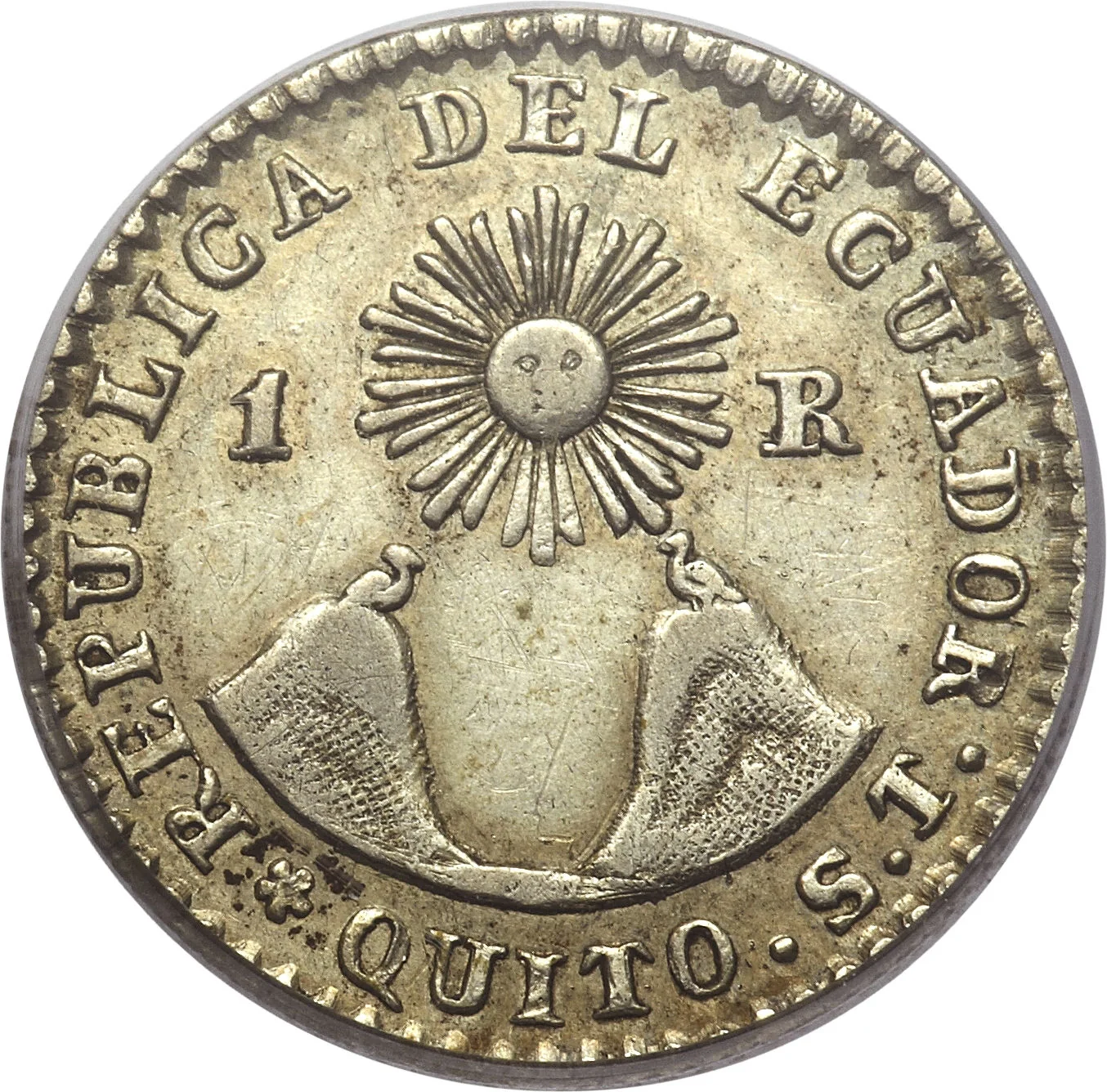
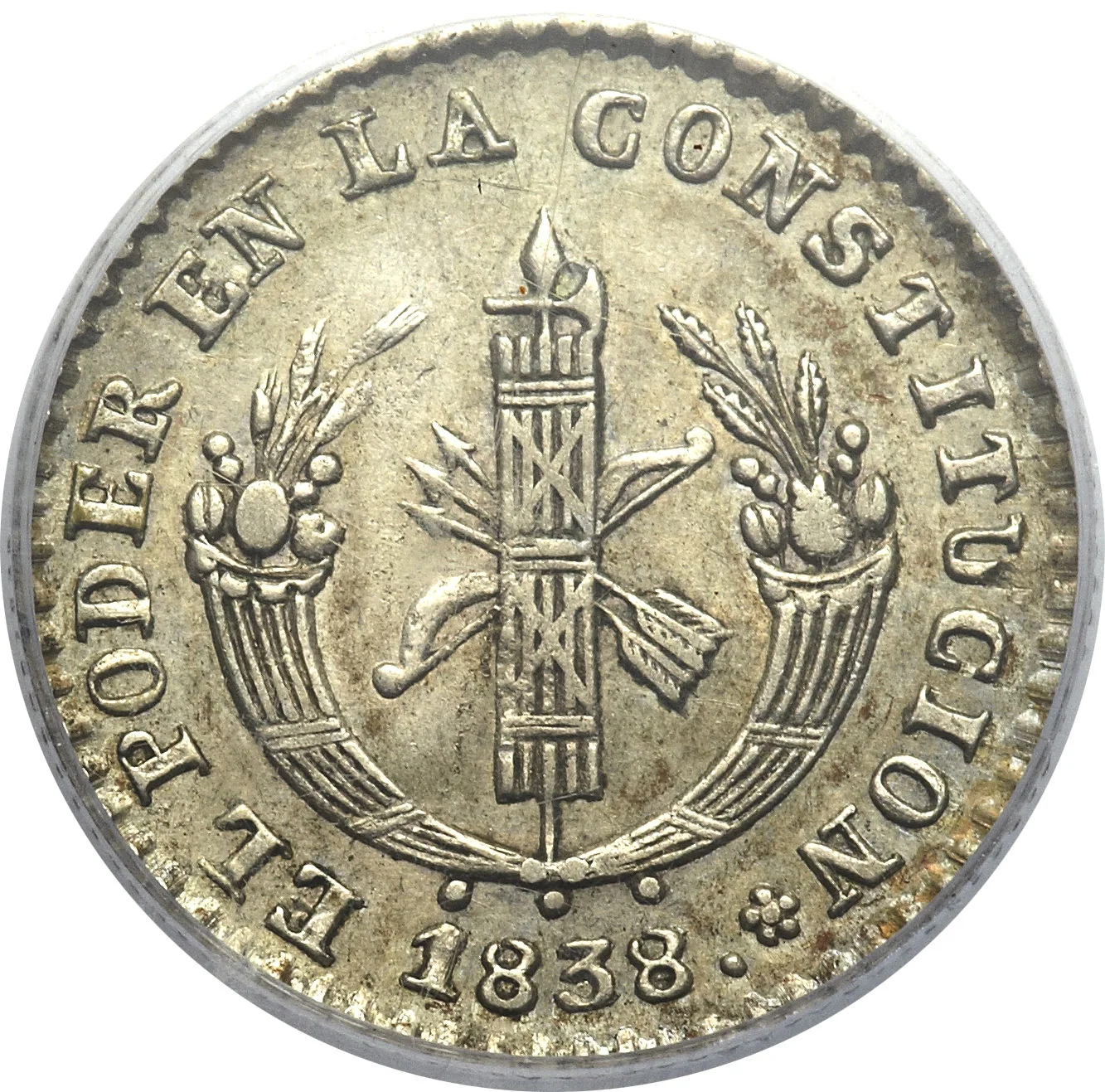
Mintings
| Year | Mint Mark | Mintage | Quality | Collection |
|---|---|---|---|---|
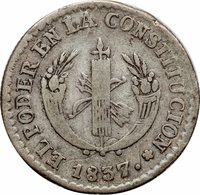
| 1837 | FP | — | ||
| 1838 | ST | — |
Historical background
In 1837, Ecuador was a young republic navigating the turbulent aftermath of its independence from Gran Colombia in 1830. The nation's monetary system was in a state of disarray and transition, characterized by a severe shortage of official coinage. The economy still relied heavily on a chaotic mix of circulating media, including worn and clipped Spanish colonial coins (like pesos and reales), coins from neighboring republics, and even counterfeit currency. This scarcity of reliable, standardized money stifled commerce and state finances, creating a pressing need for a sovereign currency that could symbolize and underpin national sovereignty and economic stability.
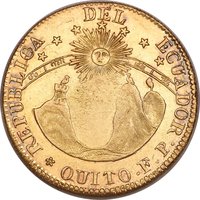
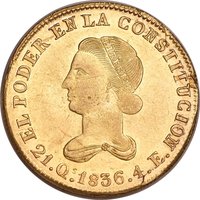
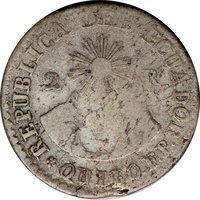
The government of President Vicente Rocafuerte (1835-1839) recognized this crisis and took decisive action. In 1836, the Congress authorized the minting of Ecuador's first national coins, and by 1837, the fledgling Quito Mint (Casa de la Moneda de Quito) had begun production. The first coins were silver cuartillos (quarter-reales) and reales, featuring the distinctive design of a condor atop a shield. This was a pivotal step toward establishing a unified monetary identity, though the volume minted was initially limited and did not immediately resolve the widespread currency shortage.
Consequently, the currency situation in 1837 was one of hopeful beginnings amidst ongoing difficulty. While the introduction of the first national coinage marked a critical milestone in nation-building, the practical reality for most Ecuadorians was a market still dependent on an unreliable patchwork of old and foreign coins. The state's ability to project economic authority remained constrained, setting the stage for continued monetary reforms and instability in the decades to follow as Ecuador struggled to fully consolidate its financial system.
The government of President Vicente Rocafuerte (1835-1839) recognized this crisis and took decisive action. In 1836, the Congress authorized the minting of Ecuador's first national coins, and by 1837, the fledgling Quito Mint (Casa de la Moneda de Quito) had begun production. The first coins were silver cuartillos (quarter-reales) and reales, featuring the distinctive design of a condor atop a shield. This was a pivotal step toward establishing a unified monetary identity, though the volume minted was initially limited and did not immediately resolve the widespread currency shortage.
Consequently, the currency situation in 1837 was one of hopeful beginnings amidst ongoing difficulty. While the introduction of the first national coinage marked a critical milestone in nation-building, the practical reality for most Ecuadorians was a market still dependent on an unreliable patchwork of old and foreign coins. The state's ability to project economic authority remained constrained, setting the stage for continued monetary reforms and instability in the decades to follow as Ecuador struggled to fully consolidate its financial system.
✨ Legendary