

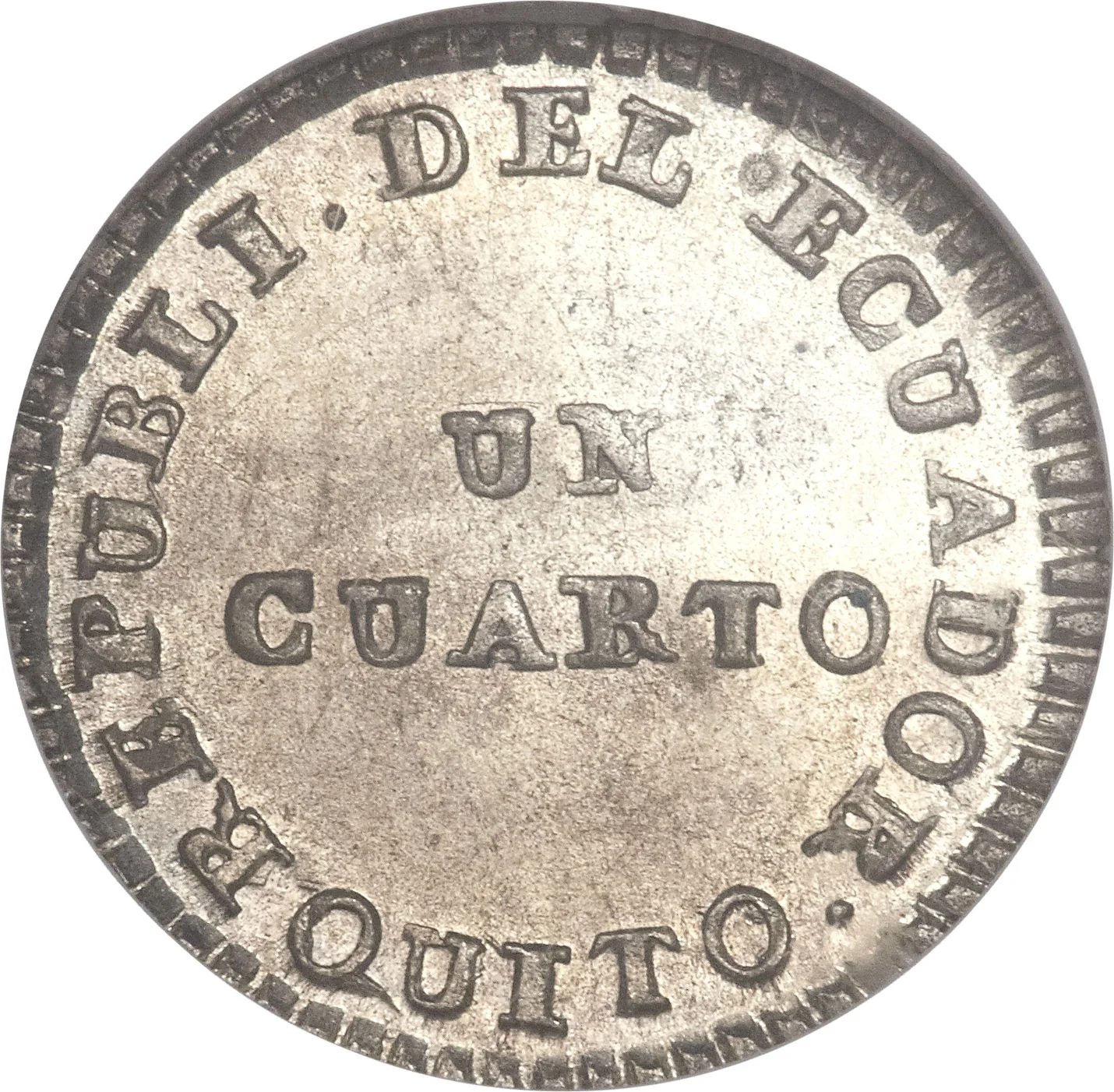
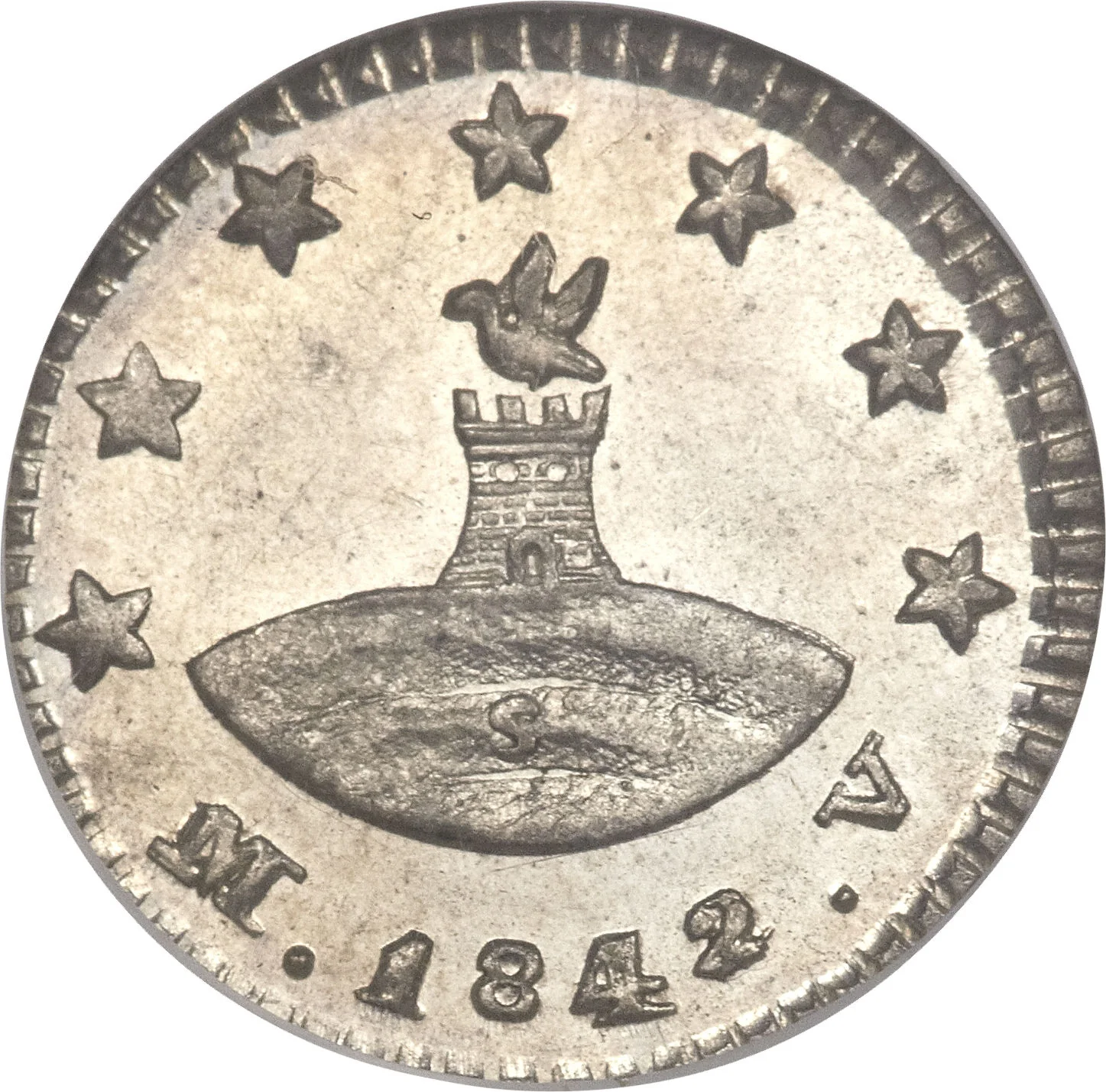
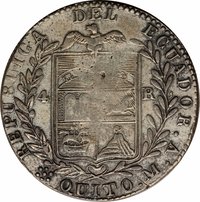
Obverse
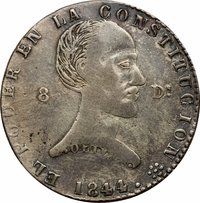
Reverse
Edge
Mintings
| Year | Mint Mark | Mintage | Quality | Collection |
|---|---|---|---|---|
| 1842 | MV | — | ||
| 1843 | MV | — |
Historical background
In 1842, Ecuador was a young republic grappling with profound monetary instability, a direct legacy of its colonial past and the turbulent early decades of independence. The nation lacked a unified national currency, leading to a chaotic circulation of a wide variety of coins. These included worn Spanish colonial pieces, such as pesos and reales, alongside coins from other Latin American republics and even counterfeits. This heterogeneous mix created constant confusion in commerce, as the value and silver content of coins were constantly in question, hindering both domestic trade and foreign investment.
The core of the problem was a severe shortage of precious metals to mint sufficient, trustworthy coinage. Ecuador's economy was primarily agricultural and export-driven (relying on cacao), and it did not possess significant silver mines like its neighbors Peru or Mexico. Consequently, the government struggled to procure bullion. Attempts to establish a mint in Quito had been inconsistent, and the state's fiscal weakness, burdened by debt from the wars of independence and ongoing internal conflicts, prevented any decisive monetary reform. Transactions often relied on barter or the physical weighing and assaying of suspect coins.
This monetary anarchy had severe economic consequences. The lack of a reliable medium of exchange stifled economic development and complicated government revenue collection, as taxes were paid in irregular coin. It also eroded public trust in financial transactions and the authority of the state itself. The situation in 1842 was thus a critical pressure point, highlighting the urgent need for monetary sovereignty and stability—a challenge that would persist for decades until the eventual adoption of the sucre in 1884.
The core of the problem was a severe shortage of precious metals to mint sufficient, trustworthy coinage. Ecuador's economy was primarily agricultural and export-driven (relying on cacao), and it did not possess significant silver mines like its neighbors Peru or Mexico. Consequently, the government struggled to procure bullion. Attempts to establish a mint in Quito had been inconsistent, and the state's fiscal weakness, burdened by debt from the wars of independence and ongoing internal conflicts, prevented any decisive monetary reform. Transactions often relied on barter or the physical weighing and assaying of suspect coins.
This monetary anarchy had severe economic consequences. The lack of a reliable medium of exchange stifled economic development and complicated government revenue collection, as taxes were paid in irregular coin. It also eroded public trust in financial transactions and the authority of the state itself. The situation in 1842 was thus a critical pressure point, highlighting the urgent need for monetary sovereignty and stability—a challenge that would persist for decades until the eventual adoption of the sucre in 1884.

💎 Extremely Rare