

50 Pence – Falkland Islands
Non-circulating coins
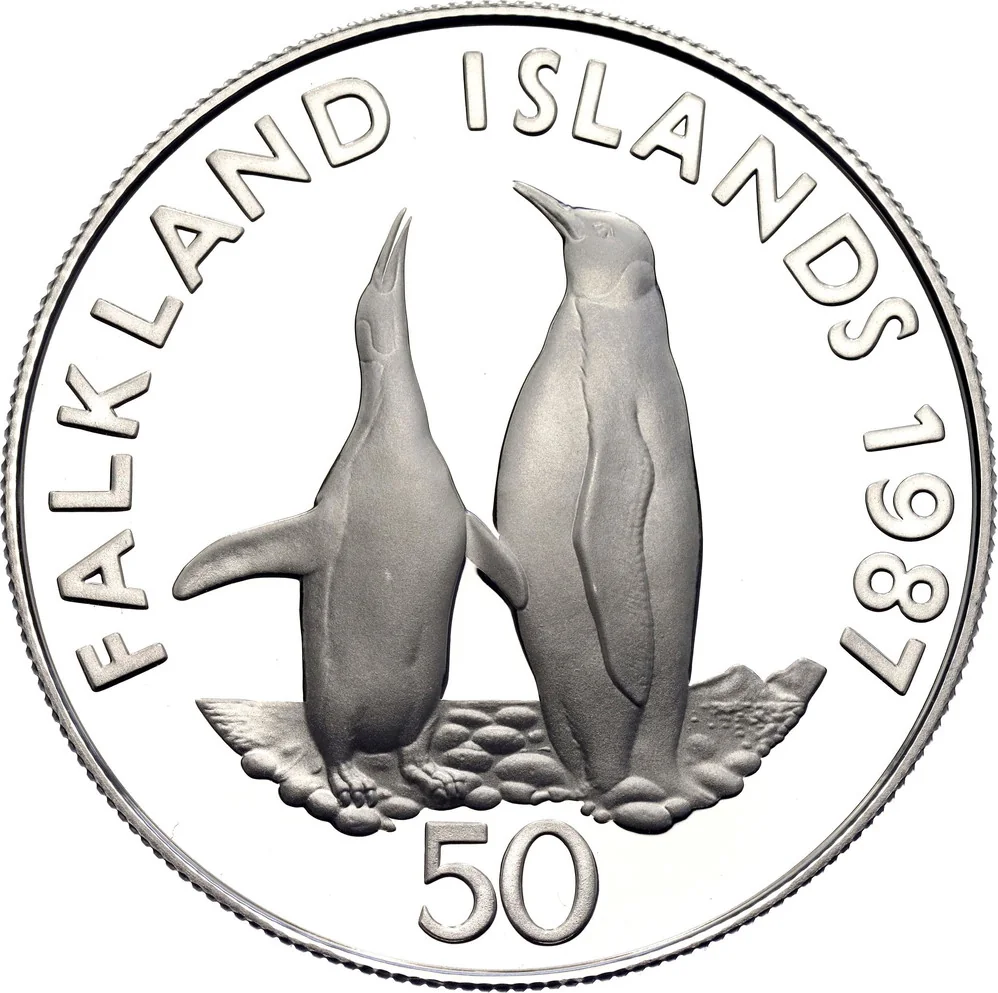
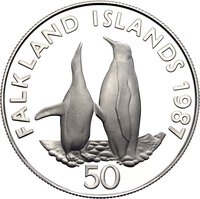
Commemoration: World Wildlife Fund - King Penguins
United Kingdom
Context
Year: 1987
Country: United Kingdom 
Issuer: Falkland Islands 
Ruler: Elizabeth II
Currency:
(since 1971)
Total mintage: 25,000
Material
References
KM: #Click to copy to clipboard25a
Numista: #40523
Value
Exchange value: 0.50 FKP
Bullion value: $76.81
Inflation-adjusted value: 1.87 FKP
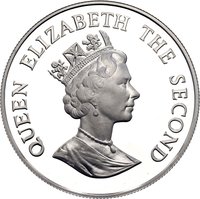
Obverse
Description:
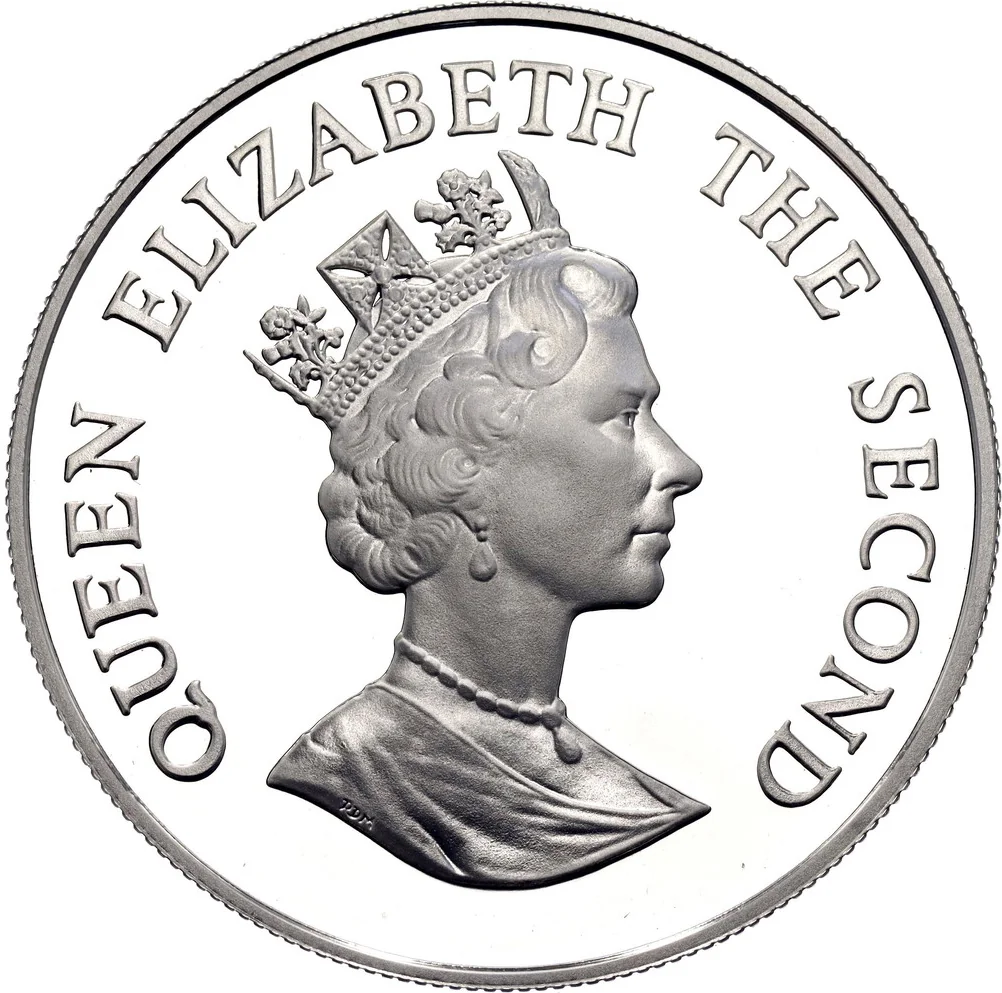
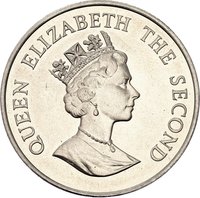
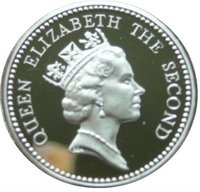
Queen Elizabeth II in profile, wearing the King George IV State Diadem.
Inscription:
QUEEN ELIZABETH THE SECOND
Script: Latin
Designer: Raphael David Maklouf
Reverse
Inscription:
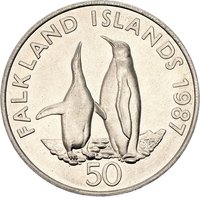
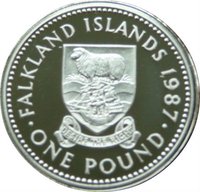
FALKLAND ISLANDS 1987
50
50
Script: Latin
Edge
Reeded
Categories
| Animal> Bird |
| Organization> WWF |
Mintings
| Year | Mint Mark | Mintage | Quality | Collection |
|---|---|---|---|---|
| 1987 | — | 25,000 | Proof |
Historical background
In 1987, the currency situation in the Falkland Islands was one of formal transition and practical continuity. Following the 1982 conflict, the British government embarked on a significant programme of infrastructure and economic development, funded in sterling. Officially, the legal tender was the Falkland Islands pound (FKP), which had been pegged at par with pound sterling (GBP) since 1899. This parity was and remains sacrosanct, meaning one FKP always equals one GBP, providing monetary stability and a direct link to the UK financial system.
In daily practice, however, the currency landscape was dominated by sterling. Banknotes issued by the Falkland Islands Government were in circulation, but UK coinage was (and still is) used interchangeably with locally minted coins. More significantly, sterling banknotes from the United Kingdom were universally accepted and formed a major part of the physical currency in use. This was due to the large British military presence, the influx of UK contractors, and the islands' complete economic dependence on Britain. The local economy was small and cash-based, revolving around the garrison, wool exports, and a nascent fisheries sector.
Thus, the 1987 situation was characterised by a de facto dual-currency system under a unitary peg. The Falkland Islands pound served as a symbol of political sovereignty and for local government transactions, while pound sterling was the functional currency for much of the economy, especially larger projects and military spending. This arrangement ensured stability and facilitated the post-war reconstruction, avoiding any exchange risk while firmly anchoring the islands' financial system to that of the United Kingdom.
In daily practice, however, the currency landscape was dominated by sterling. Banknotes issued by the Falkland Islands Government were in circulation, but UK coinage was (and still is) used interchangeably with locally minted coins. More significantly, sterling banknotes from the United Kingdom were universally accepted and formed a major part of the physical currency in use. This was due to the large British military presence, the influx of UK contractors, and the islands' complete economic dependence on Britain. The local economy was small and cash-based, revolving around the garrison, wool exports, and a nascent fisheries sector.
Thus, the 1987 situation was characterised by a de facto dual-currency system under a unitary peg. The Falkland Islands pound served as a symbol of political sovereignty and for local government transactions, while pound sterling was the functional currency for much of the economy, especially larger projects and military spending. This arrangement ensured stability and facilitated the post-war reconstruction, avoiding any exchange risk while firmly anchoring the islands' financial system to that of the United Kingdom.
⭐ Rare