

1 dirham – United Arab Emirates
Add to wishlist
United Arab Emirates
Context
Years: 2012–2022
Issuer: United Arab Emirates
Ruler: Khalifa bin Zayed Al Nahyan
Currency:
(since 1973)
Material
References
KM: #
Numista: #40522
Value
Exchange value: 1 AED
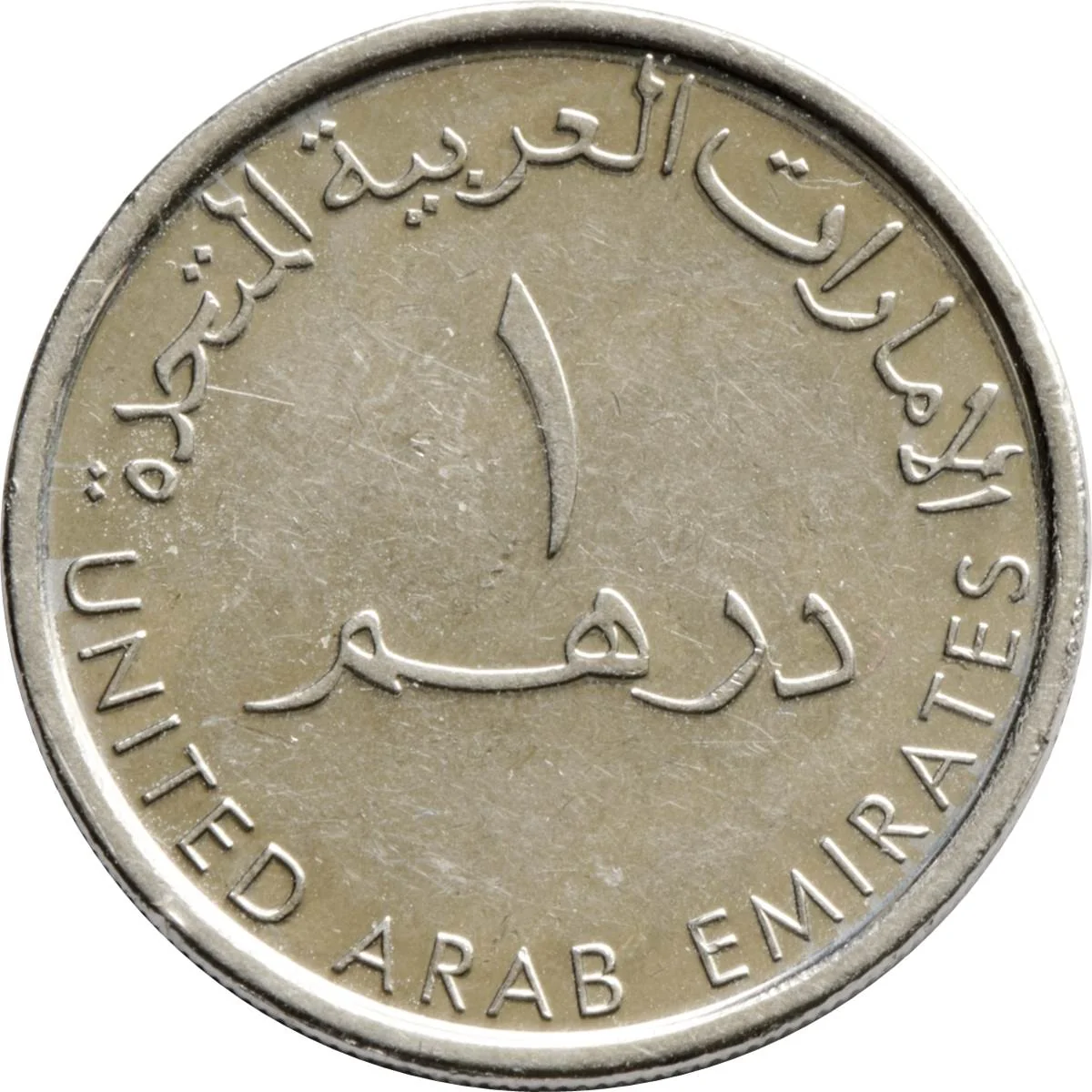
Obverse
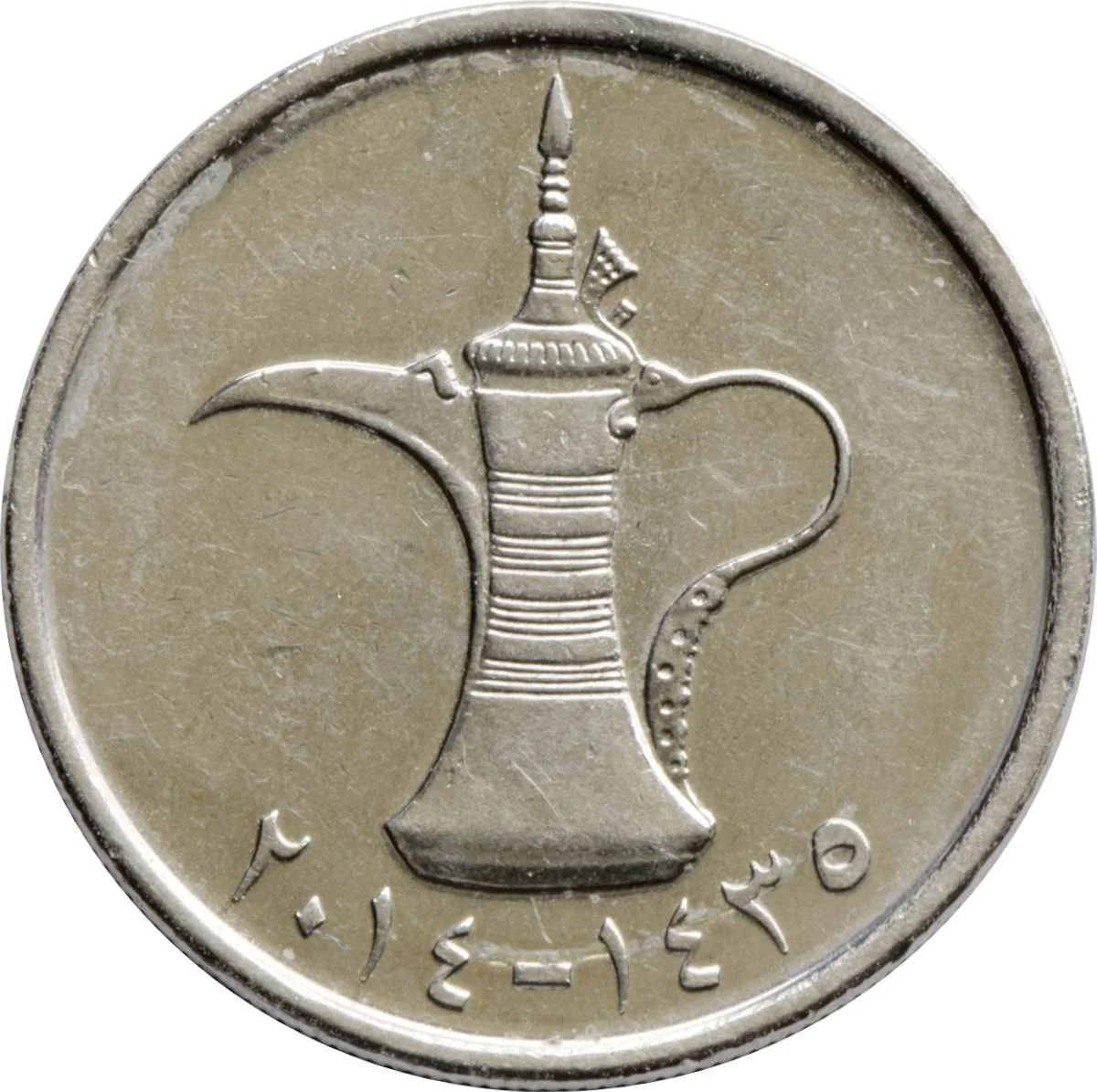
Reverse
Description:
Dallah (traditional Arabic coffee pot) from the above dates.
Inscription:
١٤٣٥-٢٠١٤
Translation:
1435-2014
Script: Arabic
Engraver: Geoffrey Colley
Edge
Reeded
Categories
| Object> Container or tableware |
Mints
| Name | Mark |
|---|---|
| Royal Canadian Mint of Winnipeg | — |
Mintings
| Year | Mint Mark | Mintage | Quality | Collection |
|---|---|---|---|---|
| 2012 | — | — | ||
| 2014 | — | — | ||
| 2022 | — | — |
Historical background
In 2012, the United Arab Emirates' currency situation was defined by the unwavering stability of the UAE dirham (AED), which remained firmly pegged to the US dollar at a fixed rate of AED 3.6725 per USD. This peg, in place since 1997, was a cornerstone of the country's monetary policy, managed by the UAE Central Bank. The primary objective was to ensure price and exchange rate stability, which was crucial for a trade-dependent economy with a large expatriate population and a dominant hydrocarbons sector priced in dollars. This stability provided a predictable environment for foreign investment and trade, shielding the economy from volatile currency fluctuations.
The context of 2012, however, presented significant external pressures. The peg meant the UAE imported the ultra-loose monetary policy of the US Federal Reserve, which had slashed interest rates to near-zero following the 2008 financial crisis. This contributed to rising inflation in the UAE, driven by increasing rents and a rebounding domestic economy, while also depressing returns on local savings. Furthermore, the ongoing Eurozone debt crisis and regional geopolitical tensions occasionally spurred capital flows into the UAE as a perceived safe haven, adding complexity to liquidity management. Despite these challenges, there was no serious debate about abandoning the dollar peg, as its benefits for trade and stability were overwhelmingly favored.
Consequently, the monetary policy focus for the UAE Central Bank in 2012 was on managing the side-effects of the peg rather than the exchange rate itself. Efforts were directed at controlling domestic liquidity and inflation through tools like reserve requirements for banks and issuing short-term certificates of deposit. The year also saw heightened regulatory attention on the banking sector's real estate exposure, learning from the 2009-2010 debt crisis. Overall, 2012 was a period of consolidated stability for the dirham, reinforcing its role as a reliable currency within the Gulf Cooperation Council (GCC), even as policymakers navigated the complexities of a globally aligned monetary stance.
The context of 2012, however, presented significant external pressures. The peg meant the UAE imported the ultra-loose monetary policy of the US Federal Reserve, which had slashed interest rates to near-zero following the 2008 financial crisis. This contributed to rising inflation in the UAE, driven by increasing rents and a rebounding domestic economy, while also depressing returns on local savings. Furthermore, the ongoing Eurozone debt crisis and regional geopolitical tensions occasionally spurred capital flows into the UAE as a perceived safe haven, adding complexity to liquidity management. Despite these challenges, there was no serious debate about abandoning the dollar peg, as its benefits for trade and stability were overwhelmingly favored.
Consequently, the monetary policy focus for the UAE Central Bank in 2012 was on managing the side-effects of the peg rather than the exchange rate itself. Efforts were directed at controlling domestic liquidity and inflation through tools like reserve requirements for banks and issuing short-term certificates of deposit. The year also saw heightened regulatory attention on the banking sector's real estate exposure, learning from the 2009-2010 debt crisis. Overall, 2012 was a period of consolidated stability for the dirham, reinforcing its role as a reliable currency within the Gulf Cooperation Council (GCC), even as policymakers navigated the complexities of a globally aligned monetary stance.
🌱 Very Common