


5 pounds (Moharram Printing Press Company) – Egypt
Add to wishlist
Non-circulating coins
Commemoration: 100th Anniversary of the Moharram Printing Press Company
Egypt
Context
Year: 1985
Islamic (Hijri) Year:: 1405
Issuer: Egypt
Period:
(since 1971)
Currency:
(since 1916)
Total mintage: 200
Material

References
KM: #
Numista: #403766
Value
Exchange value: 5 EGP
Bullion value: $5433.39
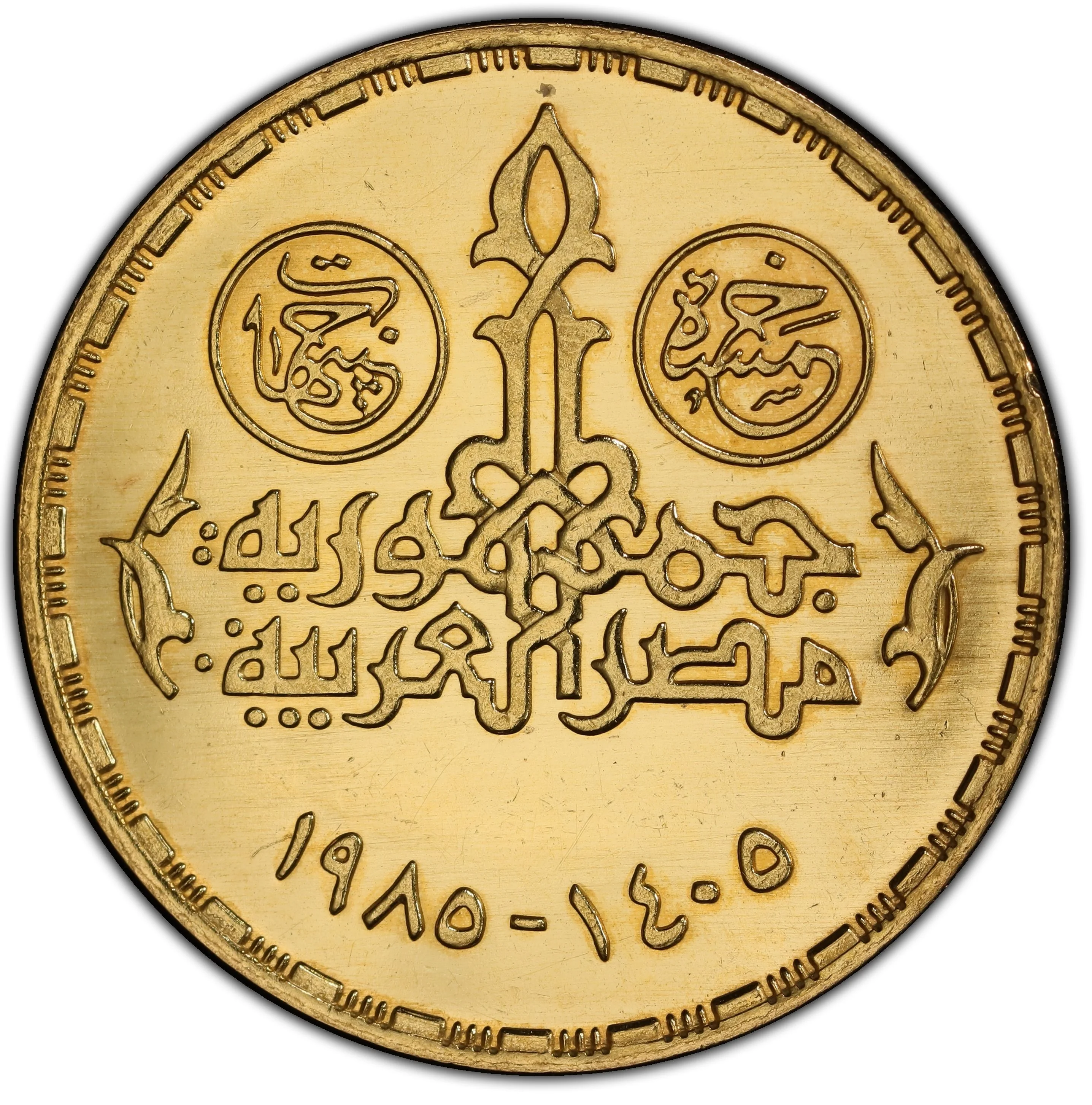
Obverse
Description:
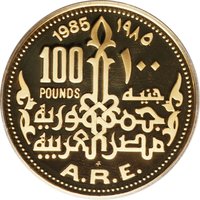
Arabic legends, dated below.
Inscription:
خمسة جنيهات
جمهورية
مصر العربية
١٤٠٥ - ١٩٨٥
جمهورية
مصر العربية
١٤٠٥ - ١٩٨٥
Translation:
Five Pounds
Arab Republic
of Egypt
1405 - 1985
Arab Republic
of Egypt
1405 - 1985
Script: Arabic (kufic)
Language: Arabic
Reverse
Description:
A shaded 'B' shape containing the letter م.
Inscription:
العيد المئوى لشركة مطابع محرم الصناعية
تأسست عام ١٨٨٥
تأسست عام ١٨٨٥
Translation:
The Centenary of Muḥarram Industrial Printing Company
Established in the year 1885.
Established in the year 1885.
Script: Arabic (kufic)
Language: Arabic
Edge
Reeded
Mints
| Name | Mark |
|---|---|
| Egyptian Mint Authority | — |
Mintings
| Year | Mint Mark | Mintage | Quality | Collection |
|---|---|---|---|---|
| 1985 | — | 200 |
Historical background
In 1985, Egypt’s currency situation was defined by a severe and growing crisis centered on its overvalued official exchange rate. The Egyptian pound was pegged to the U.S. dollar at an artificial rate of approximately E£1.00 = $1.43, a level maintained by the government since 1979. This official rate, however, bore little relation to economic reality. A massive parallel black market for foreign currency had emerged, where the pound traded at less than half its official value, reflecting widespread loss of confidence, high inflation, and a yawning trade deficit. This dual-system created significant distortions, discouraging vital remittances and exports while encouraging capital flight and import dependency.
The roots of this crisis lay in the economic policies of the preceding decade. The 1970s Infitah (economic opening) had increased imports and consumption without generating sufficient productive exports, leading to persistent current account deficits. By the mid-1980s, external shocks exacerbated these vulnerabilities: a sharp decline in oil prices reduced crucial revenue from exports, worker remittances, and Suez Canal tolls. Consequently, foreign exchange reserves dwindled, and Egypt became increasingly reliant on external borrowing and aid, primarily from the United States and international institutions, to support the unsustainable peg and finance essential imports.
The untenable currency position in 1985 set the stage for a major economic reckoning. Pressure from the International Monetary Fund (IMF) for structural reforms, including a significant devaluation, was mounting. The government, wary of the social and political instability that a sudden devaluation could cause—particularly in raising the cost of basic subsidized goods—resisted immediate action. However, by the year's end, it was clear that maintaining the status quo was impossible, paving the way for the series of controlled devaluations and eventual shift to a unified, market-driven exchange rate system that would characterize the late 1980s and early 1990s.
The roots of this crisis lay in the economic policies of the preceding decade. The 1970s Infitah (economic opening) had increased imports and consumption without generating sufficient productive exports, leading to persistent current account deficits. By the mid-1980s, external shocks exacerbated these vulnerabilities: a sharp decline in oil prices reduced crucial revenue from exports, worker remittances, and Suez Canal tolls. Consequently, foreign exchange reserves dwindled, and Egypt became increasingly reliant on external borrowing and aid, primarily from the United States and international institutions, to support the unsustainable peg and finance essential imports.
The untenable currency position in 1985 set the stage for a major economic reckoning. Pressure from the International Monetary Fund (IMF) for structural reforms, including a significant devaluation, was mounting. The government, wary of the social and political instability that a sudden devaluation could cause—particularly in raising the cost of basic subsidized goods—resisted immediate action. However, by the year's end, it was clear that maintaining the status quo was impossible, paving the way for the series of controlled devaluations and eventual shift to a unified, market-driven exchange rate system that would characterize the late 1980s and early 1990s.

✨ Legendary