

25 Dollars – Fiji
Non-circulating coins
Commemoration: King Cakobau
Fiji
Context
Material
References
KM: #Click to copy to clipboard37
Numista: #40266
Value
Exchange value: 25 FJD
Bullion value: $131.99
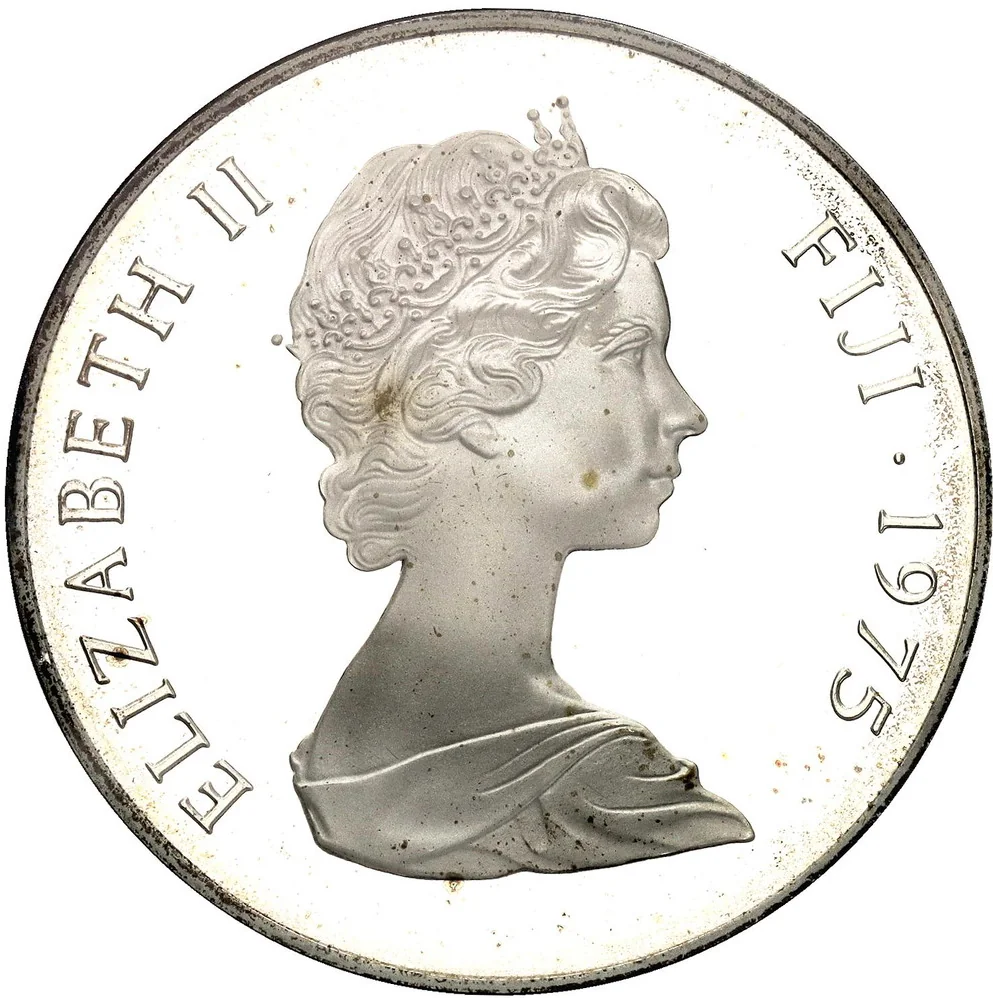
Obverse
Description:
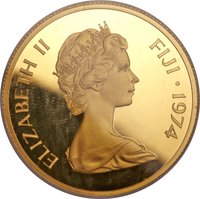
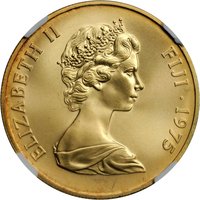
Youthful profile portrait
Inscription:
ELIZABETH II FIJI • 1975
Translation:
ELIZABETH II FIJI • 1975
Script: Latin
Language: English
Engraver: Arnold Machin
Reverse
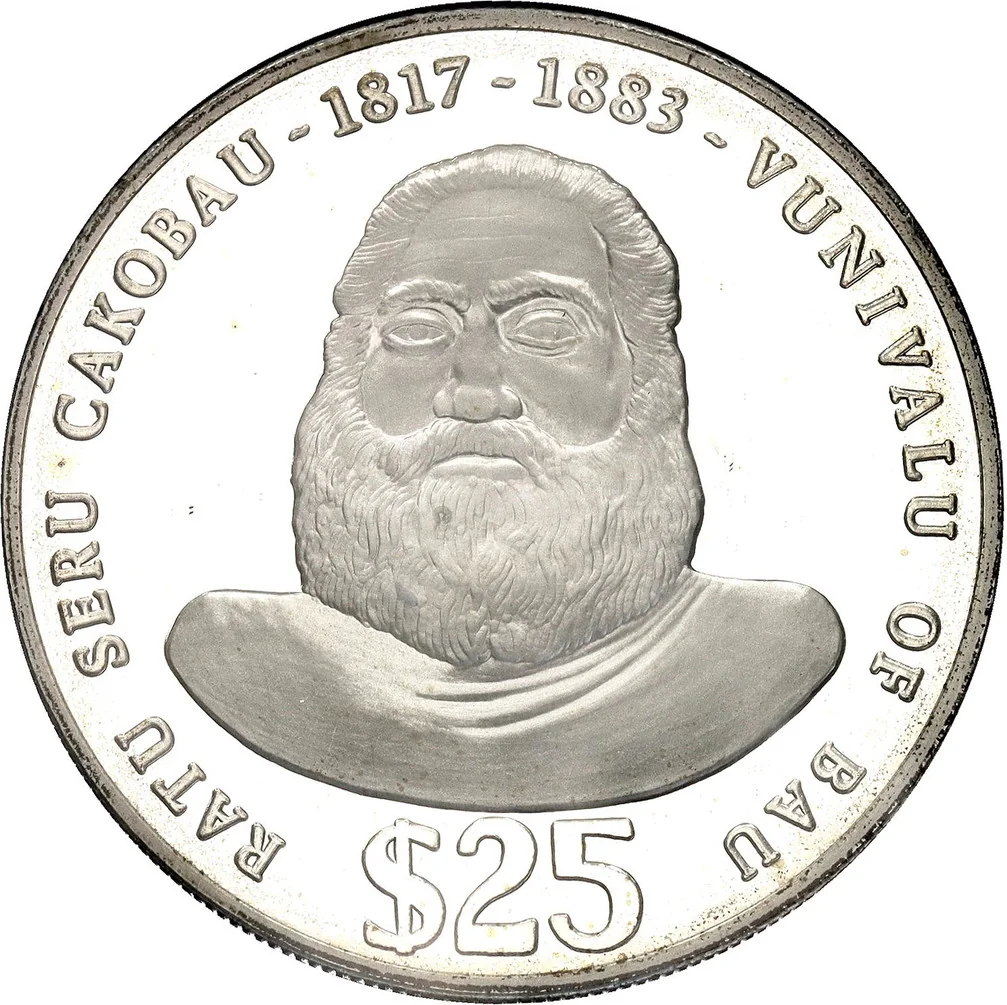
Description:
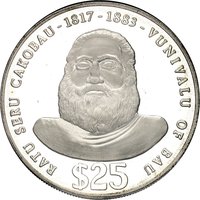
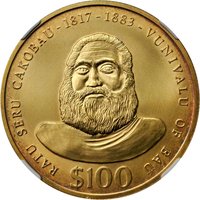
King Cakobau bust, dates above, denomination below.
Inscription:
RATU SERU CAKOBAU - 1817-1883 - VUNIVALU OF BAU
$25
$25
Script: Latin
Edge
Milled
Mints
| Name | Mark |
|---|---|
| Royal Canadian Mint of Ottawa | — |
Mintings
| Year | Mint Mark | Mintage | Quality | Collection |
|---|---|---|---|---|
| 1975 | — | 836 | ||
| 1975 | — | 5,157 | Proof |
Historical background
In 1975, Fiji's currency situation was defined by its recent transition to a decimalized system and its continued close ties to the British pound sterling. Just four years prior, in 1971, the Fijian pound had been replaced by the Fijian dollar at a rate of two dollars to one pound. This new dollar was pegged to the pound sterling, reflecting Fiji's status as a British colony (it had gained independence only in 1970). Consequently, Fiji's monetary policy and currency value were largely influenced by economic conditions and decisions in the United Kingdom, a relationship that provided stability but limited local autonomy.
The year itself was one of relative monetary stability, but it occurred against a backdrop of significant global economic turbulence, notably the aftermath of the 1973 oil crisis and the collapse of the Bretton Woods system. These events caused widespread inflation and currency volatility internationally. Fiji's peg to sterling, however, meant it was indirectly affected by Britain's own severe economic challenges of the mid-1970s, including high inflation and a falling pound. This linkage meant that imported inflation was a concern for Fiji, impacting the cost of goods and overall economic planning.
Furthermore, 1975 fell within a period where discussions about greater monetary sovereignty for Fiji were beginning to emerge. The dependency on sterling was increasingly seen as an anachronism for the newly independent nation. These conversations would culminate just a few years later, in 1975's immediate future, with a decisive shift: in 1976, Fiji broke its sterling peg and instead pegged the Fijian dollar to a basket of currencies of its major trading partners. This move was aimed at better insulating the domestic economy from external shocks and asserting greater control over its monetary destiny.
The year itself was one of relative monetary stability, but it occurred against a backdrop of significant global economic turbulence, notably the aftermath of the 1973 oil crisis and the collapse of the Bretton Woods system. These events caused widespread inflation and currency volatility internationally. Fiji's peg to sterling, however, meant it was indirectly affected by Britain's own severe economic challenges of the mid-1970s, including high inflation and a falling pound. This linkage meant that imported inflation was a concern for Fiji, impacting the cost of goods and overall economic planning.
Furthermore, 1975 fell within a period where discussions about greater monetary sovereignty for Fiji were beginning to emerge. The dependency on sterling was increasingly seen as an anachronism for the newly independent nation. These conversations would culminate just a few years later, in 1975's immediate future, with a decisive shift: in 1976, Fiji broke its sterling peg and instead pegged the Fijian dollar to a basket of currencies of its major trading partners. This move was aimed at better insulating the domestic economy from external shocks and asserting greater control over its monetary destiny.
💎 Extremely Rare