

15 Maloti – Lesotho
Non-circulating coins
Commemoration: International Year of the Child
Lesotho
Context

Material
References
KM: #Click to copy to clipboard25
Numista: #40232
Value
Exchange value: 15 LSL
Bullion value: $89.62
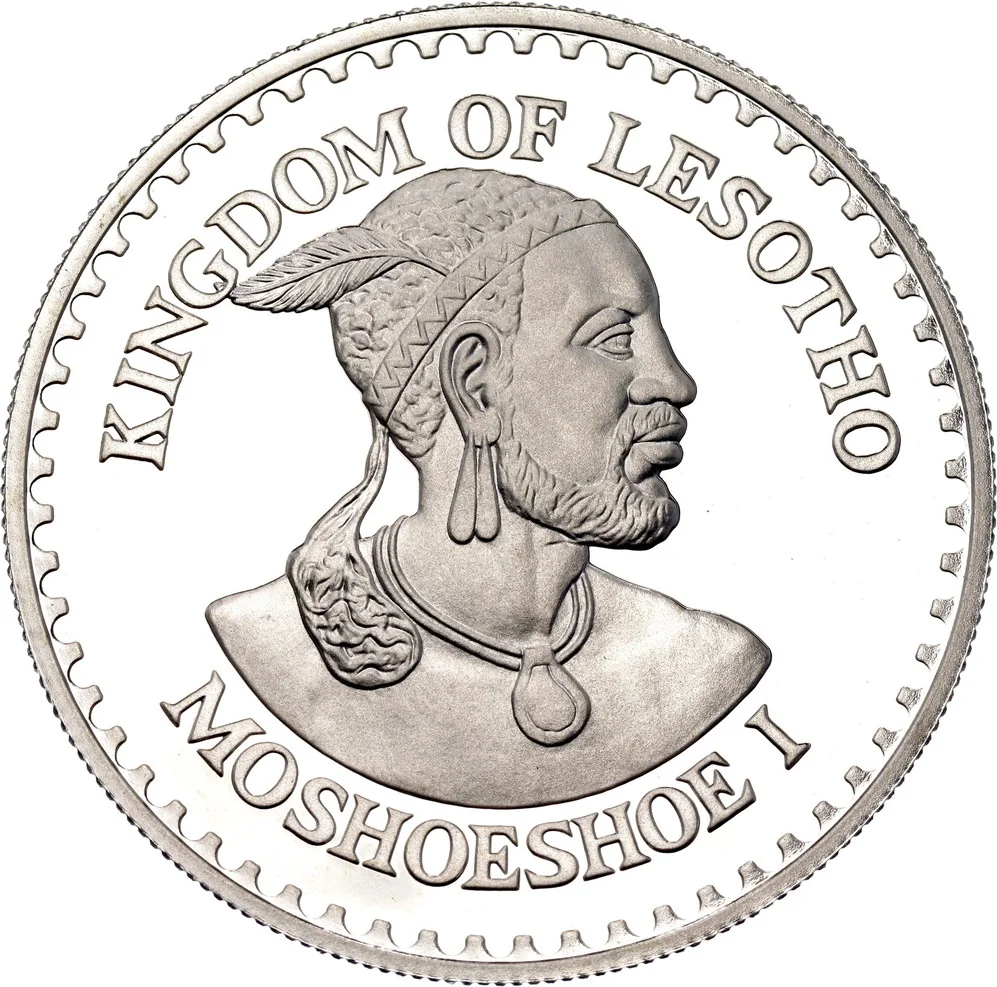
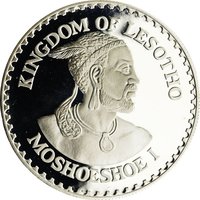
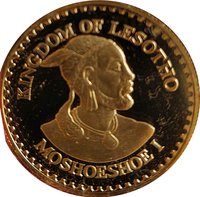
Obverse
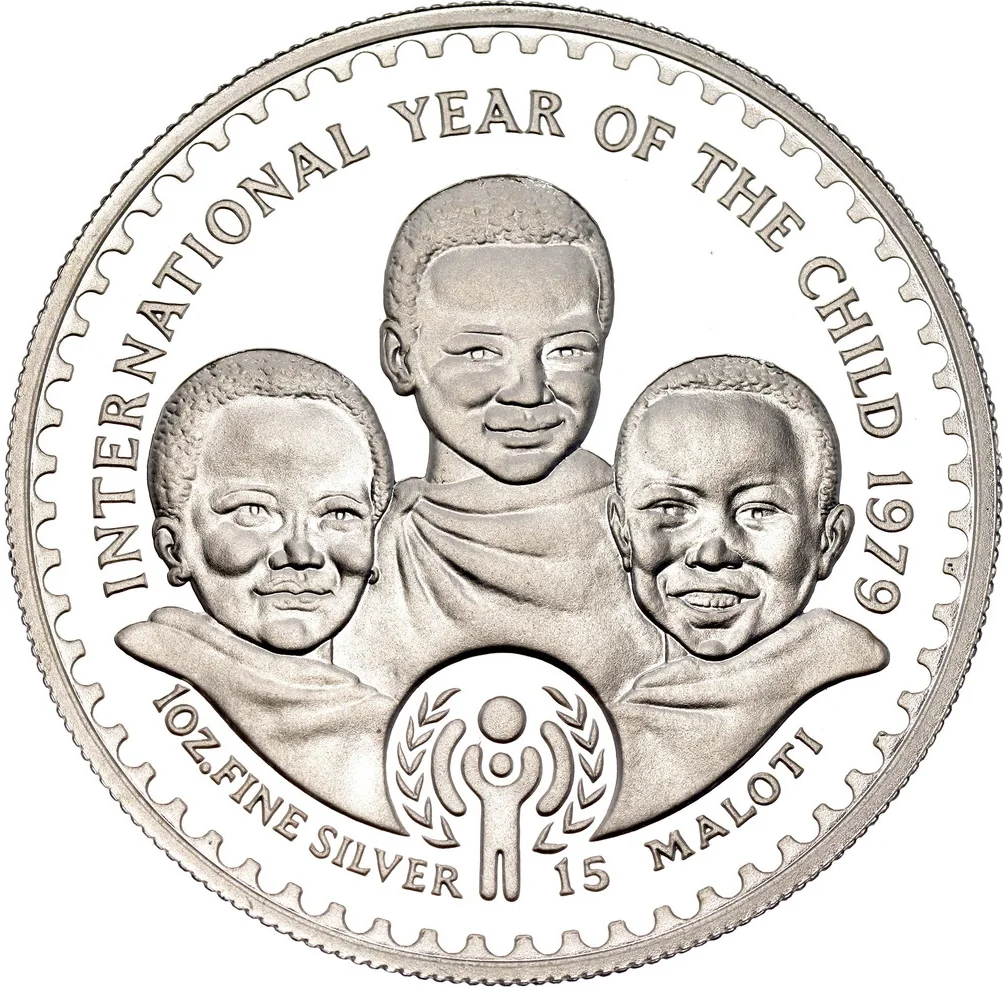
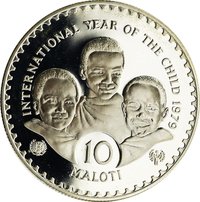
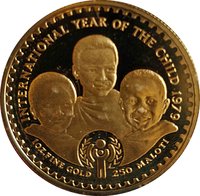
Reverse
Description:
Three child busts facing forward, logo beneath.
Inscription:
INTERNATIONAL YEAR OF THE CHILD 1979
1 OZ. FINE SILVER 15 MALOTI
1 OZ. FINE SILVER 15 MALOTI
Script: Latin
Edge
Reeded
Categories
| Person> Monarch |
| Organization> UNICEF |
Mintings
| Year | Mint Mark | Mintage | Quality | Collection |
|---|---|---|---|---|
| 1979 | — | 18,000 | ||
| 1979 | — | 7,500 | Proof |
Historical background
In 1979, Lesotho's currency situation was fundamentally defined by its economic and geographic dependence on the Republic of South Africa. The country was a member of the Rand Monetary Area (RMA), an arrangement that saw the South African rand circulate as legal tender within Lesotho. This meant the Loti, introduced in 1966 but not yet issued as physical banknotes and coins, existed primarily as a theoretical unit of account pegged at par with the rand. The kingdom had no independent monetary policy, as its money supply and interest rates were effectively determined by the South African Reserve Bank, reflecting the deep integration of the two economies.
This dependency presented a significant dilemma. On one hand, it provided monetary stability and facilitated crucial cross-border trade and labor flows, as hundreds of thousands of Basotho migrants worked in South African mines. On the other hand, it made Lesotho highly vulnerable to South Africa's economic and political decisions, a particularly acute concern given the escalating tensions of the apartheid era. The arrangement also limited the government's ability to use monetary tools for domestic economic development.
Consequently, 1979 was a pivotal year of transition. The Lesotho Monetary Authority (forerunner to the Central Bank of Lesotho) was established, signaling a move toward greater financial autonomy. This set the stage for the phased introduction of physical Loti banknotes and coins beginning in 1980, which would circulate alongside the rand. The goal was to gradually assert symbolic and practical sovereignty over currency, while still maintaining the crucial 1:1 peg with the rand to avoid economic disruption, a balancing act that would define Lesotho's monetary policy for decades.
This dependency presented a significant dilemma. On one hand, it provided monetary stability and facilitated crucial cross-border trade and labor flows, as hundreds of thousands of Basotho migrants worked in South African mines. On the other hand, it made Lesotho highly vulnerable to South Africa's economic and political decisions, a particularly acute concern given the escalating tensions of the apartheid era. The arrangement also limited the government's ability to use monetary tools for domestic economic development.
Consequently, 1979 was a pivotal year of transition. The Lesotho Monetary Authority (forerunner to the Central Bank of Lesotho) was established, signaling a move toward greater financial autonomy. This set the stage for the phased introduction of physical Loti banknotes and coins beginning in 1980, which would circulate alongside the rand. The goal was to gradually assert symbolic and practical sovereignty over currency, while still maintaining the crucial 1:1 peg with the rand to avoid economic disruption, a balancing act that would define Lesotho's monetary policy for decades.
💎 Very Rare