

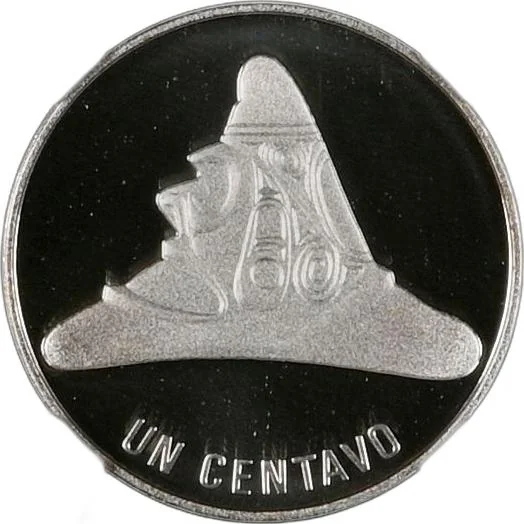
1 Centavo – Dominican Republic
Dominican Republic
Context
Year: 1989
Issuer: Dominican Republic 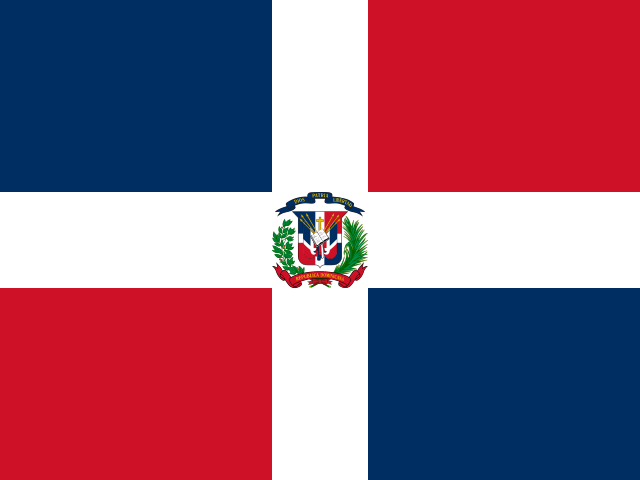
Issuing organization: Central Bank of the Dominican Republic
Period:
(since 1966)
Currency:
(since 1937)
Total mintage: 2,600
Material
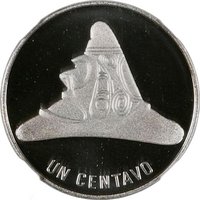
References
KM: #Click to copy to clipboard72a
Numista: #400538
Value
Exchange value: 0.01 DOP
Bullion value: $10.52
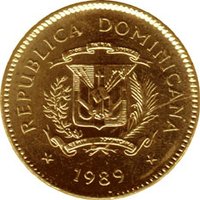
Obverse
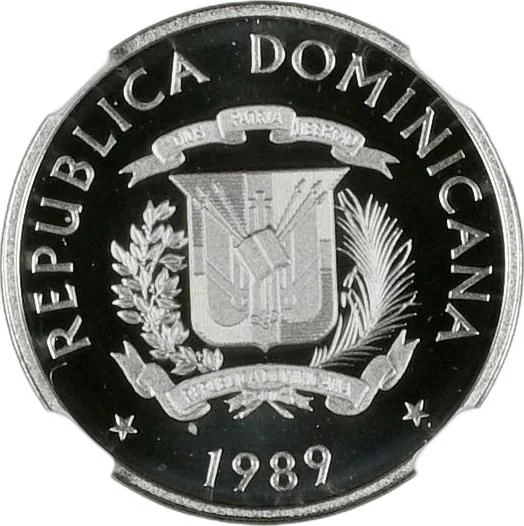
Description:
Country, coat of arms, year.
Inscription:
REPUBLICA DOMINICANA
1989
DIOS PATRIA LIBERTAD
REPUBLICA DOMINICANA
1989
DIOS PATRIA LIBERTAD
REPUBLICA DOMINICANA
Translation:
GOD FATHERLAND LIBERTY
DOMINICAN REPUBLIC
1989
DOMINICAN REPUBLIC
DOMINICAN REPUBLIC
1989
DOMINICAN REPUBLIC
Script: Latin
Language: Spanish
Engraver: Casimiro Nemesio de Moya
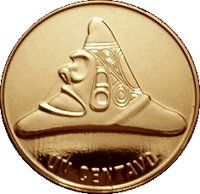
Reverse
Edge
Categories
| Symbols> Coat of Arms |
| Symbol> Wreath |
Mints
| Name | Mark |
|---|---|
| Royal Canadian Mint of Ottawa | — |
Mintings
| Year | Mint Mark | Mintage | Quality | Collection |
|---|---|---|---|---|
| 1989 | — | 2,600 | Proof |
Historical background
In 1989, the Dominican Republic was in the final stages of a profound economic transformation initiated under President Joaquín Balaguer, who had returned to power in 1986. The country was grappling with the severe legacy of the 1980s debt crisis, characterized by high inflation, fiscal deficits, and a heavily controlled and overvalued currency. The official exchange rate for the Dominican peso (RD$) was fixed by the Central Bank, but a vast and influential parallel black market for US dollars thrived, reflecting a significant loss of confidence in the national currency and creating major distortions in the economy.
That year, the government, under pressure from the International Monetary Fund (IMF) and World Bank as part of structural adjustment programs, began implementing decisive stabilization and liberalization measures. A critical step was the move towards a unified, market-driven exchange rate system. In July 1989, a major devaluation was enacted, pushing the official rate closer to the black-market level, which was a painful but necessary step to correct imbalances. This was part of a broader package that included fiscal austerity, reduction of import tariffs, and lifting price controls on many basic goods.
The currency situation of 1989, therefore, represents a pivotal turning point. The devaluation and the shift away from a fixed exchange rate regime aimed to restore competitiveness, boost exports (particularly from the free trade zones), and attract foreign investment. While these reforms laid the foundation for the macroeconomic stability and growth the Dominican Republic would experience in subsequent decades, they came at an immediate social cost, exacerbating poverty and triggering public discontent due to soaring prices for imported goods and essential commodities in the short term.
That year, the government, under pressure from the International Monetary Fund (IMF) and World Bank as part of structural adjustment programs, began implementing decisive stabilization and liberalization measures. A critical step was the move towards a unified, market-driven exchange rate system. In July 1989, a major devaluation was enacted, pushing the official rate closer to the black-market level, which was a painful but necessary step to correct imbalances. This was part of a broader package that included fiscal austerity, reduction of import tariffs, and lifting price controls on many basic goods.
The currency situation of 1989, therefore, represents a pivotal turning point. The devaluation and the shift away from a fixed exchange rate regime aimed to restore competitiveness, boost exports (particularly from the free trade zones), and attract foreign investment. While these reforms laid the foundation for the macroeconomic stability and growth the Dominican Republic would experience in subsequent decades, they came at an immediate social cost, exacerbating poverty and triggering public discontent due to soaring prices for imported goods and essential commodities in the short term.
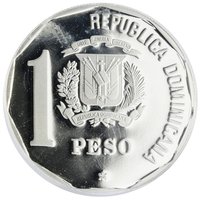
✨ Legendary